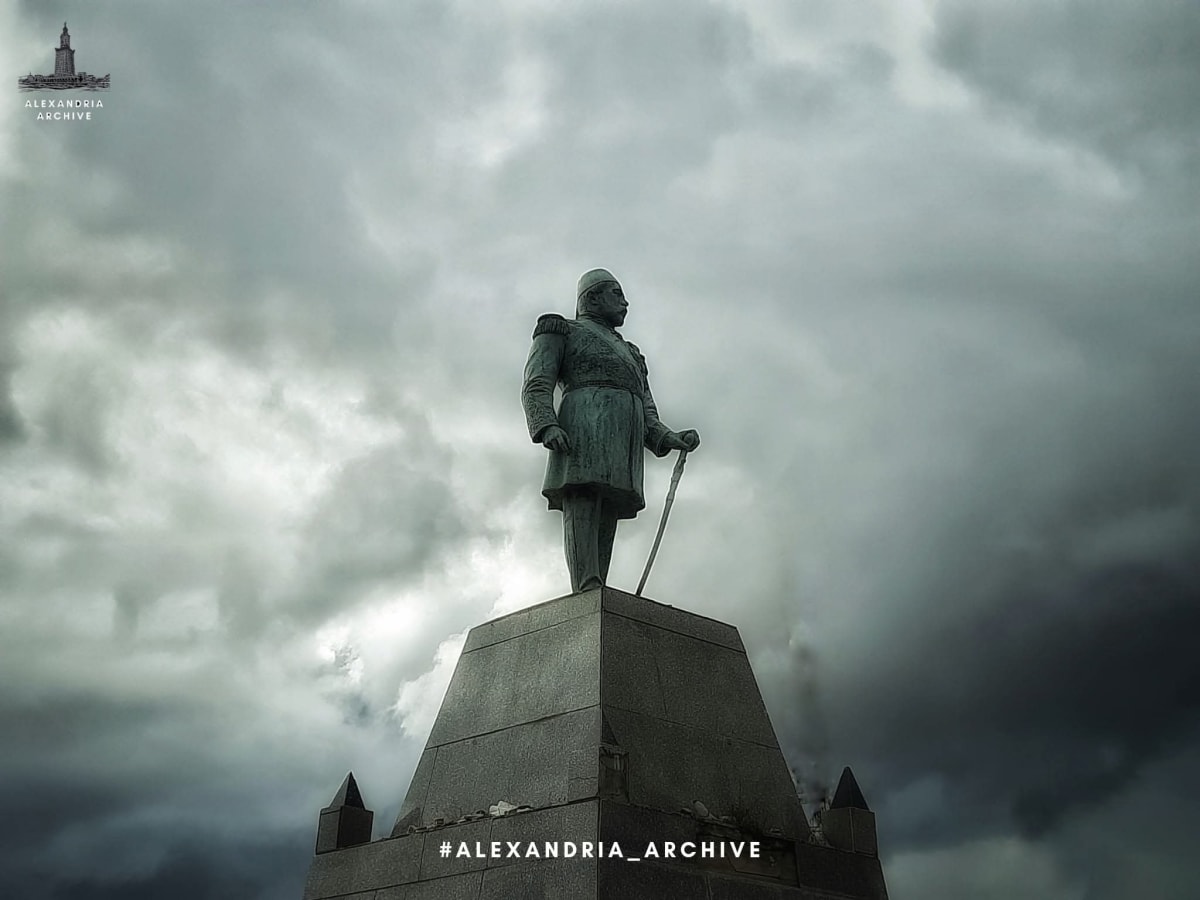
خلف سينما أمير وبجانب المسرح الروماني يوجد هذا التمثال للخديوي إسماعيل يقف شامخًا لكن هل كان هذا المكان الأول للتمثال !؟
في الحقيقة لا فإن تمثال الخديوي إسماعيل كان هو التمثال المُزين لما نعرفه اليوم بالجندي المجهول في منطقة المنشية مُطلًا على البحر بشكلٍ مباشر.
النصب التذكاري للخديوي إسماعيل بناه الإيطاليون المقيمون في الإسكندرية كتذكار لتكريم الخديوي وفيما بعد أصدر الرئيس جمال عبد الناصر قرارًا جمهوريًا عام 1964 يقضى بتحويل هذا المكان إلى نصب تذكاري للجندي البحري المجهول وتسليمه إلى قيادة القوات البحرية خلال قيادة الفريق أول "سليمان عزت" للقوات البحرية.
جاء تصميم النصب علي غرار النصب التذكاري "لفيتوريو إمانويلي الثاني" في ميدان فينيسيا بالعاصمة الإيطالية روما ويعتبر نموذجا مصغرا منه.
سنقوم بشرح التصميم الخاص بالنصب التذكاري المُقام في العاصمة الإيطالية وهو ما تم تطبيقه في النصب التذكاري للجندي المجهول وسيتم ارفاق صورة للنصب التذكاري الإيطالي في التعليقات.
الوصف :
قاعدته الرخامية يعلوها مجموعة من الأعمدة الرخامية الدائرية والمنقوشة علي شكل نصف دائرة تحيط بقبر الجندى المجهول.
تعلو الأعمدة تيجان وتعلو التيجان كمرة نصف دائرية تربط بينها بها نقوش وزخارف وكرانيش بارزة.
توجد بمنتصف نصف الدائرة تركيبة رخامية يُحيط بها 4 أعمدة، وتعلوها كتلة رخامية مكعبة الشكل بها نقوش وزخارف وبمنتصف ارتفاعها كورنيشة بارزة بها نقوش وزخارف.
التمثال قام بنحته الإيطالي "بييترو كانونيكا" ، أزيح الستار عنه في ديسمبر من عام 1938 و ظل التمثال بميدان المنشية الي منتصف الخمسينات من القرن الماضي تقريبا , و كانت حركة ضباط الجيش ضد الملك فاروق قد حولت مصر من الملكية الي الجمهورية , فتم نقل التمثال الي المخازن و اقترحت هيئة سك العملات صَهر التمثال و إستخدام معدنه في سك النقود فتقدمت حكومة ايطاليا بطلب لشراء التمثال مما احرج الحكومة المصرية فتم رفض هذا الاقتراح و ظل التمثال بالمخازن إلى أن تم إزاحة الستار عنه من جديد في ميدان الخديوي إسماعيل بكوم الدكة.
يقف الآن التمثال وحيداً دون أن يدون عليه إسم صاحب التمثال لكي تُدرك الأجيال القادمة ذلك التاريخ الثري لمدينة الإسكندرية
#أرشيف_الإسكندرية
Statue of Khedive Ismail
Behind the Amir Cinema and next to the Roman Theater stands this statue of Khedive Ismail, proudly erected. But was this its original location?
Actually, no. The statue of Khedive Ismail was originally the adornment of what we know today as the Tomb of the Unknown Soldier in the Mansheya district, overlooking the sea.
The memorial to Khedive Ismail was built by Italians residing in Alexandria as a tribute to the Khedive. Later, in 1964, President Gamal Abdel Nasser issued a presidential decree transforming this site into a memorial to the Unknown Soldier and handing it over to the Naval Forces Command during the tenure of Admiral Suleiman Ezzat.
The monument's design is modeled after the monument to Vittorio Emanuele II in Piazza Venezia in Rome, Italy, and is considered a smaller version of it.
We will explain the design of the memorial in the Italian capital, which was adopted for the Tomb of the Unknown Soldier. A picture of the Italian memorial will be included in the comments.
Description:
Its marble base is surmounted by a series of semicircular marble columns, each carved in a semicircle, surrounding the Tomb of the Unknown Soldier.
The columns are topped with capitals, and above the capitals is a semicircular beam connecting them, adorned with carvings, decorations, and projecting cornices.
At the center of the semicircle is a marble structure surrounded by four columns, surmounted by a cubical marble block with carvings and decorations. At its midpoint is a projecting cornice, also featuring carvings and decorations.
The statue was sculpted by the Italian Pietro Canonica. It was unveiled in December 1938 and remained in Mansheya Square until approximately the mid-1950s. Following the military coup against King Farouk, which transformed Egypt from a monarchy to a republic, the statue was moved to storage. The Egyptian Mint suggested melting it down and using its metal for minting coins. The Italian government then submitted a request to purchase the statue, which embarrassed the Egyptian government. This proposal was rejected, and the statue remained in storage until its recent unveiling in Khedive Ismail Square in Kom El-Dikka.
The statue now stands alone, without the name of its sculptor, so that future generations may understand the rich history of Alexandria.