Ras El Tin Palace The Oldest Witness to Modern Egyptian History
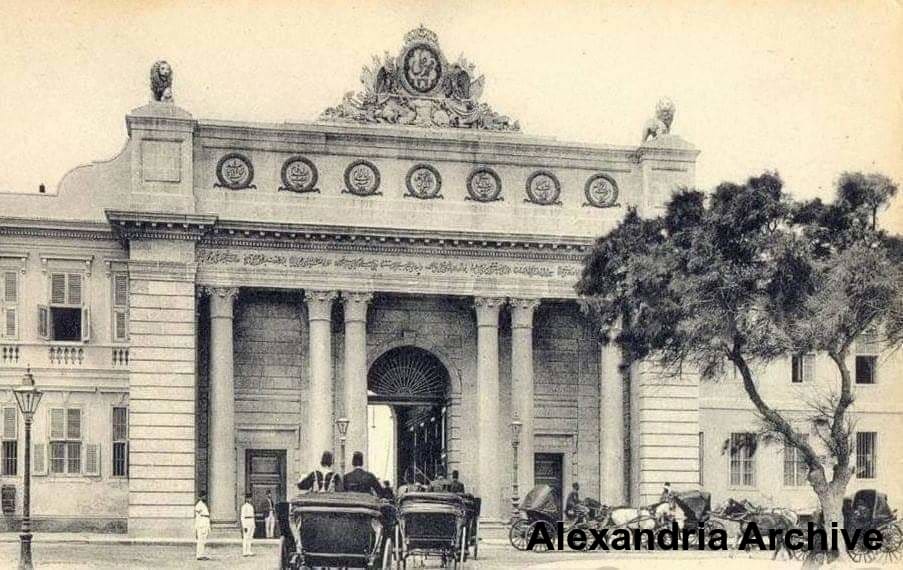
Ras El Tin Palace is not merely an architectural landmark, but a true historical treasure and one of the most important stone documents that tell the story of Alexandria and modern Egypt, making it an invaluable resource for documentation and archiving. It is the oldest royal palace in Egypt still standing and witnessed the beginning and end of the Muhammad Ali Pasha dynasty. Full details about th
Ras El Tin Palace is not merely an architectural landmark, but a true historical treasure and one of the most important stone documents that tell the story of Alexandria and modern Egypt, making it an invaluable resource for documentation and archiving. It is the oldest royal palace in Egypt still standing and witnessed the beginning and end of the Muhammad Ali Pasha dynasty. Full details about this venerable palace: 1. Foundation and the Origin of its Name The Beginning: Muhammad Ali Pasha began building the palace in 1834 as a summer residence for his government. Construction took more than 10 years, finally being completed in 1845, and it was officially opened in 1847. The Secret Behind the Name: The palace was built on land that was once planted with fig trees, for which the area of Alexandria was famous, hence its name, "Ras El Tin" (Head of the Fig). Strategic Location: It boasts a unique location overlooking the western harbor of Alexandria, which has given it political and military importance throughout history. 2. Architectural Evolution First Version: The palace was initially built in the style of a traditional Ottoman fortress, with a predominantly military character rather than that of a luxurious royal palace. Reconstruction (King Fuad's Reign): In the late 1920s, King Fuad I decided to completely rebuild and renovate the palace to bring it up to date. He commissioned the Italian architect Ernesto Ferrucci Bey (who designed the Harem Palace in Montazah) for this task. Style Blend: After the renovation, the palace's interior design resembled that of Abdeen Palace in Cairo, blending classical and European Renaissance styles with modern French and Byzantine influences. 3. Palace Features and Interior Design Throne Hall (Royal Decrees Hall): One of the palace's most luxurious halls, it was where the most important meetings were held and royal decrees were issued. Gothic Hall: A unique hall added during King Fuad's reign, distinguished by its Gothic architectural design. Marble Hall: So named because its walls and floors are clad in the rarest types of marble. The Private Wing: This includes the royal suite designated for the king and another suite for the queen, connected by a secret passageway. The Mosque and the Marina: The palace still retains the mosque built by Muhammad Ali Pasha, as well as the private marina where the royal yachts were moored. 4. Pivotal Historical Events (Beginning and End) Ras El Tin Palace is the stage upon which destiny played its part in the history of the Muhammad Ali dynasty: The Beginning: From this palace, Muhammad Ali Pasha managed a large part of the affairs of his newly established state. The End (The July 1952 Revolution): The palace witnessed the final hours of the Muhammad Ali dynasty's rule. On July 26, 1952, King Farouk I signed the document abdicating the throne in favor of his son, Ahmed Fouad II, within its walls. The Departure: From the palace's private marina, King Farouk left Egypt aboard the royal yacht "El Mahrousa," thus ending the monarchy in Egypt and beginning the republic.
بيانات السجل — Record details
- النوع — Type
- Building
- العصر — Era
- muhammad_ali
- الحي — District
- الجمرك
- التصنيف — Category
- التصوير الفوتوغرافي
- المُنشئ — Creator
- Alexandria Archive
- المعرّف — Identifier
- ARCH-ALEX-2026-YHL9
- اللغة — Language
- Arabic
- الترخيص — License
- In Copyright — All Rights Reserved
- هوية النشر — Published as
- Publication identity under review
سجلات ذات صلة — Related records
- Inauguration of Collège Saint Marc in Alexandria by King Fuad I (1928) — 1928
- Court of Justice — Contemporary
- Al-Shurbaji Mosque — Contemporary
- Tarbana Mosque — Contemporary
- statue of Muhammad Ali Pasha — 31
- Qardahi Building 🤎 — 31
- A collection of photos from the streets of Mansheya and Bahri — 2026
- Count de Zogheb’s Memories: A Record of Alexandria’s Golden Era — forties
- Entrance to one of the buildings on Salah al-Din Street — 2026
- Maritime Boat Building Workshops ⛵️🌊 | December 2024
- The oldest photograph ever taken in the history of Egypt and the Middle East. The Harem of Muhammad Ali Pasha, in Ras El Tin Palace in Alexandria, was taken on November 7, 1839, by the French photographer Frédéric Goupil-Fesquet using the daguerreotype technique.
- Sharif Pasha Street