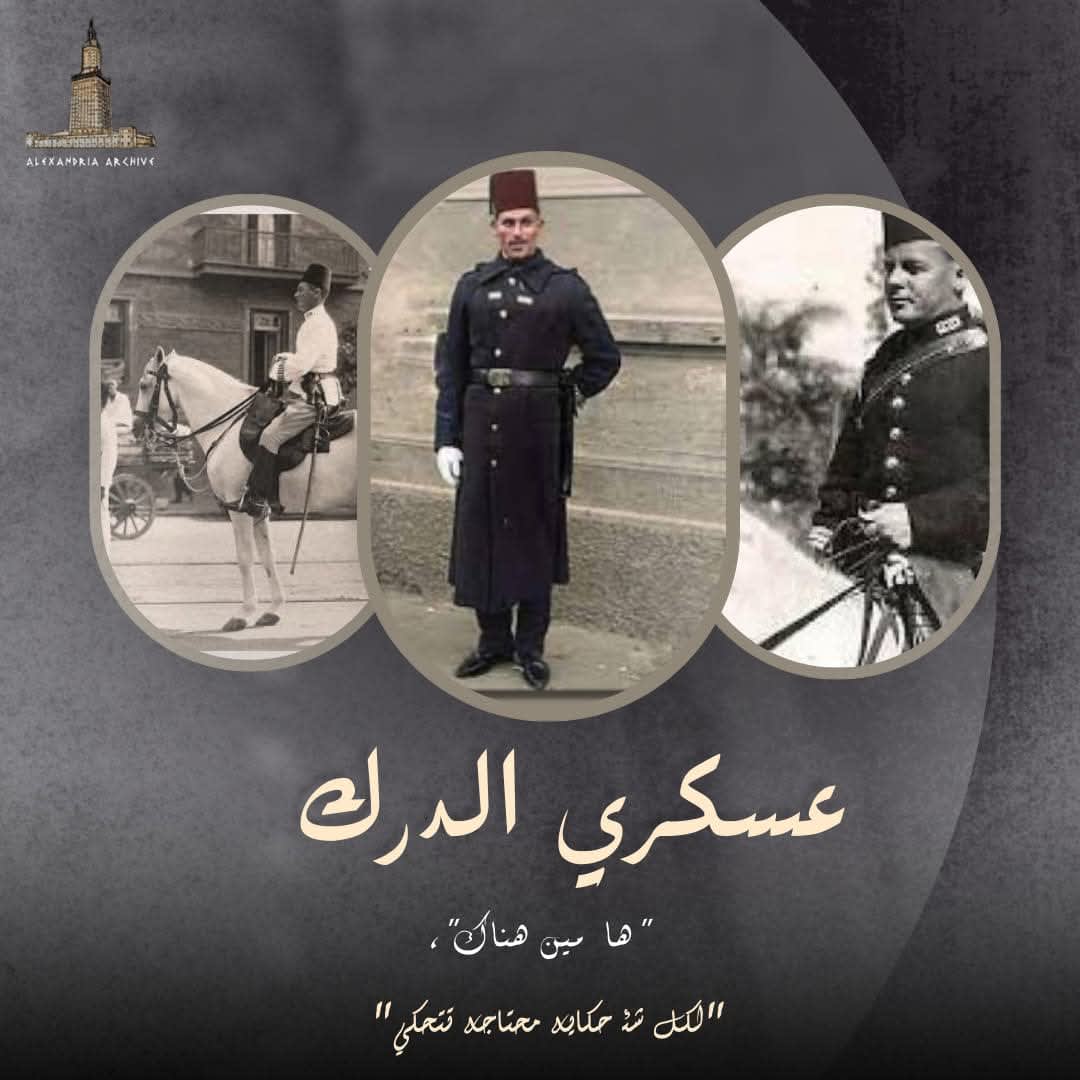
في بداية القرن ال19 كان يطلق على رجال الشرطة ب «عسكري الدَرَك» وكان شائعاً في العصر العثماني ، وحتى قيام ثورة يوليو 1952 ، ولكن تم استبداله فيما بعد بأُمناء الشرطة واختفى بعد ذلك عن الساحة.
وسمي بالدرك نظراً لأن مهمته الأساسية هي ملاحقة المجرمين واللصوص ، والحفاظ على الأمن والإستقرار ، وكان يتجول ليلاً بصفارته وجملته التي اعتاد المواطنين على سماعها فكان صوته أمن وأمان للحارات والأزقة ؛ حيث كلمة "الدرك" تعني استدراك الشئ أو ملاحقته ، ويقتصر دوره في القانون على المهام الخاصة به حتى انتهاء خدمته ، وليس له الحق في الترقية.
ولكنه لم يقتصر مهامه على حفظ الأمن فقط بل له أدوار إنسانية أُخرى ، فكان يساعد العجائز وغير القادرين على الحركة ، والتأكد من إغلاق أبواب وشبابيك المنازل ، والتحقق من أبواب الدكاكين ، وتأمين البيوت الغائب سكانها.
كانت مده خدمته بين غروب الشمس وشروقها وانتهت خدمته بقرار مجلس قيادة ثورة يوليو 1952 بإلغائه والتي امتدت عبر القرن التاسع عشر.
#أرشيف_الإسكندرية
Gendarmerie military
"Who's there?"
This was the famous catchphrase of the Derk.
In the early 19th century, police officers were commonly referred to as Derk during the Ottoman era and continued to be used until the July Revolution of 1952. However, the term was later replaced by "police officers" and eventually faded away.
The term Derk was used because their primary duty was to pursue criminals and thieves, maintain security and stability. They would patrol at night, blowing their whistles and using their iconic phrase, which had become synonymous with safety and security for the neighborhoods and alleys. The word "Derk" itself means to intercept or pursue something, and their legal role was limited to their specific duties until the end of their service.
They were not entitled to promotions.
Their duties were not limited to maintaining security; they also had other humanitarian roles.
They would assist the elderly and those who were unable to move, ensure that doors and windows were closed, check on shops, and secure homes of absent residents.
Their service hours were from sunset to sunrise, and their service ended with a decision by the Revolutionary Command Council in July 1952 to abolish the position, which had existed throughout the 19th century.