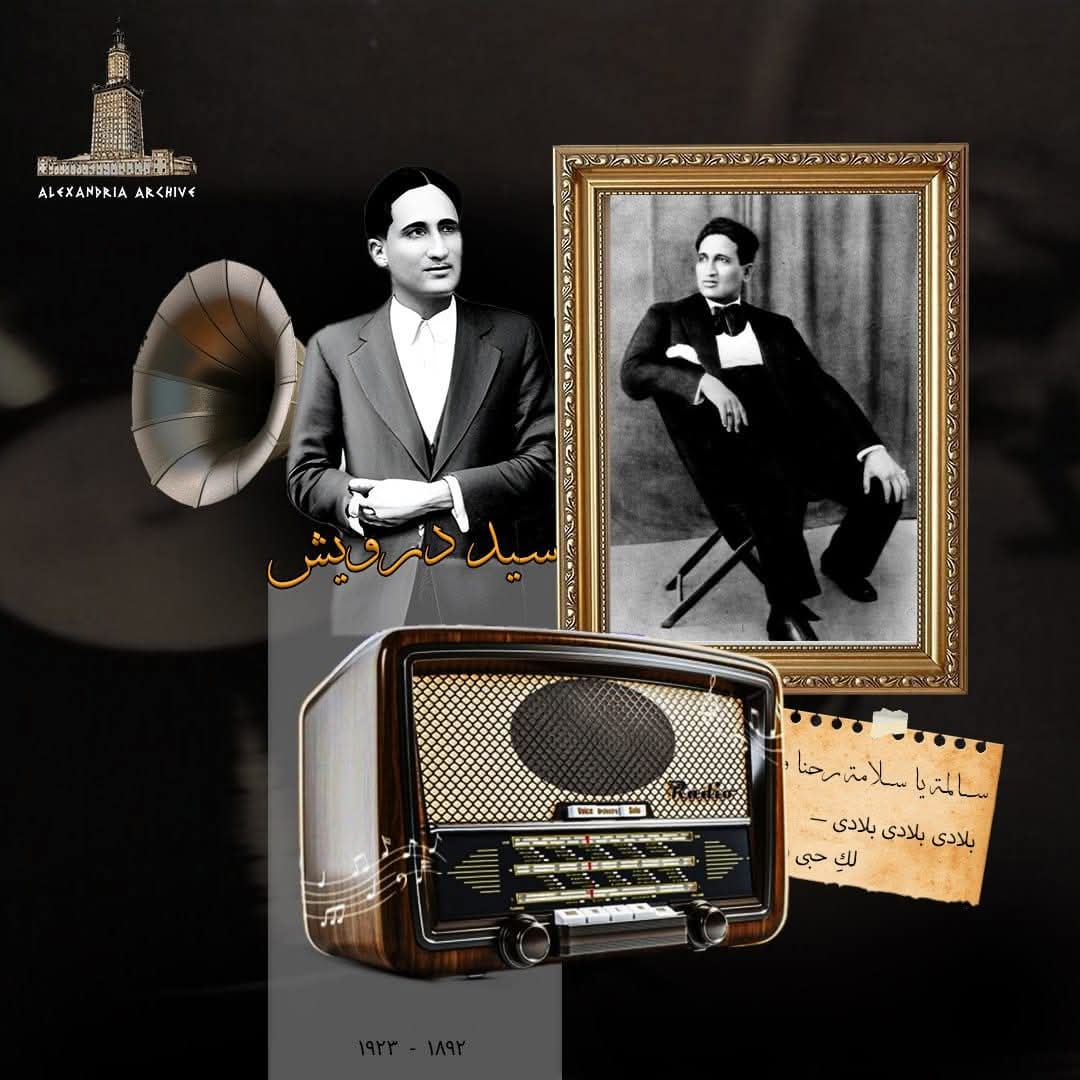
أحد أشهر كبار الموسيقيين الملقب بفنان الشعب "سيد درويش"
وُلد سيد درويش في 17 مارس عام 1892م في كوم الدكة بالإسكندرية بأسرة متوسطة الحال، الحقه والده بكتاب "سيدي أحمد الخياش" وتلقى فيه خلال عامين ما مكنه من حفظ القرآن الكريم ثم انتقل إلى مدرسة "حسن حلاوة"، وكان بالمدرسة مدرس مغرم بالغناء، وظهرت موهبته الغنائية بما يتفق ويتجاوب مع هذه الهوية التي اكتشفها المدرس، فأحاطه برعايته بل ورشحه لأن يكون رئيسا لفرقته.
انتقل بعد ذلك إلى مدرسة شمس المدارس بحي رأس التين وشاءت المصادفة أن أحد مدرسيها يعمل ليلًا بفرقة الشيخ سلامة حجازي، ويحفظ قصائده فكان يلقنها لتلاميذه، واستطاع أن يكتشف موهبة سيد درويش من بينهم.
بعد وفاة والده اضطرته ظروف الحياة الملحة أن يعمل مناولًا لعمال البناء وأثناء عمله كان يعبر عن أحزانه بغناء بعض الألحان الفولكلورية التي كانت شائعة بين الأوساط الشعبية في ذلك الحين، ولاحظ المقاول زيادة الإنتاج مما دفع المقاول إلى اختيار سيد درويش ملاحظًا للعمال على أن يكتفي منه بالغناء لهم أثناء العمل.
منذ تلك اللحظة صار سيد درويش مطربًا لأول فرقة عمالية من زملائه عمال البناء وأثناء اندماج سيد درويش في غنائه للعمال، تشاء الأقدار أن يستمع اليه الاخوان سليم وأمين عطا الله وهما جالسان علي مقهي مجاورة فأعجب بأدائه الغنائي وصوته وعرضا عليه اتفاقًا ليعمل معهما مغنيًا في فرقتهما الجوالة التي كانت تستعد للسفر الي الشام فلم يتردد سيد درويش في قبول العرض .
سافر سيد درويش مع هذه الفرقة إلى الشام مرتين عامي (1909 و 1912 ) وفي الرحلة الأولى لم ينجح سيد درويش بسبب سبق وجود الشيخ سلامة حجازي في الشام قبل رحلته، مما اضطره لمزاولة فن التمثيل في هذه الرحلة،
أما الرحلة الثانية عام 1912م فقد ساعدته على استكمال بناء شخصيته الفنية، حيث سنحت له فرص الإلتقاء ببعض كبار الموسيقيين أمثال الشيخ صالح الجذبة والشيخ علي الدرويش والأستاذ الكبير عثمان الموصلي وغيرهم.
في عام 1917م بدأ سيد درويش نشاطه في المسرح الغنائي بالتعاون مع فرقة جورچ أبيض ، فلحن له روايتي ( الهواري ) و( فيروز شاه )، ثم تعاقد مع فرقة نجيب الريحاني ولحن لها أجمل الأغاني ذات الطابع الشعبي والتي كتب أزجالها بديع خيري وغناها نجيب الريحاني بشخصيته المرحة ( كشكش بيه ) .
أعماله في غالبيتها حملت همًا اجتماعيًا ووطنيًا وحسًا سياسيًا لاذعًا، وبينما كانت الإنتقادات تتصاعد بسبب الإحتلال الإنجليزي وكذلك عدم الرضا عن قرارات الملك فؤاد الأول، قدم درويش أعمالًا شهيرة مثل "شد الحزام والتحفجية" و"الحلوة دي" و "أهو ده اللي صار"، وقد أعادت السيدة فيروز غناء الأخيرتين مع أعمال أخرى له، كما تألق الفنان الكبير صباح فخري في أداء "يا شادي الألحان وأنا عشقت"، وغيرها.
ورحل عن عالمنا في 10 سبتمبر من عام 1923م ولا يزال سبب وفاته مجهولًا.
#أرشيف_الإسكندرية
Sayed Darwish
One of the most famous musicians, nicknamed the 'People's Artist' "Sayed Darwish."
Sayed Darwish was born on March 17, 1892, in Kom El Dekka, Alexandria, to a middle-class family. His father enrolled him in the "Sidi Ahmed El-Khayash" school, where he spent two years memorizing the Quran. He then moved to the "Hassan Helawa" school, where there was a music teacher who was passionate about singing.
He then moved to Shams El-Madaris School in Ras El-Tin neighborhood. By chance, one of the teachers worked there at night with Sheikh Salama Higazy's band and memorized his poems, so he would teach them to his students. He was able to discover Sayed Darwish's talent among them.
After his father's death, the harsh of life forced Sayed Darwish to work as a laborer for construction workers. During his work, he had been expressing his sorrows by singing folk tunes that were popular among the common people at that time. The contractor noticed an increase in productivity, which prompted him to appoint Sayed Darwish as a supervisor for the workers, on the condition that he would only sing for them during work.
From that moment on, Sayed Darwish became the singer of the first workers' band, composed of his fellow construction workers. While Sayed Darwish was immersed in his singing for the workers, fate intervened. The brothers Salim and Amin Atta Allah, who were sitting in a nearby cafe, heard him and were impressed by his singing and voice. They offered him a contract to work as a singer with their traveling troupe, which was preparing to travel to Syria. Sayed Darwish did not hesitate to accept the offer.
Sayed Darwish traveled with this troupe to Syria twice, in 1909 and 1912. During the first trip, Sayed Darwish was unsuccessful due to the presence of Sheikh Salama Higazy in Syria before his arrival, which forced him to pursue acting during this trip.
The second trip in 1912, however, helped him complete the development of his artistic personality, as he had the opportunity to meet some of the greatest musicians of the time, such as Sheikh Saleh Al-Jazbawi, Sheikh Ali Al-Darwish, and the great maestro Osman Al-Mawsili, among others.
In 1917, Sayed Darwish began his involvement in musical theater by collaborating with George Abyad's troupe. He composed the music for their operettas "Al-Hawari" and "Firoz Shah." He then signed a contract with Najib Al-Rehani's troupe and composed some of their most popular folk songs, with lyrics by Badee' Khayri and sung by Najib Al-Rehani in his comedic role of "Koshkosh Bey."
Most of his works carried social, national, and sharp political concerns. As criticism mounted against the British occupation and dissatisfaction with the decisions of King Fuad I grew, Darwish presented famous works such as "Shad Al-Hizam" "Al-Tahfegiya" , "Al-Helwa Di" , and "Ahu Da Al-Li Sar" . Fairuz sang the last two songs with other works of his, and the great artist Sabah Fakhri excelled in performing "Ya Shadi Al-Alhan Wa Ana Ashoq" (Oh Singer of Melodies, I Am in Love) and others.
He passed away on September 10, 1923, and the cause of his death remains unknown.