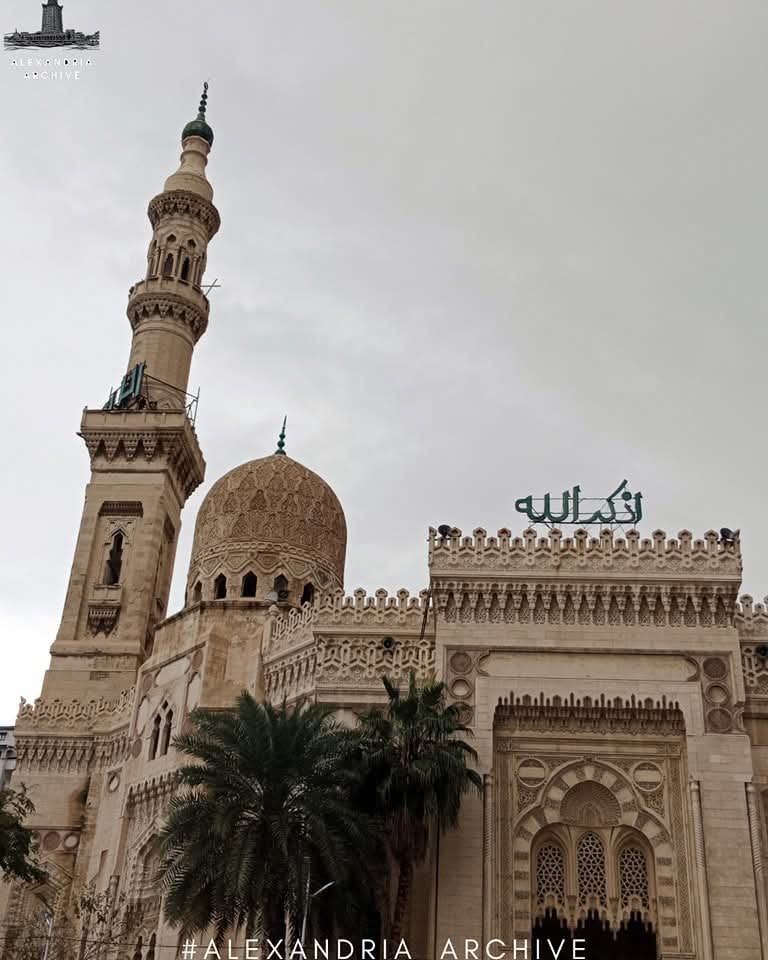
مسجد سيدي المرسي أبو العباس يعتبر من أشهر المساجد المطلة على شاطئ البحر الأبيض المتوسط في الإسكندرية
يوجد المسجد في منطقة بحري بالأنفوشي داخل مجمع مساجد ويطل على الميناء الشرقي
ينسب المسجد إلى أبو العباس المرسي وهو عالم دين صوفي أندلسي من كبار الشيوخ الذين لديهم نزعة للصوفيه في الإسكندرية والتي عاش ودرس فيها ٤٣ سنه وتم تأسيسه ١٧٧٥
بُني المسجد على الطراز الأندلسي وبه الأعمدة الرخامية والنحاسية وأعمدة مثمنة الشكل وتعلو القبه الغربية ضريح أبي العباس وولديه.
بدء مرحلة تجديد المسجد في سنة ٨٨٢ هـ الموافق ١٤٨٨م حيث كان قد ضربه الإهمال فأعاد بناءه الأمير قجماس الأسحاقي الظاهري، أيام ولايته على الإسكندرية في عصر الملك الأشرف قايتباي، وبنى لنفسه قبرًا بجوار أبي العباس ودفن فيه سنة ٨٩٢ هـ، وفي عام ١٠٠٥ هـ الموافق ١٥٩٦ه جدد بناءه الشيخ أبو العباس النسفي الخزرجي، وفي عام ١١٧٩ هـ الموافق ١٧٧٥م وفد الشيخ أبو الحسن علي بن علي المغربي، إلى الإسكندرية وزار ضريح أبي العباس المرسي فرأى ضيقه فجدد فيه كما جدد المقصورة والقبة ووسع في المسجد.
وأصاب المسجد التهدم في عام ١٢٨٠ هـ الموافق ١٨٦٣ م وصارت حالته سيئة قام أحمد بك الدخاخني، شيخ طائفة البنائين بالإسكندرية، بترميمه وتجديده وأوقف عليه وقفا، وأخذ نظار وقفه فيما بعد في توسعته
وظل المسجد كذلك حتى أمر الملك فؤاد الأول، بإنشاء ميدان فسيح يطلق عليه ميدان المساجد على أن يضم مسجدا كبيرا لأبي العباس المرسي، ومسجدًا للإمام البوصيري، والشيخ ياقوت العرش، ووضع التصميم الحالي له المهندس المعماري الإيطالي ماريو روسي، وتم الانتهاء من بنائه عام ١٩٤٣م.
#أرشيف_الإسكندرية
Sidi al-Mursi Abu al-Abbas Mosque
The Sidi al-Mursi Abu al-Abbas Mosque is one of the most famous mosques overlooking the Mediterranean Sea in Alexandria.
The mosque is located in the Bahari district of Anfoushi, within a complex of mosques, and overlooks the Eastern Harbor.
The mosque is named after Abu al-Abbas al-Mursi, an Andalusian Sufi scholar and one of the leading sheikhs in Alexandria known for his Sufi leanings. He lived and studied in Alexandria for 43 years, and the mosque was founded in 1775.
The mosque was built in the Andalusian style and features marble and copper columns, as well as octagonal columns. The western dome houses the tomb of Abu al-Abbas and his two sons.
The mosque's renovation began in 882 AH (1488 CE), after it had fallen into disrepair. Prince Qajmas al-Ishaqi al-Zahiri rebuilt it during his governorship of Alexandria under Sultan al-Ashraf Qaytbay. He also built a tomb for himself next to Abu al-Abbas and was buried there in 892 AH. In 1005 AH (1596 CE), Sheikh Abu al-Abbas al-Nasafi al-Khazraji renovated it. Then, in 1179 AH (1775 CE), Sheikh Abu al-Hasan Ali ibn Ali al-Maghribi visited Alexandria and, finding the shrine of Abu al-Abbas al-Mursi cramped, renovated it, along with the prayer niche and dome, and expanded the mosque.
The mosque fell into disrepair in 1280 AH (1863 CE). Ahmad Bey al-Dakhakhni, the head of the builders' guild in Alexandria, restored and renovated it, endowing it with a waqf (religious endowment). Later, the administrators of this waqf expanded the mosque.
The mosque remained in this state until King Fuad I ordered the construction of a spacious square called the Square of Mosques, to house a large mosque dedicated to Abu al-Abbas al-Mursi, a mosque dedicated to Imam al-Busiri, and a mosque dedicated to Sheikh Yaqut al-Arsh. The current design was created by the Italian architect Mario Rossi, and construction was completed in 1943 CE.