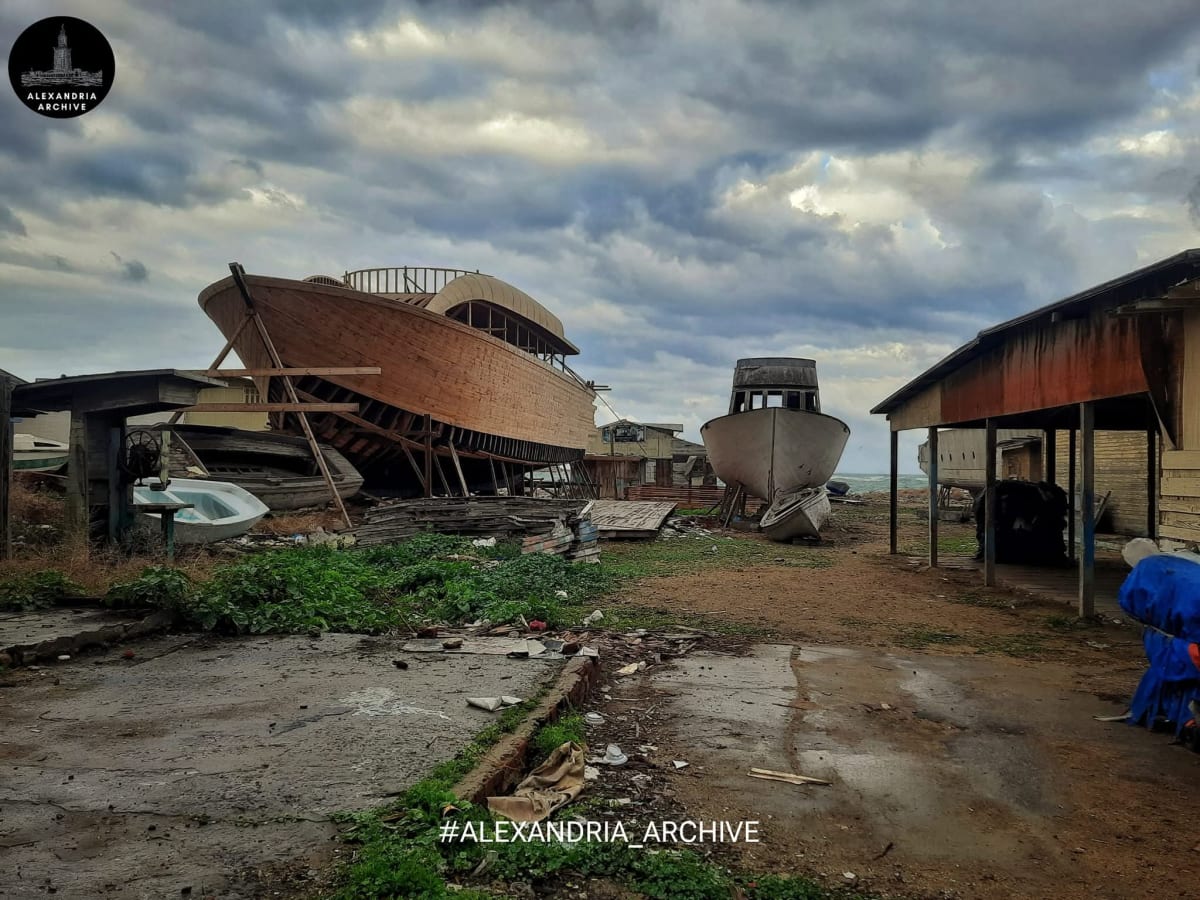
في منطقة بحري - الاسكندرية التي يعد البحر العنصر الجغرافي الأهم بها ، تحديداً بجوار شاطيء الانفوشي التابع لحي الجمرك بالقرب من قلعة قايتباي ، توجد اقدم ترسانة لصناعة و اصلاح السفن بالمدينة في اقدم احيائها بشكل خاص و في الدولة بشكل عام ، و التي لم تقتصر علي صناعة السفن فقط بل اشتملت أيضا صناعة مراكب الصيد و اليخوت السياحية بجانب السفن ،
أنشأها محمد على باشا عام ١٨٢٦ م ، لتكون واجهة بحرية تقاوم التحديات ومخاطر الحروب و تكون مركز الأسطول البحري الذب يدافع عن البلاد ، و تمركزت بها صناعة السفن منذ ذلك الحين ، و هي تجمع بين عدد من الورش المتجاورة يصل عددها إلى نحو 64 ورشة ، و يعمل بها أمهر النجارين و الحرفيين و المتخصصين بصناعة السفن و الذين كانوا يتوارثون تلك الحرفة بين الأجيال مدة عقود متتالية و اعتبروها مصدر رزق و كسب الأموال لهم ، و أول حرفى بالمنطقة هو المعلم عرب الدركيشة والحاج حمدى ولده ، و يعد كأحد شيوخ المهنة بالإسكندرية ، و يشارك بتلك الصناعة عدة تخصصات حيث يشارك النجار ، الحداد ، "الاستورجي" لدهانات الخشب ، حتي يجهزوا السفن علي مقاعد حديدية لجر السفن الي الشاطئ لتبدأ بالإبحار ، فكانت تلك الصناعة هي الأشهر في الاسكندرية و التي ترجع إلي زمن الملك فؤاد علي مدار ما يقرب من 200 عام و هي تعمل حتى الآن ،
في البداية كان مكان ورش صناعة السفن بجوار قصر الملك فاروق ، و لكنه أمر بنقل الورش لمنطقة الأنفوشي ، كما أن الورشة عاصرت الخديوي اسماعيل و الملك فاروق و شهدت علي تغير شكل السفن بداية من المراكب الشراعية حتي شكلها المتعارف عليه الآن بمختلف أحجامها ، حيث تبدأ احجام السفن من ٣ أمتار و تصل إلي ٦٠ متر ، و يتم تصنيعها باستخدام اخشاب مصرية مثل خشب 'شجرة التوت" أو " الكافور " أو " السنط " بالنسبة لمراكب الصيد ، نظراً لقدرتها الكبيرة على تحمل مياه البحر والأمواج ، أما السفن فأفضل نوع خشب لها هو خشب "الآرو" ، " الموجنو " ، " السويد" ،
"الزان"، "الأبلكاش" ، "الصويط " ، و " التك " وتصل تكلفة المتر إلى 24 ألف جنيه ، وحول تكلفة السفينة فهي قد تصل إلى 3 ملايين جنيه وفقا لتكلفة الأخشاب والأدوات المستخدمة فى الصناعة والتنجيد والدهانات ، وقد يستغرق إنشاء السفينة الواحدة عام تقريبا حتى تصبح جاهزة للإبحار ،
صناعة السفن و المراكب تواجه تحديات و أزمات كبيرة ، منها صدور قرار عام 2004 بوقف تراخيص السفن السياحية، ثم أزمة "فيروس كورونا"، والذى أدى إلى كساد حركة السياحة فى كل دول العالم ، خاصة وأن السفن التى يتم تصنيعها بتلك الورش معظمها سفن سياحية، وتعمل فى مجال السياحة خاصة بالإسكندرية وشرم الشيخ و الغردقة ، ولكن مازالت المهنة تصارع الإندثار ، ومازال صناع السفن المهرة -و هم عدد قليل - يسعوا الي بناء السفن الجديدة أو تجديد و اصلاح القديم منها حتي لا تنهار الصناعة بأكملها ، و تستمر بمقاومة الزمان و التصدي له و محاولة الاستمرار حتي لو بزبائن اقل و إقبال ضعيف ، لكي لا يضيع الأبناء مجهود ابائهم و أجدادهم الذين بذلوا جهوداً كبيرة لإنجاح تلك الصناعة و إتقانها ،
اتجه بعض أصحاب الورش الي استغلال الورش في اوقات فراغهم و صنع نماذج مصغرة من المراكب الديكور و التحف كهواية و شغف لهم و هي تكون مصنوعة يدويا لافتا ، و تطلب صناعة مراكب الديكور الي دقة و روح فنية متقنة حتي يتم إصدار افضل النتائج بجودة عالية بأقل الادوات البدائية ، و اسعارها تكون اسعار رمزية تبدأ من ٢٥ جنيه ، و تلك كلها محاولات للحفاظ على التراث الخاص بالمدينة و منطقة بحري بشكل خاص و إعادة إحياء للاحتراف و اتقان تلك الصناعة ، و الاحتفاظ بالمهنة الأصلية للورش
#أرشيف_الإسكندرية
Oldest cypress
In the Bahari district of Alexandria, where the sea is the most important geographical element, specifically near Anfoushi Beach in the Al-Gomrok district, close to the Qaitbay Citadel, lies the oldest shipyard for shipbuilding and repair in the city, and indeed in the country as a whole. This shipyard not only built ships but also fishing boats and tourist yachts.
It was established by Muhammad Ali Pasha in 1826 AD to serve as a maritime stronghold against the challenges and dangers of war, and as the center of the naval fleet defending the country. Shipbuilding has been concentrated there ever since. It comprises approximately 64 adjacent workshops, employing the most skilled carpenters, craftsmen, and shipbuilding specialists, who have inherited their craft from generation to generation for decades, considering it their livelihood. The first craftsman in the area was Master Arab Al-Darkisha, and his son, Haj Hamdi, is considered one of the elders of the profession in Alexandria. Several specialties are involved in this industry, including carpentry and blacksmithing. The "Astorgi" (woodworkers) were skilled in wood finishing and preparing ships on iron benches to haul them to shore before setting sail. This industry was the most famous in Alexandria, dating back to the reign of King Fuad and continuing for nearly 200 years.
Initially, the shipbuilding workshops were located near King Farouk's palace, but he ordered their relocation to the Anfoushi area. The workshops witnessed the reigns of Khedive Ismail and King Farouk, and saw the evolution of ships from sailboats to the various sizes we know today. Ships range in size from 3 meters to 60 meters, and are built using Egyptian woods such as mulberry, eucalyptus, or acacia for fishing boats, due to their high resistance to seawater and waves. For larger ships, the best types of wood are oak, mahogany, pine, beech, plywood, slate, and teak.
Other woods used include beech, plywood, holm oak, and teak. The cost per meter reaches 24,000 Egyptian pounds, and the cost of a ship can reach 3 million Egyptian pounds, depending on the cost of wood, tools used in manufacturing, upholstery, and paints. Building a single ship can take approximately a year until it is ready to sail.
The shipbuilding industry faces significant challenges and crises, including the 2004 decision to halt the issuance of licenses for tourist ships, followed by the COVID-19 pandemic, which led to a global tourism slump. This is particularly impactful as most of the ships manufactured in these workshops are tourist vessels, operating in the tourism sector, especially in Alexandria, Sharm El Sheikh, and Hurghada. However, the profession continues to struggle against extinction. The few remaining skilled shipbuilders strive to build new ships or renovate and repair old ones to prevent the entire industry from collapsing. They persevere, resisting the passage of time and attempting to survive, even with fewer customers and weak demand, so that the efforts of their fathers and grandfathers, who dedicated themselves to the success and mastery of this industry, are not lost.
Some workshop owners have begun utilizing their workshops in their spare time and Creating miniature models of decorative boats and artifacts is a hobby and passion for many. These handcrafted pieces are remarkable, requiring precision and a refined artistic spirit to produce high-quality results using minimal tools. Their prices are symbolic, starting from 25 Egyptian pounds. All of this is an effort to preserve the heritage of the city, particularly the Bahari district, and to revive the professionalism and mastery of this craft, thus preserving the original profession of the workshops.