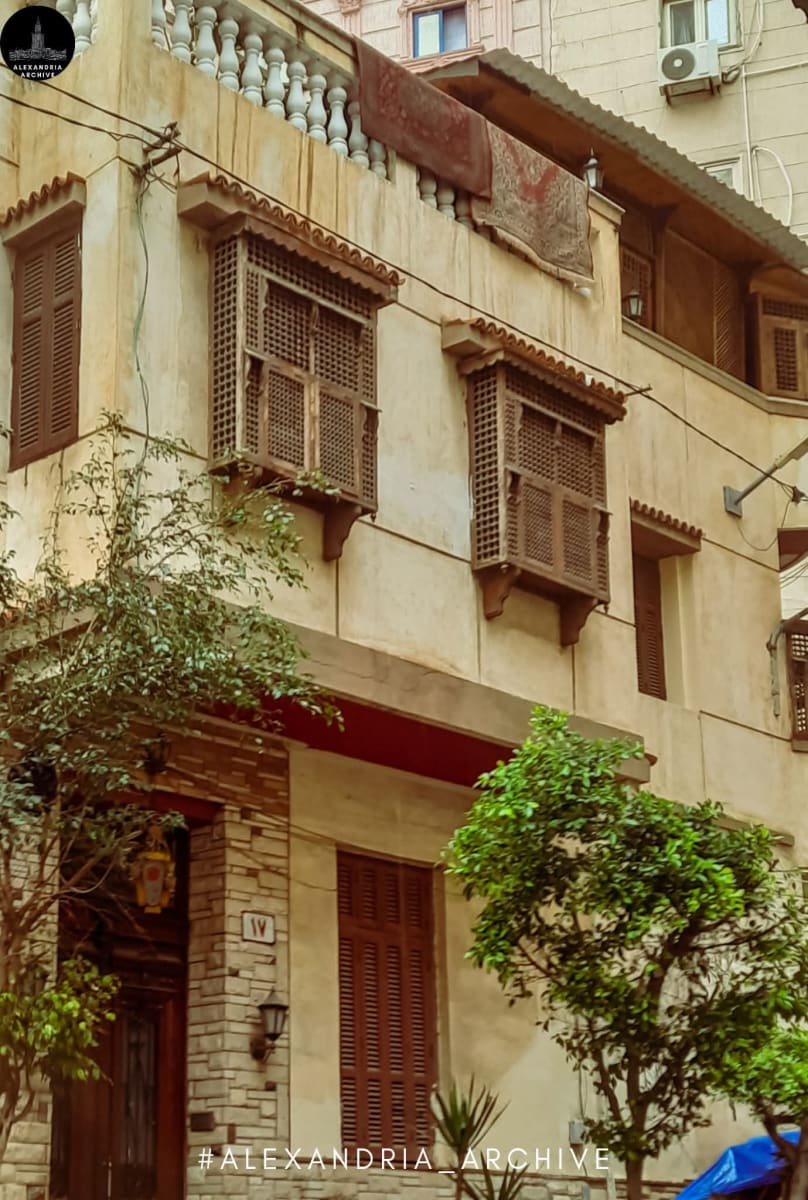
في إحدى شوارع بحري القديمة يوجد مبنی مازال محتفظ بالمشربيةبالرغم من التطور المعماري، فهي تعتبر رمزا لتراث بحري العريق.
تعد المشربية مكون من مكونات العمارة التقليدية في البلاد العربية وكان بداية وجودها في القرن السادس الهجري الثالث عشر الميلادي في العصر العباسي ، واستكمل استخدامها حتى أوائل القرن العشرين الميلادي
كانت المشربِيَّة في الماضي عبارة عن حيز بارز ذي فتحة منخلية توضع NDR فيها جرار الماء الصغيرة لتبرد بفعل التبخر الناتج عن تحرك الهواء عبرالفتحة ، ومن هنا عرفت المشربية بهذا الاسم، إذ إن آنية الماء توضع فيه لتبريدها، ولتبريد الهواء المار فوقها وأيضًا يقال أن المشربية
دون أن تشاهد.
شميت بهذا الاسم لأنها مكان مرتفع يسمح بإشراف النساء على الشارع
هناك عدة أنواع من المشربيات أحدهما مغلق والآخر مفتوح وكانت المفتوحة تمثل شرفة تطل على الشارع أو الفناء وتملؤها النقوش الخشبية حيث تترك مفتوحة حتى تسمح بدخول الهواء والضوء للغرفة، أما المغلقة كانت ممتدة خارج الغرف في الطابق الأول وكانتزخارفها تبطن بالزجاج ونوافذها تفتح عموديا.
كان تصميم المشربية تحفة معمارية، فقد كانت تقدم فوائد جمة لا حصر لها، حيث كانت تسمح بدخول الضوء الطبيعي دون تعرض الغرف لأشعة الشمس مباشرة وتحسين التهوية حيث كانت تسمح بدخول الهواء النقي دون دخول الغبار أو الحشرات بالإضافة إلى الحفاظ على
الخصوصية.
Mashrabiya
In one of the old streets of Bahri, there is a building that still retains its mashrabiya, despite architectural developments. It is considered a symbol of Bahri's rich heritage.
The mashrabiya is a component of traditional architecture in Arab countries. Its origins date back to the 6th century AH (13th century AD) during the Abbasid era, and its use continued until the early 20th century AD.
In the past, the mashrabiya was a projecting space with a latticework opening in which small water jugs were placed to cool through evaporation caused by the air passing through the opening. Hence, the mashrabiya became known as such, as the water containers were placed inside to cool both the water and the air passing over them. It is also said that the mashrabiya was unseen.
It was given this name because it was a raised space that allowed women to look out onto the street.
There are several types of mashrabiyas, some closed and some open. The open type served as a balcony overlooking the street or courtyard and was filled with intricate wooden carvings. It was left open to allow air and light into the room. The closed type extended beyond the rooms on the first floor and its decorations were lined with glass, with windows opening vertically.
The mashrabiya was an architectural masterpiece, offering countless benefits. It allowed natural light to enter without exposing the rooms to direct sunlight, improved ventilation by allowing fresh air in while keeping dust and insects out, and also maintained privacy.