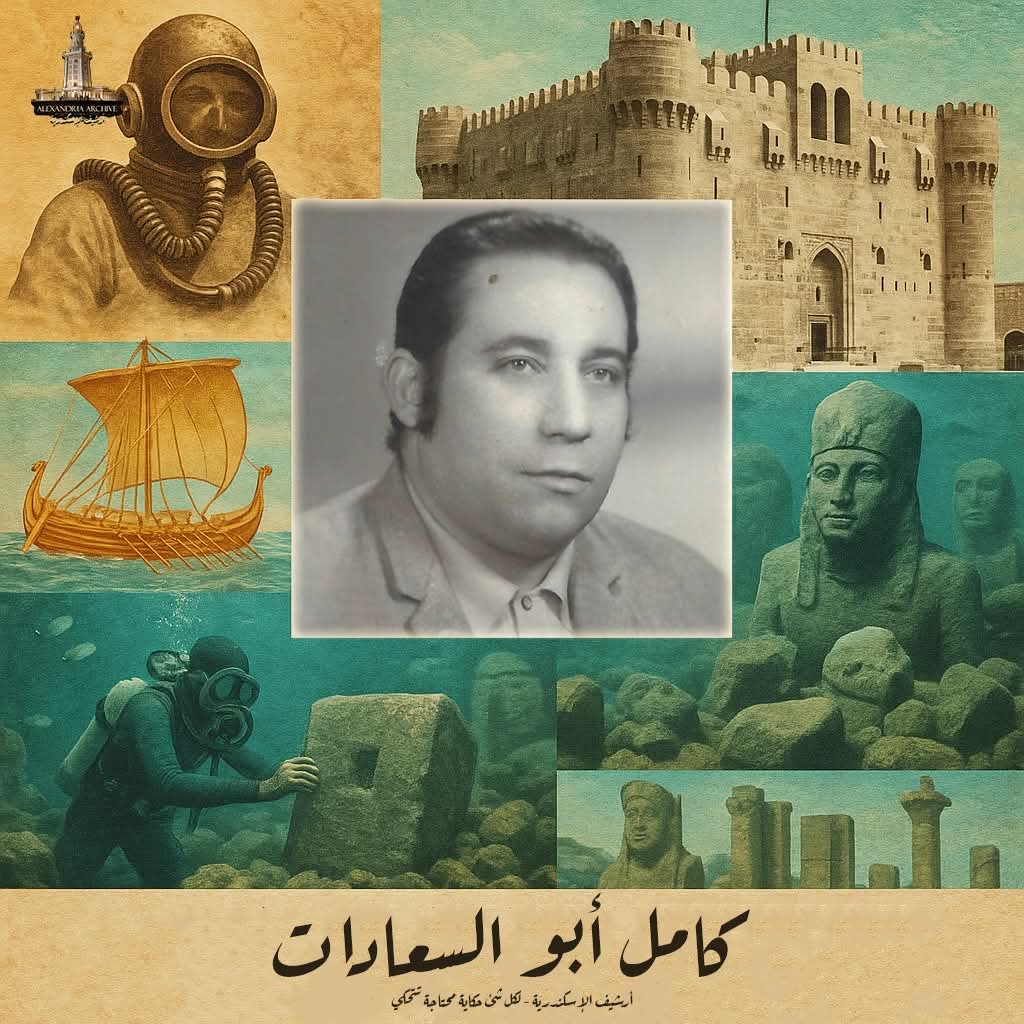
كامل أبو السعادات (1934-1984) كان غواصًا مصريًا سكندريًا، يُعد أحد أبرز رواد علم "الآثار الغارقة" في مصر والعالم العربي. ترك بصمة في تاريخ الاستكشاف البحري بعمله الفردي المذهل على مدى أكثر من عقدين، إذ جمع بين حبه للغوص وبحثه عن الكنوز المطمورة تحت سطح البحر، وأصبح أحد أهم أعمدة التنوير الأثري لمواقع الإسكندرية الغارقة.
البدايات والمسيرة
وُلد أبو السعادات في الإسكندرية عام 1934، وكان مولعًا بالبحر منذ طفولته. تعلم الغوص بنفسه، فاستطاع بمهارته الفريدة في حبس النفس ولطف الحركة تحت الماء أن يكتسب القدرة على استكشاف الأعماق دون أجهزة متطورة، ثم تدرّج بعد ذلك في تعلم تقنيات الغوص المستمر والأجهزة الحديثة التي بدأت تنتشر لاحقًا.
عُرف أبو السعادات بشغفه بالبحث عن آثار "الأرض المفقودة" داخل الموانئ، لاسيما الميناء الشرقي وقلعة قايتباي، حيث اكتشف لأول مرة هندسة عمرانية كاملة مخبأة تحت مياه الإسكندرية. ومن هذه الاكتشافات تمثال الإلهة "إيزيس" والتماثيل اليونانية، بالإضافة إلى تماثيل أوتو نتماثيل أوتو نتماثيل، وأوانٍ فخارية، وسفن غارقة كاملة، حتى بقايا مسلات كبيرة، وعلى الرغم من افتقاده إلى التمويل والدعم الرسمي، إلا أنه واصل عمله بدافع حب المعرفة والاكتشاف.
الاكتشافات العظيمة وإثراء المعرفة البشرية
في الستينيات والسبعينيات، جلس أبو السعادات على قمّة التأثير في مجال الغوص الأثري. ففي عام 1961 اكتشف معالم أولية قادت إلى الكشف عن آثار الميناء الشرقي. في عام 1962 ساعدت جهوده في انتشال تمثال لمن يرتدي عباءة من حجر الجرانيت بطول 1.70 متر، وفي عام 1964 رسم أول خريطة لمواقع الآثار الغارقة بالبوغاز ما يزال الباحثون يعتمدون عليها حتى اليوم.
وفي قلعة قايتباي والميناء الشرقي و"رأس لوكياس"، وثّق كامل مواقع قصور البطالمة والمباني الرومانية التي غرقتها السيول والزلازل، كما ساهم في العمل المشترك مع اليونسكو لرسم خرائط علمية دقيقة للآثار الغارقة وتحديد مناطق البحث.
ومن أبرز إنجازاته أيضًا مشاركته في البحث عن بقايا أسطول نابليون بونابرت الذي غرق في خليج أبو قير عام 1799، إذ ساعد في تحديد مواقع السفن الثلاث الرئيسية: «الأوريان»، «السيريوس»، و«الجورييه».
إنجازات وإنشاء علم "الآثار الغارقة"
يعد كامل أبو السعادات المؤسس الفعلي لعلم الآثار الغارقة في مصر، إذ كان أول من نادى بضرورة التنقيب تحت الماء، ووضع مشروعًا علميًا لكشف وتوثيق مواقع الآثار الغارقة. اعترفت له السلطات الدولية بهذا الدور، ومنحت الحكومة الفرنسية ميدالية تذكارية عام 1997 تسلمها أخوه بعد وفاته.
الوفاة الغامضة والإرث المتبقي
توفي أبو السعادات عام 1984 في حادث غوص مفاجئ أثناء عمله على متن سفينة بحث في خليج أبو قير، ويُعتقد أن الوفاة قد تكون حادثة حقيقية أو نتيجة تسرب حادثة صعود نادر، لكن بعض الباحثين أشاروا إلى احتمال أن تكون وفاته مرتبطة باكتشافات حساسة تتعلق بأسطول نابليون.
رغم وفاته، بقي إرثه حيا. فقد أصبح المتحف اليوناني الروماني في الإسكندرية يقدّر إنجازاته بإنشاء معرض تحمل وثائقه وخرائطه بأسماء «معرض كامل أبوالسعادات للآثار الغارقة»، كما تُعد الخرائط التي رسمها المصدر الأول لكل الدراسات الأثرية المتعلقة بالإسكندرية المغمورة لحد الآن.
خلاصة القول
كامل أبو السعادات لم يكن غواصًا فقط، بل كان أول من رسم أفقًا جديدًا لعلم الآثار تحت الماء، متحديًا القيود وعدم توفر الموارد، ليحوّل شغفه العظيم بالبحر إلى وظيفة علمية تتجاوز الوطن وتُسجل في سجل التراث العالمي. بفضل رؤياه وشجاعته، أصبح بالإمكان للعلماء والباحثين في وقتنا اليوم التسلل إلى أعماق البحر بكاميراتهم وأدواتهم، في حين ناهض البحار بنظره الحاد منذ عقود، مفكّرًا في الماضي ومكتشفًا حضارات العالم المغمورة.
#أرشيف_الإسكندرية
#alexandria_archive
Kamel Abu Al-Saadat (1934-1984)
Kamel Abu El Saadat (1934-1984) was an Alexandrian Egyptian diver, considered one of the most prominent pioneers of underwater archaeology in Egypt and the Arab world. He left an indelible mark on the history of marine exploration with his remarkable solo work over more than two decades, combining his love of diving with his search for buried treasures beneath the sea's surface. He became a key figure in illuminating the archaeological sites of Alexandria's submerged territories.
Early Life and Career
Abu El Saadat was born in Alexandria in 1934 and was fascinated by the sea from childhood. He taught himself to dive, and his unique skill in holding his breath and moving gracefully underwater enabled him to explore the depths without sophisticated equipment. He then gradually progressed in learning continuous diving techniques and the modern equipment that later became widespread.
Abu El Saadat was known for his passion for searching for the remains of the "lost land" within the ports, particularly the Eastern Harbor and the Citadel of Qaitbay, where he was the first to discover a complete architectural structure hidden beneath the waters of Alexandria. Among these discoveries were a statue of the goddess Isis and other Greek statues, as well as statues of Utu, pottery, complete sunken ships, and even the remains of large obelisks. Despite lacking funding and official support, he continued his work driven by a love of knowledge and discovery.
Great Discoveries and the Enrichment of Human Knowledge
In the 1960s and 1970s, Abu al-Saadat was at the forefront of the field of archaeological diving. In 1961, he discovered initial features that led to the excavation of the Eastern Harbor. In 1962, his efforts helped in the recovery of a 1.70-meter-tall granite statue of a man wearing a cloak. In 1964, he drew the first map of the submerged archaeological sites in the Bosphorus, a map that researchers still rely on today.
At Qaitbay Citadel, the Eastern Harbor, and Ras Luqyas, Kamel documented the locations of Ptolemaic palaces and Roman buildings submerged by floods and earthquakes. He also contributed to collaborative work with UNESCO to create accurate scientific maps of underwater archaeology and define research areas.
Among his most notable achievements was his participation in the search for the remains of Napoleon Bonaparte's fleet, which sank in Abu Qir Bay in 1799. He helped locate the three main ships: the Orient, the Sirius, and the Gourier.
Achievements and the Establishment of Underwater Archaeology
Kamel Abu El-Saadat is considered the true founder of underwater archaeology in Egypt. He was the first to advocate for underwater excavation and developed a scientific project to uncover and document submerged archaeological sites. International authorities recognized his role, and the French government awarded him a commemorative medal in 1997, which was accepted by his brother posthumously.
The Mysterious Death and the Enduring Legacy
Kamel Abou El Saadat died in 1984 in a sudden diving accident while working on a research vessel in Abu Qir Bay. It is believed that his death may have been a genuine accident or the result of a rare surface leak, but some researchers have suggested that his death might be linked to sensitive discoveries concerning Napoleon's fleet.
Despite his death, his legacy lives on. The Greco-Roman Museum in Alexandria honors his achievements by establishing an exhibition of his documents and maps, named the "Kamel Abou El Saadat Exhibition of Underwater Antiquities." His maps remain the primary source for all archaeological studies of submerged Alexandria to this day.
In Short
Kamel Abou El Saadat was not just a diver; he was a pioneer in underwater archaeology, defying limitations and a lack of resources to transform his profound passion for the sea into a scientific career that transcends national boundaries and is now recognized as a World Heritage Site. Thanks to his vision and courage, scientists and researchers today can delve into the depths of the sea with their cameras and equipment, while decades ago, this sailor, with his keen insight, pondered the past and discovered the world's submerged civilizations.