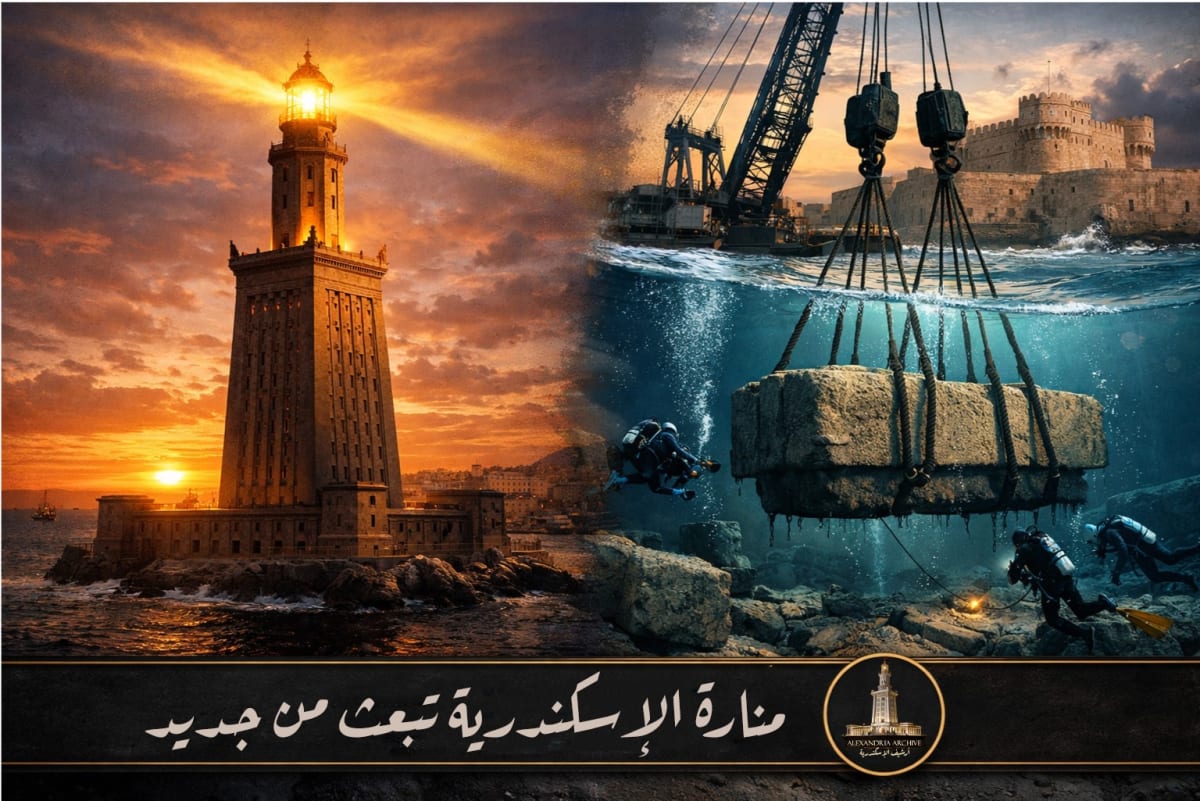
The Lighthouse of Alexandria rises again: Giant stone blocks are recovered from the seabed after two thousand years.
Eslam Ali —
في تطور أثري وعلمي بارز، وبعد قرون من الغرق تحت أمواج البحر الأبيض المتوسط، تمكنت بعثة أثرية دولية من انتشال 22 كتلة حجرية ضخمة من بقايا منارة الإسكندرية القديمة، إحدى عجائب الدنيا السبع. يمثل هذا الاكتشاف خطوة محورية ضمن الجهود الرامية إلى إعادة بناء هذا الصرح التاريخي رقمياً.
تفاصيل عملية الانتشال والاكتشافات المعمارية
قادت هذه العملية الأثرية الدقيقة عالمة الآثار والمهندسة المعمارية الفرنسية إيزابيل هيري (Isabelle Hairy)، من المركز الوطني الفرنسي للبحث العلمي (CNRS). تأتي هذه المهمة في إطار مشروع "فاروس" (PHAROS project)، الذي يهدف إلى دراسة وتوثيق بقايا المنارة. وقد جرت أعمال الانتشال تحت إشراف مباشر من وزارة السياحة والآثار المصرية.
شملت القطع الأثرية التي تم انتشالها بعضاً من أبرز العناصر المعمارية للمنارة، والتي تعد أيقونية في تصميمها وهندستها. من بين هذه العناصر:
• الأعتاب والقوائم: وهي أجزاء من مدخل صرحي هائل، يزن كل منها ما بين 70 إلى 80 طناً. هذه الأوزان الهائلة تعكس ضخامة البناء الأصلي والتقنيات الهندسية المتقدمة التي استخدمت في تشييده.
• عتبة ضخمة: كانت جزءاً من المدخل، مما يضيف تفصيلاً مهماً لتصميم البوابة الرئيسية للمنارة.
• بلاطات تأسيس كبيرة: تشير إلى الأساسات القوية التي ارتكزت عليها المنارة، والتي مكنتها من الصمود لقرون طويلة.
• أجزاء من صرح (Pylon) غير معروف سابقاً: يتميز هذا الصرح بمدخل يجمع بين خصائص التصميم المصري القديم وأساليب البناء اليونانية، مما يسلط الضوء على التلاقح الثقافي والفني الذي شهدته الإسكندرية في العصر الهلنستي.
التوثيق الرقمي وإعادة التصور الافتراضي
تساهم هذه الاكتشافات الجديدة في إثراء الأرشيف الرقمي المتنامي للموقع الأثري. فخلال العقد الماضي، تم مسح أكثر من 100 قطعة معمارية غارقة ضوئياً. ستخضع الكتل التي تم انتشالها مؤخراً لعمليات معالجة فوتوغرامترية (Photogrammetric processing) متقدمة، وهي تقنية تسمح بإنشاء نماذج ثلاثية الأبعاد دقيقة للأجسام من خلال صور متعددة.
بعد هذه المعالجة، سيتم تسليم البيانات الناتجة إلى مهندسين من مؤسسة داسو سيستمز (La Fondation Dassault Systèmes). يهدف هذا التعاون إلى إعادة وضع الكتل افتراضياً في مواقعها الأصلية ضمن نموذج رقمي شامل للمنارة. هذا النموذج لن يكشف فقط عن هيئة المنارة المهيبة كما كانت قائمة، بل قد يساعد أيضاً في فهم كيفية انهيارها وتفككها عبر الزمن.
امتداد لأبحاث سابقة تحت الماء
تعتبر هذه الأعمال استكمالاً للأبحاث الرائدة التي بدأت في عام 1995، عندما اكتشف عالم الآثار جان إيف إمبيرور (Jean-Yves Empereur)، مؤسس مركز الدراسات السكندرية (CEAlex)، بقايا المنارة الغارقة تحت الماء. وقد ساهمت جهوده المبكرة في تكوين صورة أوضح للمخطط الأصلي للمنارة وأطلقت دراسات طويلة الأمد للحفاظ على الموقع.
منارة الإسكندرية: أعجوبة عصرها
شُيدت منارة الإسكندرية في أوائل القرن الثالث قبل الميلاد، وتحديداً في العصر الهلنستي، تحت حكم بطليموس الأول سوتر (Ptolemy I Soter)، أحد قادة الإسكندر الأكبر وخليفته في مصر. بلغ ارتفاع المنارة أكثر من 100 متر، وكانت بمثابة معلم بحري حيوي يرشد السفن في الملاحة على طول الساحل الصخري للمدينة، كما كانت رمزاً للأهمية الاستراتيجية والثقافية للإسكندرية كمركز حضاري وتجاري في حوض البحر الأبيض المتوسط.
وفقاً للمؤرخ والجغرافي اليوناني سترابو (Strabo)، فإن المهندس المعماري اليوناني سوستراتوس من كنيدوس (Sostratus of Cnidus)، وهو صديق مقرب لبطليموس، هو من قام بتصميم وبناء المنارة، ويُعتقد أنه مول أعمال البناء أيضاً.
اعتبرت المنارة على نطاق واسع أول ناطحة سحاب في العالم، وظلت قائمة لأكثر من 1600 عام قبل أن تتضرر بشدة جراء سلسلة من الزلازل المدمرة. وفي نهاية المطاف، تم تفكيك أجزائها المتبقية واستخدام حجارتها كمواد بناء في تشييد قلعة قايتباي عام 1477، والتي لا تزال قائمة حتى اليوم في موقع المنارة الأصلي.
سد الفجوات التاريخية بالبحث العلمي
يجمع مشروع "فاروس" (PHAROS project) نخبة من المتخصصين في مجالات متعددة، بما في ذلك علماء الآثار، والمهندسون المعماريون، والمؤرخون، وخبراء العملات. يهدف المشروع إلى جمع وتوثيق الأوصاف القديمة، والرسوم التوضيحية، والأدلة التاريخية التي تغطي الفترة من أواخر القرن الرابع قبل الميلاد وحتى القرن الخامس عشر الميلادي.
تساعد هذه السجلات التاريخية في سد الفجوات المعرفية التي خلفتها البقايا المادية للمنارة، والتي تقلصت بشكل أكبر بعد استخدام حجارتها في بناء قلعة قايتباي.
ولادة رقمية لصرح مفقود
في عام 2025، قامت شركة الإنتاج GEDEON بتصوير المهمة الحالية لإنتاج فيلم وثائقي جديد مدته 90 دقيقة، من إخراج لورانس ثيريات (Laurence Thiriat). من المقرر عرض الفيلم في أوقات الذروة على قناة فرانس تيليفيزيون (France Télévisions)، ليقدم للمشاهدين فرصة فريدة لمتابعة قصة ولادة هذا الصرح الأثري المفقود من جديد.
مع صعود هذه الأحجار القديمة من أعماق البحر، تبدأ منارة الإسكندرية في الظهور مرة أخرى، ليتم إعادة بنائها افتراضياً، قطعة بقطعة، من خلال تضافر جهود العلم والتاريخ والخيال.
أرشيف الإسكندرية | Alexandria Archive
In a significant archaeological and scientific development, after centuries of being submerged beneath the waves of the Mediterranean Sea, an international archaeological mission has recovered 22 massive stone blocks from the remains of the ancient Lighthouse of Alexandria, one of the Seven Wonders of the Ancient World. This discovery represents a pivotal step in the efforts to digitally reconstruct this historical monument.
Details of the Recovery and Architectural Discoveries
This meticulous archaeological operation was led by French archaeologist and architect Isabelle Hairy, from the French National Centre for Scientific Research (CNRS). The mission is part of the PHAROS project, which aims to study and document the remains of the lighthouse. The recovery work was carried out under the direct supervision of the Egyptian Ministry of Tourism and Antiquities.
The recovered artifacts include some of the lighthouse's most prominent architectural elements, iconic in their design and engineering. Among these elements are:
• Thresholds and columns: These are parts of a monumental entrance, each weighing between 70 and 80 tons. These enormous weights reflect the sheer scale of the original structure and the advanced engineering techniques employed in its construction.
• A massive threshold: This was part of the entrance, adding an important detail to the design of the lighthouse's main gateway.
• Large foundation slabs: These indicate the strong foundations upon which the lighthouse rested, enabling it to stand for centuries.
• Fragments of a previously unknown pylon: This pylon features an entrance that combines elements of ancient Egyptian design with Greek construction techniques, highlighting the cultural and artistic fusion that Alexandria experienced during the Hellenistic period.
Digital Documentation and Virtual Reconstruction
These new discoveries contribute to the growing digital archive of the archaeological site. Over the past decade, more than 100 submerged architectural elements have been scanned. The recently recovered blocks will undergo advanced photogrammetric processing, a technique that allows for the creation of accurate 3D models of objects from multiple images.
Following this processing, the resulting data will be handed over to engineers at Dassault Systèmes. This collaboration aims to virtually reconstruct the blocks in their original positions within a comprehensive digital model of the lighthouse. This model will not only reveal the imposing lighthouse as it once stood but may also help in understanding how it deteriorated and fell apart over time.
Building on Previous Underwater Research
This work builds upon pioneering research that began in 1995 when archaeologist Jean-Yves Empereur, founder of the Center for Alexandrian Studies (CEAlex), discovered the submerged remains of the lighthouse. His early efforts contributed to a clearer picture of the lighthouse's original layout and launched long-term conservation studies of the site.
The Lighthouse of Alexandria: A Marvel of Its Time
The Lighthouse of Alexandria was built in the early 3rd century BC, during the Hellenistic period, under the rule of Ptolemy I Soter, one of Alexander the Great's generals and his successor in Egypt. The lighthouse stood over 100 meters tall and served as a vital maritime landmark, guiding ships along the city's rocky coastline. It was also a symbol of Alexandria's strategic and cultural importance as a center of civilization and trade in the Mediterranean basin.
According to the Greek historian and geographer Strabo, the lighthouse was designed and built by the Greek architect Sostratus of Cnidus, a close friend of Ptolemy, who is also believed to have financed the construction.
Widely considered the world's first skyscraper, the lighthouse stood for over 1,600 years before being severely damaged by a series of devastating earthquakes. Eventually, its remaining sections were dismantled, and its stones were used as building materials in the construction of the Citadel of Qaitbay in 1477, which still stands today on the original lighthouse site.
Bridging Historical Gaps with Scientific Research
The PHAROS project brings together a select group of specialists from various fields, including archaeologists, architects, historians, and numismatists. The project aims to collect and document ancient descriptions, illustrations, and historical evidence covering the period from the late 4th century BC to the 15th century AD.
These historical records help fill the knowledge gaps left by the physical remains of the lighthouse, which were further diminished after its stones were used in the construction of the Citadel of Qaitbay.
A Digital Rebirth of a Lost Monument
In 2025, the production company GEDEON filmed the current project to produce a new 90-minute documentary, directed by Laurence Thiriat. Scheduled for primetime broadcast on France Télévisions, the film offers viewers a unique opportunity to follow the story of the rebirth of this lost archaeological monument.
As these ancient stones rise from the depths of the sea, the Lighthouse of Alexandria begins to emerge once more, to be virtually reconstructed, piece by piece, through the combined efforts of science, history, and imagination.