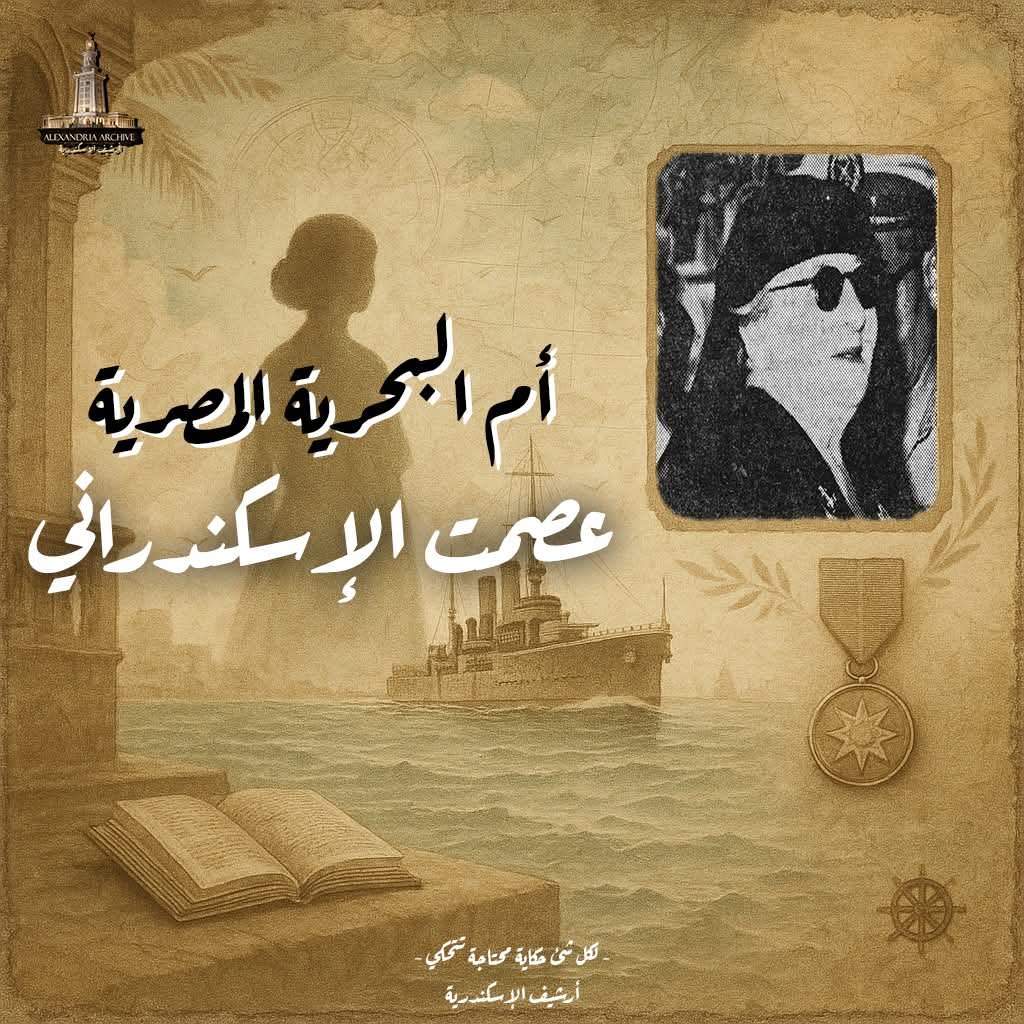
عصمت الإسكندراني.. أم البحرية المصرية وحفيدة أمير البحار
في قلب الإسكندرية، المدينة التي أنجبت عظماء البحر والتاريخ، ولدت عام 1897 واحدة من أعظم سيدات مصر وأكثرهن تفانيًا في خدمة الوطن: السيدة عصمت حسن محسن حسن الإسكندراني، المعروفة بلقب "أم البحرية المصرية"، و"بنت بطوطة مصر". لم تكن مجرد امرأة عادية، بل كانت رمزًا للوطنية الخالصة، والتاريخ، والوفاء لجذور بحرية عريقة تمتد لعصر محمد علي باشا.
جذورها البحرية العريقة
تنتمي عصمت إلى أسرة بحرية عريقة، إذ كانت حفيدة القبطان حسن الإسكندراني، أول من أنشأ وقاد الأسطول المصري الحديث في عهد محمد علي باشا، وقد أطلق عليه لقب "أمير البحار". شارك جدها في معركة نافارين الشهيرة عام 1827، والتي كانت من أبرز المعارك البحرية في تاريخ مصر، واستشهد في حرب القرم عام 1854. أما والدها، حسن محسن باشا، فكان من كبار رجال الدولة، وأمها عزيزة حسن تنتمي إلى أسرة عسكرية مرموقة، فشقيقها عزيز حسن كان من قادة الجيش في حرب البلقان عام 1912.
ثقافتها وتكوينها
تلقت عصمت تعليمها في الإسكندرية، ودرست في المنزل والمدرسة، وأتقنت ثلاث لغات: العربية، الفرنسية، والإنجليزية. منذ صغرها عشقت البحر والسفن، وتأثرت بشدة بتاريخ جدها "أمير البحار"، ما جعلها تهيم بالملاحة والسفر والاستكشاف.
قضت عصمت حوالي 18 عامًا في رحلات بحرية ودراسية زارت خلالها العديد من الدول العربية والأوروبية، مثل لبنان، سوريا، الجزائر، المغرب، الأندلس، فرنسا، بلجيكا، وسويسرا. درست الآثار الإسلامية، وتفقدت المساجد، القلاع، والمكتبات، مما جعلها تلقب بـ "بنت بطوطة" نسبة إلى رحالة المغرب الشهير.
تضحياتها من أجل البحرية المصرية
لم يكن ولاؤها للبحرية مجرد مشاعر، بل تُرجم إلى أفعال عظيمة ونادرة. فعندما اندلعت حرب فلسطين، تبرعت عصمت بسفينة حربية كاملة التجهيز على نفقتها الخاصة للبحرية المصرية، في مشهد نادر من الإيثار والتضحية الوطنية. ولم تكتفِ بذلك، بل أهدت منزلها الفخم في حي رأس التين بالإسكندرية ليكون ناديًا للبحرية المصرية.
وفي وصيتها، وهبت جميع ممتلكاتها، من أراضٍ زراعية، عقارات، وأموال للكلية البحرية، لتدعم بها تعليم وتدريب أجيال من الضباط، وتساعد في نهضة الأسطول المصري، الذي كانت تتمنى أن يضاهي أعظم أساطيل العالم.
تكريمها واعتراف الدولة
في عام 1955، منحها الرئيس جمال عبد الناصر وسام الكمال الذهبي تقديرًا لوطنيتها وإسهاماتها، وبعد أن سُرق الوسام من منزلها، أعاد عبد الناصر إهداءها وسامًا جديدًا، في مناسبة تدشين المتحف البحري بالإسكندرية عام 1960، حيث كانت من أوائل المدعوين.
وكتبت عنها جريدة الجمهورية وقتها:
"هذه السيدة تستطيع أن تدخل مقر القوات البحرية في أي وقت، وتصعد إلى ظهر أي بارجة أو مدرعة دون اعتراض... إنها تنبض كل نقطة من دمها بحب النيل، وهبت كل مليم تملكه للقوات البحرية..."
أمٌ حقيقية للبحارة
عرفها ضباط البحرية وطلبة الكلية البحرية بـ "أمهم"، فكانت تستقبلهم في عيد الأم كل عام بمنزلها، وتعيد على مسامعهم قصص أمجاد البحرية المصرية، وتاريخ الأسطول أيام مجده في القرن التاسع عشر. وكان رقم هاتفها في عزبة شبراخيت رقمًا سريًا لا يعرفه سوى أبنائها من الضباط، وسمحت لهم بالاتصال بها في أي وقت، ليلًا أو نهارًا.
رحيلها وخلود ذكراها
رحلت السيدة عصمت الإسكندراني عن عالمنا في عام 1973، لكن سيرتها بقيت خالدة، كرمز للمرأة المصرية التي جمعت بين العلم والعمل، الوطنية والإيثار، الثقافة والقيادة. هي المرأة التي منحت الوطن سفينة، ومنزلًا، وميراثًا من الحب والانتماء لا يقدّر بثمن.
لقد كانت أم البحرية المصرية بحق، وستظل في ذاكرة الوطن مثالًا حيًا للمرأة التي صنعت التاريخ بصمت، وكتبت فصولًا من المجد البحري لمصر لا تُنسى.
Mother of the Egyptian Navy
Esmat El-Iskandarani: The Mother of the Egyptian Navy and Granddaughter of the Admiral
In the heart of Alexandria, the city that gave birth to great figures of the sea and history, one of Egypt's greatest and most dedicated women was born in 1897: Esmat Hassan Mohsen Hassan El-Iskandarani, known as the "Mother of the Egyptian Navy" and "Egypt's Battuta." She was no ordinary woman; she was a symbol of pure patriotism, historical significance, and unwavering loyalty to a rich maritime heritage that stretches back to the era of Muhammad Ali Pasha.
Her Rich Maritime Roots
Esmat belonged to a distinguished naval family. She was the granddaughter of Captain Hassan El-Iskandarani, the first to establish and command the modern Egyptian fleet during the reign of Muhammad Ali Pasha, and who was given the title "Amir El-Bihar" (Amir of the Seas). Her grandfather participated in the famous Battle of Navarino in 1827, one of the most prominent naval battles in Egyptian history, and was martyred in the Crimean War in 1854. Her father, Hassan Mohsen Pasha, was a high-ranking statesman, and her mother, Aziza Hassan, came from a distinguished military family; her brother, Aziz Hassan, was an army commander in the Balkan Wars of 1912.
Her Culture and Upbringing
Esmat received her education in Alexandria, studying both at home and at school, and became fluent in three languages: Arabic, French, and English. From a young age, she loved the sea and ships, and was deeply influenced by the history of her grandfather, the "Amir al-Bahr" (Admiral of the Seas), which instilled in her a passion for navigation, travel, and exploration.
Esmat spent approximately 18 years on sea voyages and studies, visiting numerous Arab and European countries, including Lebanon, Syria, Algeria, Morocco, Andalusia, France, Belgium, and Switzerland. She studied Islamic antiquities and visited mosques, fortresses, and libraries, which earned her the nickname "Bint Battuta" after the famous Moroccan traveler.
Her Sacrifices for the Egyptian Navy
Her loyalty to the navy was not merely sentimental; it was translated into extraordinary and rare acts. When the Palestine War broke out, Esmat donated a fully equipped warship at her own expense to the Egyptian Navy, in a rare display of altruism and patriotic sacrifice. Not only that, but she also gifted her luxurious home in the Ras El Tin district of Alexandria to serve as a naval club.
In her will, she bequeathed all her possessions—farmland, real estate, and money—to the Naval Academy, to support the education and training of generations of officers and contribute to the revitalization of the Egyptian fleet, which she hoped would rival the world's greatest navies. Honoring Her and State Recognition
In 1955, President Gamal Abdel Nasser awarded her the Order of the Virtues (Gold) in recognition of her patriotism and contributions. After the medal was stolen from her home, Nasser re-presented it to her on the occasion of the inauguration of the Alexandria Maritime Museum in 1960, where she was among the first invitees.
The newspaper Al-Gomhuria wrote about her at the time:
"This woman can enter the naval headquarters at any time and board any battleship or armored vessel without hindrance... Every drop of her blood pulsates with love for the Nile, and she has dedicated every penny she owns to the naval forces..." A True Mother to Sailors
Naval officers and students of the Naval Academy knew her as "their mother." Every year on Mother's Day, she would receive them at her home and recount stories of the glories of the Egyptian Navy and the history of the fleet during its heyday in the 19th century. Her telephone number in Ezbet Shubrakhit was a secret number known only to her sons, the officers, and she allowed them to call her at any time, day or night.
Her passing and the enduring memory of her
Mrs. Esmat El-Iskandarani passed away in 1973,
But her legacy remains immortal, a symbol of the Egyptian woman who combined knowledge and action, patriotism and altruism, culture and leadership. She is the woman who gave the nation a ship, a home, and a priceless legacy of love and belonging.
She was truly the mother of the Egyptian Navy, and she will forever remain in the nation's memory as a living example of a woman who silently made history and wrote unforgettable chapters of Egypt's maritime glory.