Bombardment of Alexandria 1882

نورهان

قصف الإسكندرية

قصف الإسكندرية 1882: الأحداث التي مهدت للاحتلال البريطاني لمصر

لا يُعد قصف الإسكندرية في 11 يوليو 1882 حادثًا منفصلًا عن سياقه، بل يمثل نقطة التحول الفاصلة التي فتحت الطريق أمام الاحتلال البريطاني. ويستند هذا العرض إلى الوثائق الرسمية المصرية، ومحاضر المحاكم المختلطة، ومراسلات الضباط البريطانيين، وتقارير لجنة التحقيق المصرية، بالإضافة إلى أرشيف الصحافة المصرية مثل الأهرام، والوثائق التي تحفظها مكتبة الإسكندرية.

المشهد السياسي قبل القصف (1869–1882)

شهدت مصر اضطرابات مالية وسياسية بدأت منذ مشروعات الخديوي إسماعيل الضخمة، وعلى رأسها قناة السويس، مما قاد إلى تعاظم الدور الأجنبي في المالية المصرية، ثم إلى عزله سنة 1879 لصالح الخديوي توفيق بضغوط أوروبية. في المقابل، ظهرت حركة وطنية بقيادة أحمد عرابي داخل الجيش تطالب بالمساواة ورفض التدخل الأجنبي، وبتقوية المؤسسات الوطنية. كانت الإسكندرية مدينة دولية واسعة النفوذ الأجنبي، مما جعلها بؤرة حساسة لأي توتر.

التصعيد قبل القصف

وصول الأساطيل الأوروبية

في 20 مايو 1882 وصلت الأساطيل البريطانية والفرنسية إلى شواطئ الإسكندرية "لحماية الأجانب". وتشير تحقيقات بلدية الإسكندرية إلى أن وجود ست سفن بريطانية وثلاث فرنسية أحدث توترًا واضحًا في المدينة. (ملاحظة: انسحب الأسطول الفرنسي لاحقًا قبل بدء القصف، تاركًا العملية بريطانية خالصة).

أحداث 11–12 يونيو 1882

اندلعت اشتباكات داخل الإسكندرية بين مصريين ومالطيين، وسرعان ما تطورت رغم تدخل الشرطة. وتظهر وثائق المحاكم المختلطة:

أن الحادثة بدأت بمشاجرة فردية (بين مكاري مالطي ورجل مصري).

أن السلطات المصرية حاولت السيطرة على الأحداث.

أن التقارير التي رفعتها القنصليات الأجنبية بالغت في تصوير الخطر على رعاياها. لم يُثبت أي تحقيق رسمي تورط الجيش المصري أو الحكومة في إشعال الفتنة، لكن بريطانيا استخدمت الحدث ذريعة للتدخل.

الإنذار البريطاني ورفضه

قدّم الأميرال سيمور إنذارًا يطالب بوقف إصلاح التحصينات الساحلية. الوثائق المصرية تؤكد أن تلك التحصينات كانت قديمة، وأن ما جرى هو مجرد صيانة لها وليس بناء تحصينات جديدة. رفضت الحكومة المصرية الإنذار باعتباره مساسًا مباشرًا بالسيادة الوطنية، ودعم أحمد عرابي موقف الدفاع.

القصف البريطاني يوم 11 يوليو 1882

مع بزوغ الفجر كانت 15 سفينة بريطانية تحاصر المدينة. وفي السابعة صباحًا بدأت عملية القصف التي استمرت أكثر من عشر ساعات.

سفن الأسطول البريطاني المشاركة في القصف

تألفت القوة المهاجمة من بارجات مُدّرعة رئيسية وزوارق حربية، أبرزها:

HMS Inflexible (قائدة الأسطول وأقوى بارجة).

HMS Alexandra (سفينة الأدميرال سيمور الرئيسية).

HMS Sultan

HMS Superb

HMS Téméraire

HMS Monarch

HMS Penelope

HMS Invincible

HMS Condor (الزورق الحربي الشهير الذي هاجم مارابو).

HMS Bittern (زورق حربي).

التحصينات المستهدفة:

رأس التين:

التفصيل: كانت تضم قصر الخديوي والبطاريات الدفاعية المحيطة به. كانت هدفًا استراتيجيًا رئيسيًا للقصف للسيطرة على محيط الميناء.

الفنار (Fort Pharos):

التفصيل: تقع في الطرف الشرقي للميناء (قرب قلعة قايتباي). كانت من أقدم وأقوى الحصون، وركزت البوارج البريطانية الثقيلة نيرانها عليها بشدة.

الطابية (Al-Tabiya):

التفصيل: يُرجح أنها تشير إلى طابية العادة (Fort Ada)، وهي حصن رئيسي شارك بقوة في المقاومة ودُمرت فيه مخازن البارود ظهرًا، مما أدى إلى فقدان الجيش المصري لنقطة دفاع محورية.

المكس (Fort Mex):

التفصيل: الحصن الرئيسي الذي يحمي المدخل الغربي للميناء. دارت حوله معركة عنيفة وواجه قصفًا كثيفًا من خمس سفن بريطانية.

مارابو (Fort Marabout):

التفصيل: يقع في أقصى الغرب. اشتهر بمقاومته الشديدة، بما في ذلك مواجهته للسفينة البريطانية الصغيرة "كوندور" (HMS Condor).

المستشفى العسكري (Hospital Battery):

التفصيل: تُعرف بـ "طابية الإسبتالية". كانت مزودة بمدفعية حديثة نسبياً (أرمسترونج) وشكلت تهديداً للسفن البريطانية.

المقاومة المصرية

تشهد السجلات العسكرية المصرية على مقاومة شديدة، خصوصًا من طابية الفنار والمكس. ورغم تفوق الأسطول البريطاني تقنيًا، فقد أصيبت عدة سفن، واضطر بعضها لتغيير مواقعها.

طول المعركة

استمر القصف حتى الخامسة والنصف مساءً. دُمرت معظم البطاريات، ونفدت الذخيرة، ما أدى إلى توقف المدافع المصرية.

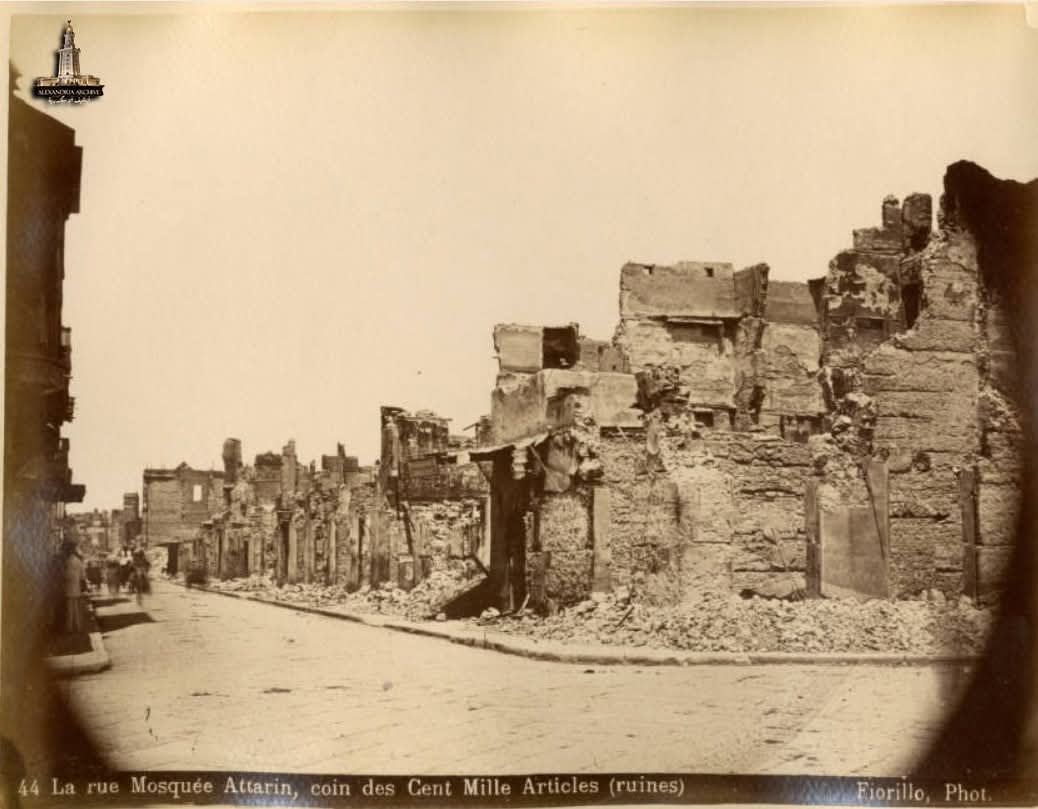
12 يوليو – المدينة تشتعل

وفق يوميات الإسكندرية 1882 ووثائق البلدية:

اندلعت النيران في المنشية ومناطق واسعة من وسط المدينة.

قوّت الرياح انتشار الحريق.

استمر الحريق يومين كاملين.

لم تنزل القوات البريطانية إلى البر إلا يوم 14 يوليو، عندما كانت المدينة قد أصيبت بدمار واسع ونهب في كثير من المناطق التجارية.

الخسائر

الجيش المصري: 600–700 شهيد، و250–350 جريح.

المدنيون: تقديرات غير دقيقة تشير إلى مئات الضحايا.

البريطانيون: 6 قتلى و27 جريحًا (أرقام رسمية دقيقة).

الخسائر المادية: دمار كبير في وسط الإسكندرية، تعطّل الميناء، وانهيار النشاط الاقتصادي.

تحرك الجيش البريطاني بعد القصف وانسحابه من الإسكندرية

بعد القصف واحتلال المدينة، لم تتقدم القوات البريطانية فورًا نحو الداخل. والسبب الرئيسي، وفق البرقيات البريطانية، هو:

أن الوضع في المدينة لم يكن آمنًا.

أن خطوط الإمداد لم تكن جاهزة بعد.

أن القوات المصرية كانت متمركزة في مواقع دفاعية قوية جنوب المدينة.

لهذا انسحبت القوات البريطانية داخل نطاق الإسكندرية الساحلي، وجعلت المدينة قاعدة عمليات بدلًا من نقطة اقتحام.

معارك ما قبل التل الكبير: كفر الدوار (يوليو – سبتمبر 1882)

تُجمع الوثائق المصرية والبريطانية على أن خط دفاع كفر الدوار كان من أقوى خطوط التحصين في مصر. أقامه عرابي ليمنع أي تقدم بريطاني نحو القاهرة من الشمال.

شهد خط كفر الدوار عدة معارك:

المعركة الأولى – 24 يوليو: حاولت القوات البريطانية التقدم، لكنها فوجئت بتحصينات قوية ونيران كثيفة أوقفت الهجوم تمامًا.

المعركة الثانية – 5 أغسطس: تقدمت القوات البريطانية مرة أخرى، لكن المدفعية المصرية أصابت تشكيلاتهم وأجبرتهم على التراجع.

النتيجة العامة لمعركة كفر الدوار

فشل البريطانيون في اختراق الخط الدفاعي.

تكبّدت القوات البريطانية خسائر أكبر مما ظهر في التقارير الرسمية.

اضطر البريطانيون إلى إعادة تقييم كامل لخطة الغزو.

ولذلك قررت بريطانيا الالتفاف حول القوات المصرية بدلاً من مواجهتها مباشرة، وذلك بالتقدم عبر قناة السويس، حيث الحماية البريطانية والسيطرة البحرية كانت مضمونة بعد خدعة "حياد القناة" التي واجهها أحمد عرابي من فرديناند ديليسبس.

معركة التل الكبير – 13 سبتمبر 1882

اعتمد البريطانيون خطة مباغتة:

التحرك ليلًا لمسافة طويلة عبر الصحراء.

الوصول إلى الخطوط المصرية قبل الفجر.

كانت قوات عرابي مرابطة لكنها منهكة وتفتقر للمعلومات الاستخباراتية الدقيقة بعد انسحاب الجنرال علي الروبي من مواقع الاستطلاع. في الساعة 4:30 صباحًا بدأ الهجوم البريطاني المكثف على طول الخط الدفاعي. ورغم المقاومة في بعض المواقع، فُتح خط الدفاع، خصوصًا مع ضعف الاتصالات بين الوحدات المصرية. بحلول الساعة السابعة صباحًا، كانت المعركة محسومة.

النتائج الاستراتيجية

قصف الإسكندرية لم يكن عملية معزولة، بل المرحلة الأولى لعملية احتلال شاملة:

القصف مهّد للسيطرة البريطانية على المدينة.

فشل بريطانيا في كفر الدوار دفعها لتغيير خطة الغزو.

تحرك الجيش عبر قناة السويس أدى إلى سقوط التل الكبير.

بدخول البريطانيين إلى القاهرة انتهت حقبة الاستقلال الفعلي، وبدأ النفوذ البريطاني الذي استمر سبعة عقود.

كتب عباس محمود العقاد:

"كان ضرب الإسكندرية إعلانًا بأن مصر دخلت عهدًا جديدًا، لا تملك فيه قرارها، ولا تتحكم في مصيرها."

#أرشيف_الإسكندرية

#alexandria_archive


Bombardment of Alexandria 1882: The Events That Paved the Way for the British Occupation of Egypt

The bombardment of Alexandria on 11 July 1882 cannot be viewed as an isolated event. Rather, it was the decisive turning point that opened the road to the British occupation of Egypt. This account is based on Egyptian official records, mixed court proceedings, correspondence of British officers, reports of the Egyptian investigative committee, archives of the Egyptian press such as Al-Ahram, and documents preserved by the Bibliotheca Alexandrina.

The Political Scene Before the Bombardment (1869–1882)

Egypt witnessed severe financial and political unrest beginning with the ambitious projects of Khedive Ismail, most notably the Suez Canal. These policies increased foreign influence over Egypt’s finances and eventually led to his removal in 1879, replaced by Khedive Tawfiq under European pressure.

At the same time, a national movement emerged within the army under Ahmed Urabi, demanding equality, resistance to foreign interference, and stronger national institutions. Alexandria, as a cosmopolitan city with heavy foreign presence, became an especially sensitive center of tension.

Escalation Before the Bombardment

Arrival of the European Fleets

On 20 May 1882, British and French fleets arrived off the coast of Alexandria “to protect foreigners.” Municipal investigations indicate that the presence of six British ships and three French ships created visible tension in the city. (The French fleet later withdrew before the bombardment, leaving the operation entirely British.)

Events of 11–12 June 1882

Clashes broke out in Alexandria between Egyptians and Maltese residents, quickly escalating despite police intervention. Records from the Mixed Courts show:

The incident began as a personal quarrel (between a Maltese mule driver and an Egyptian man).

Egyptian authorities attempted to restore order.

Reports sent by foreign consulates exaggerated the danger to their nationals.

No official investigation proved that the Egyptian army or government had instigated the violence, yet Britain used the unrest as a pretext for intervention.

The British Ultimatum

Admiral Beauchamp Seymour issued an ultimatum demanding a halt to coastal fortification works. Egyptian records insist these defenses were old structures merely undergoing maintenance, not new fortifications.

The Egyptian government rejected the ultimatum as a direct violation of national sovereignty, and Ahmed Urabi supported the decision to defend the country.

The British Bombardment – 11 July 1882

At dawn, 15 British warships surrounded Alexandria. At 7:00 a.m., shelling began and continued for more than ten hours.

Main British Warships Involved

HMS Inflexible – flagship and strongest battleship

HMS Alexandra – Admiral Seymour’s command ship

HMS Sultan

HMS Superb

HMS Téméraire

HMS Monarch

HMS Penelope

HMS Invincible

HMS Condor

HMS Bittern

Targeted Fortifications

Ras El-Tin – surrounding the Khedive’s palace and key harbor defenses.

Fort Pharos – near today’s Citadel of Qaitbay, one of the strongest forts.

Fort Ada (likely the “Tabiya”) – a major defensive point whose powder magazine was destroyed.

Fort Mex – guarding the western harbor entrance.

Fort Marabout – famous for resisting HMS Condor.

Hospital Battery – equipped with relatively modern Armstrong guns.

Egyptian Resistance

Military records describe determined Egyptian resistance, especially from Fort Pharos and Fort Mex. Several British ships were hit, and some were forced to reposition despite their technological superiority.

Duration of the Battle

The bombardment lasted until 5:30 p.m. Most batteries were destroyed, and Egyptian ammunition was exhausted.

12 July – The City Burns

According to municipal records and contemporary diaries:

Fires broke out in the Mansheya district and much of central Alexandria.

Strong winds spread the flames rapidly.

Fires continued for two full days.

British troops did not land until 14 July, by which time the city had suffered extensive destruction and looting in many commercial districts.

Losses

Egyptian Army: 600–700 killed, 250–350 wounded

Civilians: likely hundreds, though exact numbers remain uncertain

British Forces: 6 killed, 27 wounded (official figures)

Material Damage: heavy destruction in central Alexandria, disruption of the port, and economic collapse

British Advance After the Bombardment

After occupying Alexandria, British forces did not immediately march inland because:

The city remained unstable

Supply lines were not ready

Egyptian forces held strong defensive positions south of the city

Thus, Alexandria became a military base rather than a direct invasion route.

Battles Before Tel El-Kebir: Kafr El-Dawwar (July–September 1882)

Both Egyptian and British sources agree that the defensive line at Kafr El-Dawwar was one of the strongest in Egypt. Urabi built it to block a British advance toward Cairo.

Key Engagements

24 July: British advance halted by heavy fire and strong fortifications.

5 August: Another attempt repelled by Egyptian artillery.

Results

Britain failed to break through the line.

British casualties were likely higher than officially reported.

Britain was forced to reconsider its invasion plan.

As a result, Britain chose to bypass Egyptian defenses through the Suez Canal, using the claim of canal neutrality and support from Ferdinand de Lesseps.

Battle of Tel El-Kebir – 13 September 1882

Britain launched a surprise operation:

Night march across the desert

Arrival before dawn at Egyptian lines

Urabi’s army was exhausted and lacked reliable intelligence after the withdrawal of General Ali Al-Roubi’s scouts. At 4:30 a.m., the British assault began. Though resistance occurred in parts of the line, weak communications between Egyptian units allowed the defenses to collapse. By 7:00 a.m., the battle was effectively over.

Strategic Consequences

The bombardment of Alexandria was not an isolated naval action, but the first phase of a full occupation campaign:

The shelling enabled British control of Alexandria.

Failure at Kafr El-Dawwar forced Britain to alter strategy.

The Suez route led to victory at Tel El-Kebir.

With British entry into Cairo, Egypt lost its effective independence and entered an era of British dominance lasting decades.

As Abbas Mahmoud Al-Aqqad later wrote:

“The bombardment of Alexandria declared that Egypt had entered a new age in which it no longer held its own decision nor controlled its destiny.”