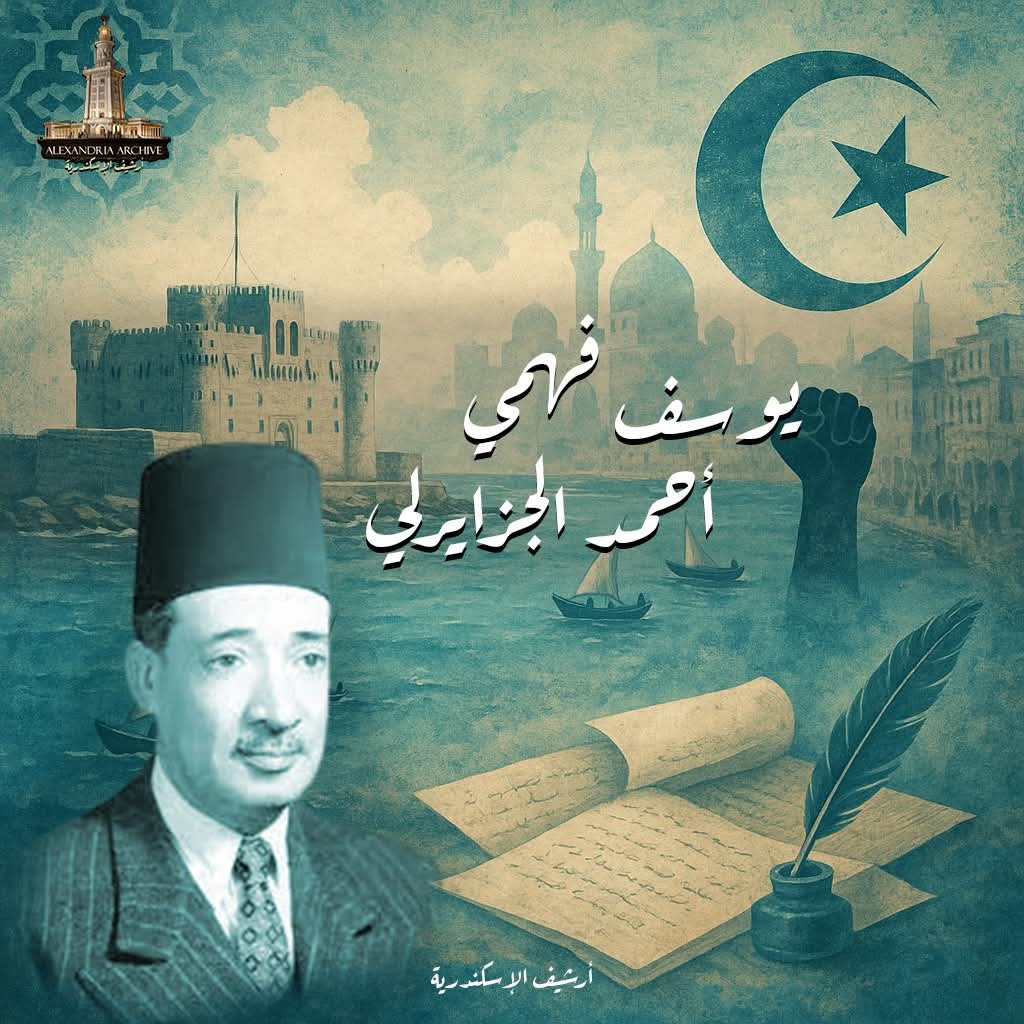
حكاية يوسف فهمي أحمد الجزايرلي.. رحلة عمر مليئة بالكفاح والوطنية
في يوم 4 أكتوبر سنة 1881، وُلد يوسف فهمي أحمد الجزايرلي في حي الجمرك بالإسكندرية، في أحد الشوارع المتفرعة من شارع إسماعيل صبري. والده كان جزائري الجنسية تحت الحماية الفرنسية، ووالدته من أصل تونسي.
هاجر والده من الجزائر إلى مصر وقت الاحتلال الفرنسي للجزائر، وكان من عائلة "الطيب"، وابن عمه الشيخ حمدان الطيب محمود الذي كان مفتي الجزائر المالكي أثناء الحرب العالمية الأولى. أما والدته فتنتمي لعائلة "المفتي الجزايرلي" في الإسكندرية.
في ذلك الوقت، كانت معظم عائلات الإسكندرية الكبيرة تسكن بحي الجمرك بالقرب من قصر رأس التين، مثل عائلات: الراكشي، الغرياني، الناضوري، والجزايرلي. وما زال حتى اليوم منزل توفيق بك الجزايرلي موجودًا في شارع رأس التين، وكذلك ضريح الشيخ المفتي الجزايرلي في حارة باسمه.
توفي والده وهو في التاسعة من عمره، فتولت والدته تربيته. كان والده ثريًا ولديه أملاك في الجزائر، فسافرت أمه هناك عامًا كاملًا لتصفية التركة، وعادت بالثروة. لكن أقاربها استولوا على الأموال تدريجيًا لأنها لم تكن متعلمة. وقتها كان يوسف قد بلغ الحادية عشرة.
كانت والدته حفيدة الشيخ محمد الجزايرلي، المفتي المالكي الشهير بالإسكندرية، الذي كان مجلسه غالبًا في جامع البوصيري. وقد استدعاه محمد علي باشا بنفسه ليساعده بفتوى تتيح استخدام بعض أموال الأوقاف الخيرية للإنفاق على الجيش والبحرية، فأفتى له بذلك، فكافأه محمد علي باشا بسخاء.
التحق يوسف بمدرسة إبراهيم باشا، وحفظ القرآن الكريم، وأتقن اللغة العربية نحوًا وصرفًا وإعرابًا. وبعدها التحق بالمدرسة الثانوية. وعقب تخرجه استدعته فرنسا للتجنيد لأنه كان تحت حمايتها، فشارك مجبرًا في الحرب العالمية الأولى مع الجيش الفرنسي ضد الألمان، وكان دائمًا يروي أهوال الحرب.
أثناء وجوده في فرنسا، زار متحف اللوفر، وهناك لفت نظره وجود موسوعة عن شوارع باريس، فقرأها واستوعب أهميتها كمرجع لتاريخ الشوارع. كانت هذه الفكرة أحد الدوافع التي أثرت فيه بعد ذلك.
في إحدى إجازاته ركب باخرة من مرسيليا عائدًا إلى مصر. لكن غواصة ألمانية اعترضت الباخرة وأصابتها بطوربيد. وبينما كان ينتظر دوره للنزول، رأى طفلًا يبكي، فحمله على كتفه، مما جعل القبطان يسمح له بالنزول فورًا لإنقاذ الطفل. غرقت الباخرة قرب سواحل تونس، فسبح يوسف بالطفل على كتفه سبع ساعات كاملة حتى وصل إلى الشاطئ. نُقل إلى المستشفى للعلاج، ثم أكمل طريقه إلى الإسكندرية.
بعد انتهاء خدمته العسكرية عاد إلى مصر، والتحق ببلدية الإسكندرية (محافظة الإسكندرية حاليًا). كان أول مرتب يتقاضاه "خمسة بنتوه" أي خمسة جنيهات ذهبية. ترقى حتى وصل إلى منصب مدير عام السكرتارية. كما درس الحقوق الفرنسية بالمراسلة، وحصل على ليسانس الحقوق. وفي عام 1936 حصل على الجنسية المصرية له ولأسرته.
عندما كان أمين باشا فكري مديرًا للبلدية، طلب له درجة "البكوية" نظرًا لثقافته ونشاطه، لكن بسبب انتمائه لحزب الوفد وكتابته قصيدة ينتقد فيها النظام الملكي رُفض منحه اللقب.
وكان له دور بارز في العمل الوطني؛ ففي إحدى مظاهرات الوفد ضد الاحتلال الإنجليزي بشارع عمر بن الخطاب، أطلق يوسف النار من مسدسه الصغير "براوننج" وقتل ضابطًا إنجليزيًا كان يقود عربة مصفحة. ثم هرب واختبأ في منزل رجل قبطي استقبله وأخفاه عن الجنود الإنجليز الذين داهموا البيت. أنقذه ذلك الموقف، وكان دليلًا على وحدة المصريين مسلمين وأقباط ضد المحتل.
بعد خروجه إلى المعاش المبكر من البلدية، عُيّن مديرًا عامًا للغرفة التجارية بالإسكندرية. وكان أحد مؤسسي جماعة نشر الثقافة سنة 1932، التي أصبحت فيما بعد هيئة الفنون والآداب. وكان شاعرًا ينشر أشعاره في صحيفتي البلاغ والمقطم، وله ديوان شعر كامل.
من أبرز مؤلفاته:
- كتاب "أرض البطولة - الجزائر": مرجع تاريخي عن الاحتلال الفرنسي للجزائر ونضال شعبها حتى الاستقلال.
- كتاب "الأدب المقارن بين أدباء العرب ونخبة من أدباء الفرنسيين".
- كتاب "الأمة العربية وإمكانياتها الاقتصادية" الصادر عام 1956 أثناء رئاسته للغرفة التجارية.
كان يوسف فهمي أبًا مثاليًا، يدرّس بنفسه لأبنائه اللغة العربية والفرنسية والعلوم الاجتماعية، ويشجعهم دائمًا.
ابنه فريد التحق بكلية الحقوق بعد أن فاته الطب بدرجة بسيطة، وأصبح رئيس محكمة استئناف القاهرة.
ابنه سمير التحق بكلية الطب، وتخصص في أمراض النساء والتوليد، وأصبح أستاذًا بالمستشفيات والمعاهد التعليمية بوزارة الصحة.
كان وطنيًا غيورًا، يغرس في أبنائه حب مصر. فرح بعبور القوات المسلحة قناة السويس في أكتوبر 1973، لكنه توفي في 23 أكتوبر من نفس العام متأثرًا بصدمة سماعه خبر الثغرة.
ترك أعظم أعماله: موسوعة شوارع الإسكندرية. قضى في إعدادها ثلاثين عامًا من البحث والتدقيق حتى أكملها سنة 1967. عرضها على المحافظ حمدي عاشور الذي وافق على طبعها، لكن حرب 1967 أجلت الطباعة. فيما بعد طُبع منها مقتطفات مثل: "إسكندرية في فجر القرن العشرين" و"سكندريات". كما أذيع منها برنامج إذاعي بعنوان "للشوارع تواريخ".
وقد صدرت الموسوعة أخيرًا برعاية مكتبة الإسكندرية بعد مرور عقود طويلة من الجهد.
هذه السيرة كتبها ولداه:
المستشار فريد فهمي الجزايرلي
الأستاذ الدكتور سمير فهمي الجزايرلي
بتاريخ 27 أكتوبر 2009.
#أرشيف_الإسكندرية
#alexandria_archive
Youssef Fahmy Ahmed
The Story of Youssef Fahmy Ahmed El-Gezairly: A Lifelong Journey Filled with Struggle and Patriotism
On October 4, 1881, Youssef Fahmy Ahmed El-Gezairly was born in the El-Gomrok district of Alexandria, on a side street off Ismail Sabry Street. His father was an Algerian citizen living under French protectorate, and his mother was of Tunisian origin.
His father had emigrated from Algeria to Egypt during the French occupation of Algeria. He belonged to the El-Tayeb family, and his cousin, Sheikh Hamdan El-Tayeb Mahmoud, was the Maliki Mufti of Algeria during World War I. His mother belonged to the El-Mufti El-Gezairly family of Alexandria.
At that time, most of Alexandria's prominent families lived in the El-Gomrok district, near Ras El-Tin Palace, including the El-Rakshi, El-Ghariani, El-Nadori, and El-Gezairly families. The house of Tawfiq Bey El-Gezairly still stands on Ras El-Tin Street, as does the shrine of Sheikh Mufti El-Gezairly in a lane bearing his name.
His father passed away when he was nine years old, and his mother raised him. His father was wealthy and owned property in Algeria. His mother traveled there for a year to settle the inheritance and returned with the fortune. However, her relatives gradually seized the money because she was uneducated. Yusuf was eleven years old at the time.
His mother was the granddaughter of Sheikh Muhammad al-Jazayirli, the renowned Maliki Mufti of Alexandria, whose council was often held at the al-Busiri Mosque. Muhammad Ali Pasha himself summoned him to provide a fatwa permitting the use of some charitable endowment funds to finance the army and navy. He issued the fatwa, and Muhammad Ali Pasha rewarded him generously.
Yusuf enrolled in Ibrahim Pasha School, memorized the Quran, and mastered Arabic grammar, morphology, and syntax. He then attended secondary school. After graduating, France, under its protection, called him up for military service. He was forced to fight in World War I with the French army against the Germans, and he often recounted the horrors of the war.
While in France, he visited the Louvre Museum, where he noticed an encyclopedia about the streets of Paris. He read it and grasped its importance as a reference for the history of the city's streets. This idea was one of the motivating factors that influenced him later on.
During one of his vacations, he boarded a ship from Marseille returning to Egypt. However, a German submarine intercepted the ship and torpedoed it. While waiting his turn to disembark, he saw a crying child and carried him on his shoulder. This prompted the captain to allow him to immediately go aboard to rescue the child. The ship sank near the coast of Tunisia, and Youssef swam with the child on his shoulder for seven long hours until he reached the shore. The child was taken to the hospital for treatment, and then Youssef continued his journey to Alexandria.
After completing his military service, he returned to Egypt and joined the Alexandria Municipality (now the Alexandria Governorate). His first salary was five "bentouh," meaning five gold pounds. He rose through the ranks until he reached the position of Director General of the Secretariat. He also studied French law by correspondence and obtained a law degree. In 1936, he and his family were granted Egyptian citizenship.
When Amin Pasha Fikri was the mayor, he requested that Youssef be granted the title of "Bey" due to his culture and activism. However, because of his affiliation with the Wafd Party and his writing of a poem criticizing the monarchy, the request was denied.
He played a prominent role in the national movement. During one of the Wafd demonstrations against the British occupation on Omar Ibn Al-Khattab Street, Youssef fired his Browning pistol, killing a British officer driving an armored vehicle. He then fled and hid in the home of a Coptic man who sheltered him from the British soldiers who raided the house. This act saved his life and demonstrated the unity of Egyptians, both Muslims and Copts, against the occupiers.
After taking early retirement from the municipality, he was appointed Director General of the Alexandria Chamber of Commerce. He was also one of the founders of the Cultural Dissemination Group in 1932, which later became the Arts and Literature Authority. He was a poet who published his poems in the newspapers Al-Balagh and Al-Muqattam, and he had a complete collection of poetry.
Among his most prominent works are:
- "The Land of Heroism - Algeria": a historical reference on the French occupation of Algeria and the struggle of its people until independence.
- "Comparative Literature: Between Arab Writers and a Selection of French Writers."
- "The Arab Nation and Its Economic Potential," published in 1956 during his presidency of the Chamber of Commerce.
Youssef Fahmy was an exemplary father, personally teaching his children Arabic, French, and social studies, and always encouraging them.
His son Farid enrolled in the Faculty of Law after narrowly missing out on medical school, and became the head of the Cairo Court of Appeals.
His son Samir enrolled in the Faculty of Medicine, specializing in obstetrics and gynecology, and became a professor in hospitals and educational institutes affiliated with the Ministry of Health.
He was a fervent patriot who instilled in his children a love for Egypt. He rejoiced at the crossing of the Suez Canal by the armed forces in October 1973, but he died on October 23 of the same year, deeply affected by the shock of hearing the news of the breach.
He left behind his greatest work: the Encyclopedia of Alexandria's Streets. He spent thirty years researching and meticulously preparing it, finally completing it in 1967. He presented it to Governor Hamdi Ashour, who approved its publication, but the 1967 war delayed printing. Later, excerpts were published, such as "Alexandria at the Dawn of the Twentieth Century" and "Alexandrians." A radio program titled "Streets Have Histories" was also broadcast.
The encyclopedia was finally published under the auspices of the Library of Alexandria after decades of dedicated effort.