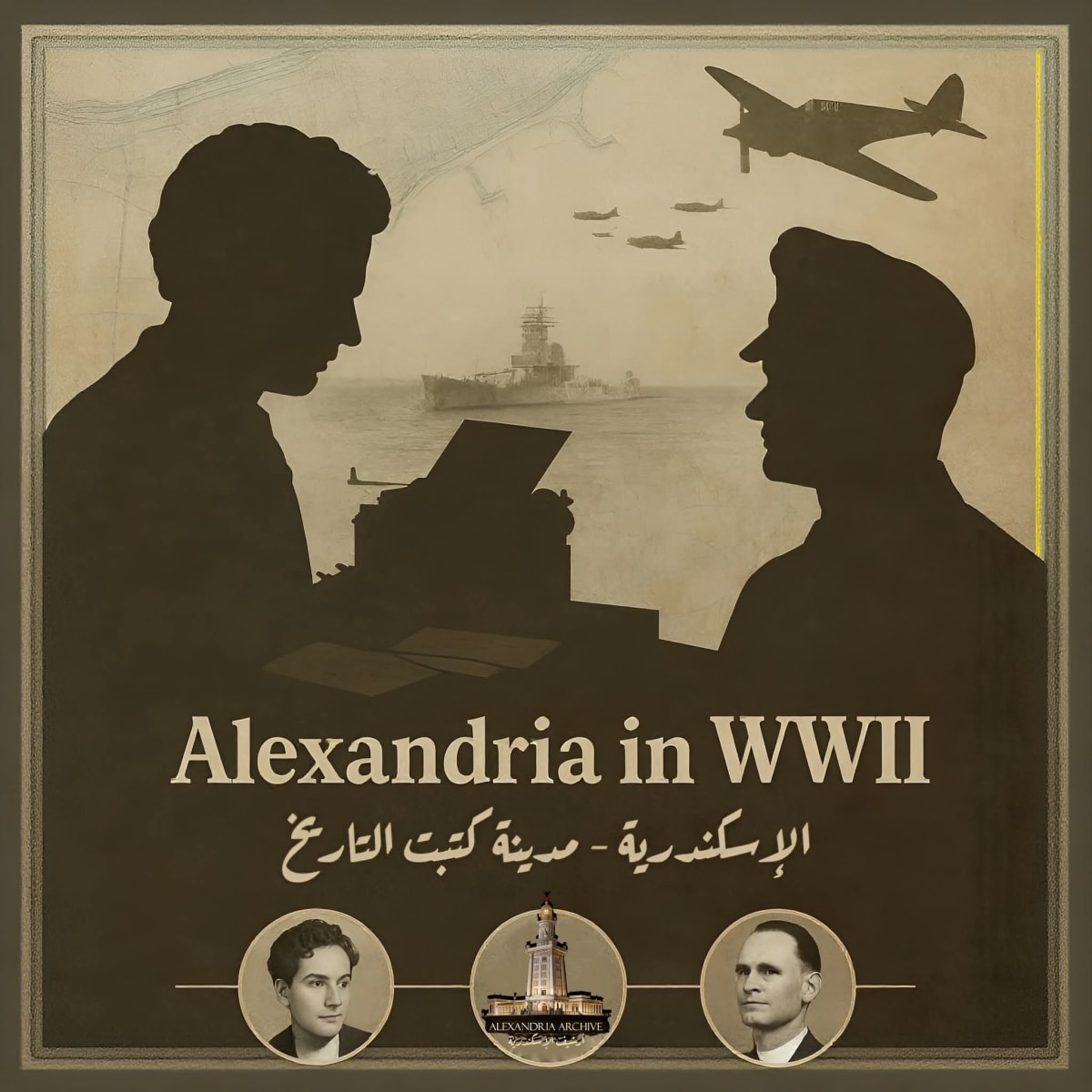
الإسكندرية.. حين كانت حاضرة على خريطة العالم العسكرية والأدبية في الحرب العالمية الثانية.
في خضمّ المعارك الكونية التي شهدتها أربعينيات القرن الماضي، لم تكن الإسكندرية مجرد مدينةٍ ساحليةٍ تلامس مياه المتوسط، بل تحولت إلى عُقدة استراتيجية في نسيج الحرب العالمية الثانية. عام 1940، احتضنت شواطئها أساطيلَ بريطانيةً عملاقة، بينما تحركت من مينائها القواتُ نحو ساحات معارك البحر المتوسط. تحوّلت شوارعُها إلى مسرحٍ لتحركات الجيوش، وسماءُها إلى مدرجٍ لطائراتٍ حربية، لكنها رغم دوي المدافع ظلّت حاضنةً للتنوع الثقافي، وصامدةً بروحها التي لا تُقهَر.
شخصيات تاريخية.. وُلدت من رحم المدينة
لم تكن الإسكندرية مسرحًا للأحداث فحسب، بل انبثقت من أحيائها شخصياتٌ غيّرت مسار التاريخ:
رودولف هِس: وُلد عام 1894 في قلب الإسكندرية، لأسرةٍ ألمانية-سويسرية. غادرها صغيرًا ليتحوّل لاحقًا إلى الرجل الثاني في الرايخ الثالث بقيادة هتلر. في عام 1941، أقلع من ألمانيا بطائرته نحو بريطانيا في مغامرةٍ فرديةٍ غامضةٍ لِتفادي توسع الحرب، لِيُسجَن حتى نهاية حياته. لكنّ سجلات التاريخ تُؤكد: مسيرته بدأت من أرصفة الإسكندرية.
لورانس داريل: الكاتب البريطاني الذي عاش في المدينة خلال سنوات الحرب، وعمل في القنصلية البريطانية. هناك، دوّن مذكراته التي تحوّلت لاحقًا إلى روايته الشهيرة "رباعية الإسكندرية"، حيث نسجَ بسحرٍ أدبيٍّ تفاصيلَ المدينة؛ تناقضاتها الثقافية، وزخمَ شوارعها، وشخصياتها الواقعية مثل "جاستين" المستوحاة من السكندرية اليهودية إيف كوهين.
مدينة تكتب تاريخها بين رمال الحرب وأمواج الأدب
لم تكن الحربُ مجرد دمارٍ في الإسكندرية، بل كانت حافزًا لإبداعٍ أدبيٍّ، ومحركًا لتحركاتٍ سياسيةٍ غيّرت خريطة الصراع. بين صفارات الإنذار وهمهمات الطائرات، ظلّت المدينة تُناغم بين صمودها العسكري وإرثها الحضاري. اليوم، تُخلّد الكتبُ ذكراها ليس فقط كساحة حرب، بل كمنبعٍ لروائعَ أدبيةٍ، وشاهدٍ على عصرٍ حوّل العالم إلى صفحةٍ من دمٍ وإبداع.
Alexandria: When It Was Present on the World Military and Literary Map During World War II
Amidst the global battles of the 1940s, Alexandria was more than just a coastal city on the Mediterranean; it became a strategic hub in the fabric of World War II. In 1940, its shores sheltered massive British fleets, while troops moved from its port toward the battlefields of the Mediterranean. Its streets became a stage for troop movements, and its skies a runway for warplanes. Yet, despite the roar of cannons, it remained a cradle of cultural diversity, steadfast in its indomitable spirit.
Historical Figures Born from the City
Alexandria was not only a stage for events, but its neighborhoods also gave birth to figures who changed the course of history:
Rudolf Hess: Born in 1894 in the heart of Alexandria to a German-Swiss family, he left as a young boy to later become the second most powerful man in Hitler's Third Reich. In 1941, he took off from Germany in his plane bound for Britain on a mysterious solo adventure to avoid the war's expansion, only to be imprisoned for life. But history records that his journey began on the docks of Alexandria.
Lawrence Durrell: The British writer who lived in the city during the war years and worked at the British Consulate. There, he recorded his memoirs, which later became his famous novel, "The Alexandria Quartet," where he masterfully wove together the details of the city: its cultural contradictions, the vibrancy of its streets, and its realistic characters like "Justine," inspired by the Jewish Alexandrian Yves Cohen.
A city writing its history amidst the sands of war and the waves of literature
War was not merely destruction in Alexandria; it was a catalyst for literary creativity and a driving force behind political movements that altered the map of the conflict. Between the air raid sirens and the drone of airplanes, the city continued to harmonize its military resilience with its rich cultural heritage. Today, books commemorate Alexandria not only as a battleground, but also as a wellspring of literary masterpieces and a testament to an era that transformed the world into a page of blood and creativity.
This is how great cities write their stories: with a heart that beats with defiance and a pen that recounts glory.