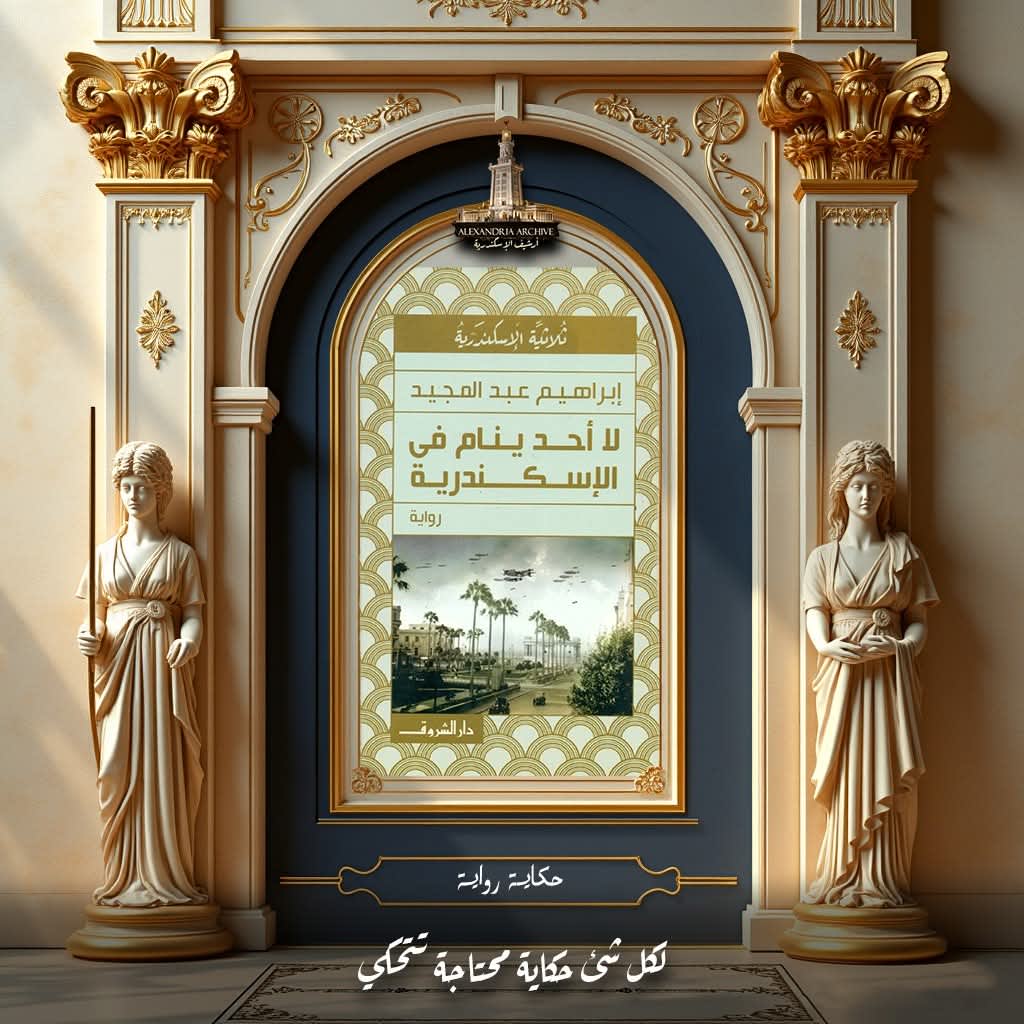
The story of the novel "No One Sleeps in Alexandria"
Alexandria Archive —
حكاية رواية "لا أحد ينام في الإسكندرية":
تخيّل نفسك في أربعينيات القرن الماضي، بين أزقة الإسكندرية التي تهتز تحت وطأة دويّ طائرات الحرب العالمية الثانية، وأصوات أهلها المليئة بتناقضات الأمل والخوف. هنا، تبدأ رحلة مجد الدين، الفلاح الهادئ القادم من دلتا مصر هاربًا من ثأر دموي في قريته، مع زوجته زهرة وابنته الرضيعة. يبحث عن ملاذ في المدينة الكوزموبوليتانية، لكنه يجد نفسه في قلب عاصفة أخرى: حرب عالمية تهدد بابتلاع كل شيء، ومجتمعاً متنوعاً يختبر قدرته على التعايش بين أديان وثقافات متشابكة.
في الإسكندرية، يلتقي مجد الدين بـ دميان، المسيحي الصعيدي الذي يختلف عنه في المظهر لكنه يشبهه في القلق الوجودي. تصبح صداقتهما خيطًا من النور وسط الظلام: يعملان معًا في السكك الحديدية، ويتشاركان الأسئلة عن الدين والحياة، ويسندان بعضهما بينما تزداد الغارات الجوية شراسة، وتتحول شوارع الإسكندرية إلى ساحة معركة. لكن الحرب لا تأتي بالدبابات فقط، بل تُظهر تناقضات المجتمع أيضاً: فبينما يحاول مجد الدين ودميان كسر حواجز الدين، تُمنع قصة حب بين كامليا (ابنة الخواجة المسيحي) ورشدي (الشاب المسلم) لأن "الاختلاف الديني" يُعتبر جداراً لا يُهدم.
الأحداث تتسارع كقطار لا يمكن إيقافه: مقتل أخ مجد الدين في شجار طائفي، وانزياح الإسكندرية تحت القصف، ورحلة مجد الدين ودميان إلى صحراء مطروح حيث تلتقي عيون الجنود من كل الجنسيات، قبل أن تَفصِل بينهما معركة العلمين بمأساوية. يموت دميان في الصحراء، ويعود مجد الدين إلى قريته حاملاً جراح الفقد، لكنه يقرر في النهاية العودة إلى الإسكندرية – المدينة التي لا تنام، والتي تبتلع أحلام الناس وأحزانهم معاً.
الرواية لا تكتفي بسرد الحرب، بل تحفر في ذاكرة الإسكندرية كرمز للتعددية: نساء قويات مثل زهرة ومريم (جارتهما) ينسجن شبكة دعم إنساني، وأماكن مثل منزل "الخواجة ديمتري" تتحول إلى بوتقة تنصهر فيها الأصوات المتباينة. حتى اللغة تروي الحكاية: بالفصحى الممزوجة بنفحات عامية، كأن الكاتب يهمس لك: "هذه ليست قصة خيالية، بل شظايا من واقع عاشه الناس".
اللافت أن الكاتب إبراهيم عبد المجيد لم يكتب الرواية من برج عاجي، بل سار حافي القدمين في صحراء العلمين ليتنفس غبار المعارك القديمة، واختبر حر الصيف وبرد الشتاء كي يحكي لك التفاصيل كما لو كنت تراها. الرواية جزء من ثلاثيته الشهيرة التي تتابع تحولات الإسكندرية عبر عقود: من الحرب العالمية إلى تطرف السبعينيات، كأنما يقول: "المدينة كالإنسان، تُجرح وتُشفى، تفقد جزءاً من روحها ثم تبحث عنه من جديد".
في النهاية، "لا أحد ينام في الإسكندرية" ليست مجرد رواية عن الحرب، بل عن الإنسان الذي يحاول أن يجد معنىً للوجود وسط الفوضى، وعن مدينة تختبرك كما تختبرها. هل ستنجح في النوم إذا قرأتها؟ ربما لا... لأن أصداء شخصياتها ستظل تسألك: ماذا كنت ستفعل لو كنت مكانهم؟
#أرشيف_الإسكندرية
The story of the novel "No One Sleeps in Alexandria"
The Story of "No One Sleeps in Alexandria":
Imagine yourself in the 1940s, amidst the alleyways of Alexandria trembling under the roar of World War II warplanes, and the voices of its inhabitants, filled with the contradictions of hope and fear. Here begins the journey of Magd El-Din, a quiet peasant from the Nile Delta, fleeing a blood feud in his village, with his wife, Zahra, and infant daughter. He seeks refuge in the cosmopolitan city, but finds himself at the heart of another storm: a world war threatening to engulf everything, and a diverse society testing its ability to coexist amidst intertwined religions and cultures.
In Alexandria, Magd El-Din meets Damian, a Christian from Upper Egypt, different from him in appearance but sharing his existential anxieties. Their friendship becomes a thread of light in the darkness: they work together on the railway, share questions about religion and life, and support each other as the air raids intensify and the streets of Alexandria transform into a battlefield. But war isn't just about tanks; it also exposes the contradictions within society. While Magd El-Din and Damian try to break down religious barriers, the love story between Camelia (the daughter of a Christian merchant) and Rushdi (a young Muslim man) is forbidden because "religious difference" is considered an insurmountable wall.
Events unfold rapidly: Magd El-Din's brother is killed in a sectarian clash, Alexandria is bombarded, and Magd El-Din and Damian journey to the desert of Matrouh, where soldiers of all nationalities meet, before the tragic Battle of El Alamein separates them. Damian dies in the desert, and Magd El-Din returns to his village, bearing the wounds of loss, but ultimately decides to return to Alexandria—the city that never sleeps, the city that swallows people's dreams and sorrows together.
The novel doesn't merely recount the war; it delves into the memory of Alexandria as a symbol of pluralism: strong women like Zahra and Maryam (their neighbor) weave a network of human support, and places like the home of "Khawaja Dimitri" become a melting pot of disparate voices. Even the language tells the story: classical Arabic interspersed with colloquialisms, as if the author is whispering to you: "This isn't a work of fiction, but fragments of a reality lived by the people."
Remarkably, the author, Ibrahim Abdel Meguid, didn't write the novel from an ivory tower. He walked barefoot in the desert of El Alamein to breathe in the dust of past battles and experienced the summer heat and winter cold to recount the details as if you were witnessing them firsthand. The novel is part of his renowned trilogy, which traces Alexandria's transformations across decades: from World War II to the extremism of the 1970s, as if to say: "The city, like a person, is wounded and heals, loses a part of its soul and then searches for it anew."
Ultimately, "No One Sleeps in Alexandria" is not just a novel about war, but about humanity's struggle to find meaning in existence amidst chaos, and about a city that tests you as much as you test it. Will you be able to sleep after reading it? Perhaps not... because the echoes of its characters will keep asking you: What would you have done if you were in their place?