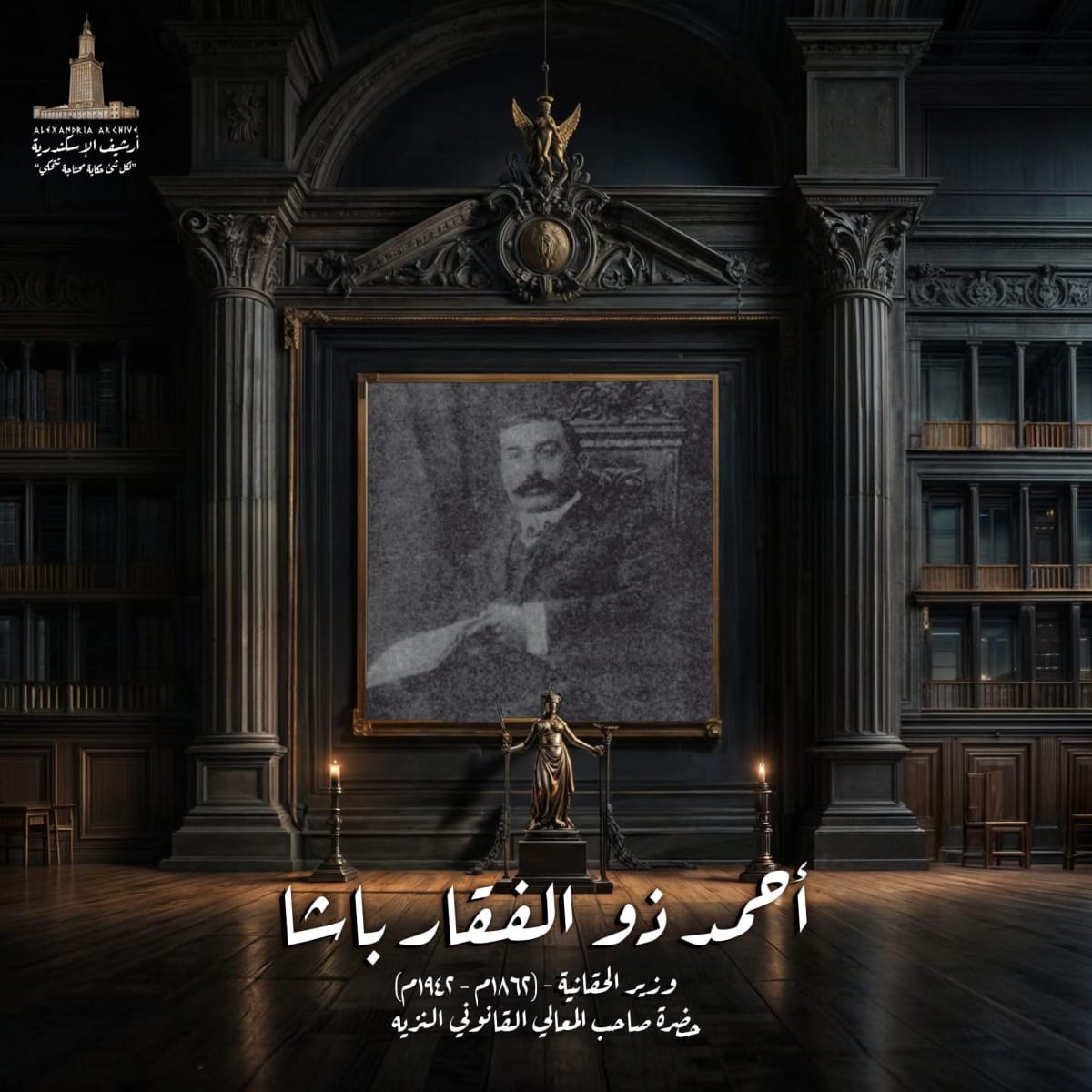
من الشخصيات الرائدة في الدبلوماسية المصرية والذي ترك بصمات واضحة ومميزة في تاريخ مصر بفضل أعماله الدولية هو “أحمد ذو الفقار باشا”.
وُلد أحمد ذو الفقار باشا لعائلة مصرية عريقة، عُرفت بولائها للأسرة المالكة وبخدمتها للوطن في شتى المجالات، خاصة القطاعات العسكرية والسياسية. كان والده “أحمد علي ذو الفقار باشا” أحد وزراء مصر السابقين، فكان مولده في الإسكندرية عام 1862، الموافق سنة 1277 هـ.
بفضل اتصال عائلته بالطبقات الراقية من المجتمع، تلقى تعليمه في مدارس مرموقة، واهتم بتطوير ذاته في مجالات العلوم السياسية والدبلوماسية، خاصة بعد أن درس الحقوق في جامعة باريس وتفوق فيها، مما ساعده فيما بعد ليصبح سفيراً لمصر في عدد من الدول الأوروبية بجانب إتقانه للغات الإنجليزية والفرنسية والتركية.
بدأ أحمد ذو الفقار باشا مسيرته الدبلوماسية في مرحلة حرجة من تاريخ مصر، حيث كانت البلاد تمر بمرحلة انتقالية ما بين العهد الملكي والعهد الجمهوري. لكنه نجح في العمل كسفير لمصر في روما، مما أدى إلى توطيد العلاقات المصرية الإيطالية، وكان ممثلاً ناجحاً لمصر أمام دول العالم، حيث التقى بالعديد من الشخصيات البارزة دولياً.
تنقل أحمد باشا ذو الفقار بين العديد من محاكم مصر على مدار السنين في مختلف المحافظات. فمن أول المناصب التي شغلها في المناصب القضائية، تولى منصب مساعد بالنيابة المختلطة في يناير 1892، ثم عُين قاضياً من الدرجة الثالثة لمحكمة أسيوط في يوليو 1894. وبعد عامين، انتقل إلى محكمة مصر الأهلية، ثم نال ترقية لمنصب قاضي من الدرجة الثانية في 1900. في العام التالي، انتقل إلى محكمة طنطا، وفي يناير 1902 تمت ترقيته مجدداً ليصبح قاضياً من الدرجة الأولى.
لم يتوقف أحمد ذو الفقار باشا عند ذلك الحد، بل استكمل مسيرته القضائية وعُين وكيلاً لمحكمة أسيوط الأهلية، ثم رئيساً لمحكمة قنا. وتوالت بعدها المناصب التي أثبت فيها جدارته وعدله، فاستحق منصب وزير الحقانية، وتم اختياره لهذا المنصب لأول مرة بتاريخ 21 مارس عام 1919 في رئاسة صاحب الدولة محمد سعيد باشا. ثم تكرر توليه لهذا المنصب ست مرات في مختلف التشكيلات الوزارية، كما في وزارة صاحب الدولة يوسف وهبة باشا، ووزارتي صاحب الدولة محمد توفيق نسيم باشا الأولى والثانية، رئاسة صاحب الدولة يحيى إبراهيم باشا، وأخيراً في عهد وزارة زيور باشا.
حاز على عدد من النياشين والرتب التي تثبت مدى تأثيره وأهمية أعماله في مختلف المجالات. من ضمنها: حاز على الرتبة الثانية سنة 1892، والمتمايز سنة 1908، والباشوية سنة 1915، والمتمايز الرفيعة. كما منح نيشان المجيدي الخامس مع النجمة المصرية سنة 1883، والمجيد الثالث في يوليو سنة 1911، وقلادة النيل من الطبقة الثالثة سنة 1918، والوشاح الأكبر سنة 1919.
#أرشيف_الإسكندرية
Ahmed Zulfikar Pasha
One of the pioneering figures in Egyptian diplomacy who left a clear and distinctive mark on Egypt’s history through his international contributions is “Ahmed Zulfiqar Pasha.”
Ahmed Zulfiqar Pasha was born into a noble Egyptian family known for its loyalty to the royal family and its service to the nation in various fields, particularly in the military and political sectors. His father, “Ahmed Ali Zulfiqar Pasha,” was one of Egypt’s former ministers. Zulfiqar was born in Alexandria in 1862, corresponding to the year 1277 AH.
Thanks to his family’s connections with the upper echelons of society, he received his education in prestigious schools and focused on developing himself in political and diplomatic sciences, especially after studying law at the University of Paris, where he excelled. This later helped him become Egypt’s ambassador to several European countries, alongside his fluency in English, French, and Turkish.
Ahmed Zulfiqar Pasha began his diplomatic career during a critical phase in Egypt’s history, as the country was transitioning between the royal era and the republican era. He successfully served as Egypt’s ambassador in Rome, strengthening Egyptian-Italian relations, and was a successful representative of Egypt on the international stage, meeting with many prominent international figures.
Zulfiqar Pasha moved between several Egyptian courts over the years in various provinces. Among the first judicial positions he held was Assistant in the Mixed Prosecution in January 1892, after which he was appointed as a third-class judge in Assiut Court in July 1894. Two years later, he moved to the National Court of Egypt, then was promoted to second-class judge in 1900. The following year, he transferred to Tanta Court, and in January 1902, he was promoted again to first-class judge.
Ahmed Zulfiqar Pasha did not stop there; he continued his judicial career and was appointed Deputy of the National Court of Assiut, then Chief Judge of Qena Court. His positions continued to grow, proving his competence and fairness. He earned the position of Minister of Justice and was first appointed to this position on March 21, 1919, during the premiership of His Excellency Mohamed Said Pasha. He was then reappointed to the same position six more times in various cabinet formations, such as in the governments of His Excellency Youssef Wahba Pasha, the first and second ministries of His Excellency Mohamed Tawfiq Naseem Pasha, the premiership of His Excellency Yahya Ibrahim Pasha, and finally during the government of Ziwar Pasha.
He was awarded numerous medals and ranks, reflecting the impact and significance of his work in various fields. Among them, he was awarded the Second Rank in 1892, the Order of Merit in 1908, and the title of Pasha in 1915. Additionally, he received the fifth-class Medjidie Order with the Egyptian Star in 1883, the third-class Medjidie in July 1911, the Order of the Nile (Third Class) in 1918, and the Grand Cordon in 1919.