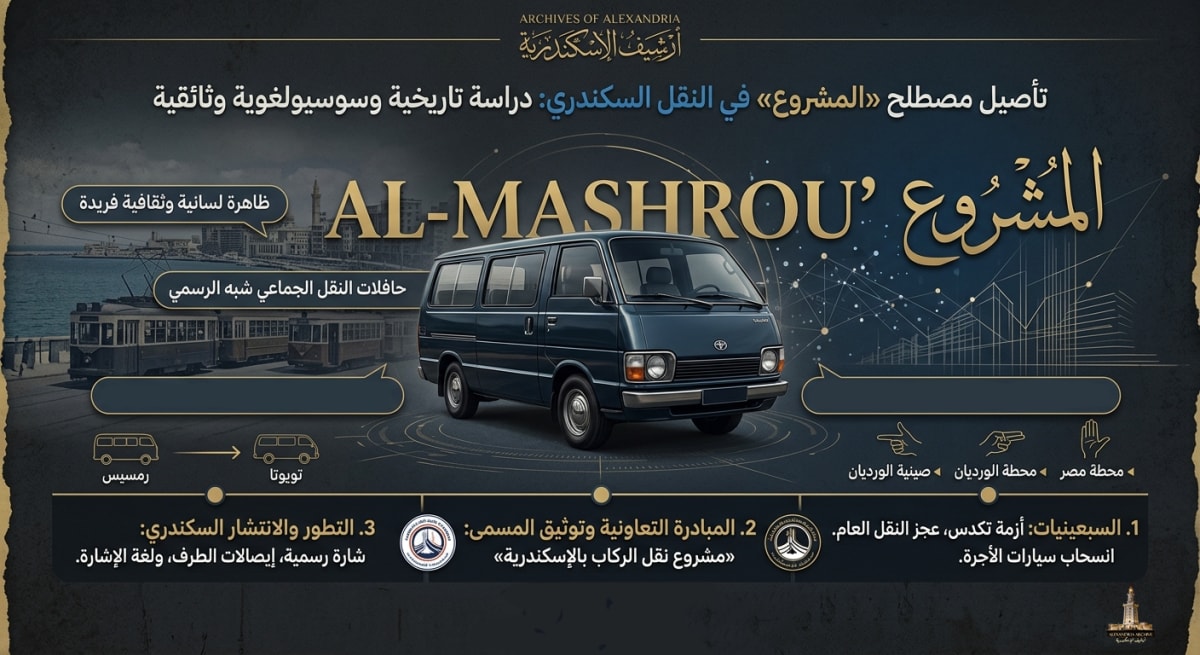
تأصيل دلالة مصطلح «المشروع» في النقل السكندري: دراسة تاريخية وسوسيولغوية وثائقية
أرشيف الإسكندرية —
يمثل مصطلح «المشروع» ظاهرة لسانية وثقافية فريدة تميز الفضاء الحضري لمدينة الإسكندرية عن سائر الأقاليم المصرية، حيث يُطلق المصطلح بصورة حصرية ومطلقة للدلالة على حافلات النقل الجماعي شبه الرسمي متناهية الصغر، المعروفة في العاصمة والأقاليم الأخرى بـ «الميكروباص» أو «السرفيس». ولا يُعد هذا التخصيص الدلالي وليد مصادفة معجمية أو مجرد تحوير لغوي عفوي، بل هو وثيقة اجتماعية وتاريخية تحفظ في طياتها ملامح أزمة تنموية كبرى شهدتها المدينة الساحلية في الربع الأخير من القرن العشرين، وتجسد الأسلوب المؤسسي الذي اتُّبع لاحتواء تلك الأزمة عبر مبادرات التشغيل المجتمعي.
السياق التاريخي والأزمة البنيوية للنقل في سبعينيات الإسكندرية
ارتبطت نشأة المصطلح بالسياق الاقتصادي والاجتماعي الذي ساد مصر في مرحلة ما بعد حرب أكتوبر 1973 وبدايات تطبيق سياسات «الانفتاح الاقتصادي»، وما رافق ذلك من تمدد عمراني ونمو سكاني متسارع داخل الإسكندرية. كانت المدينة تعتمد بصورة شبه كلية على وسيلتين أساسيتين تديرهما «الهيئة العامة لنقل الركاب بمحافظة الإسكندرية»، وهما خطوط الترام (ترام الرمل وترام المدينة) وحافلات النقل العام الكبيرة. ومع اتساع الرقعة العمرانية وتكاثف حركة التنقل اليومية بين شرق المدينة وغربها، عجز الأسطول العام المتهالك عن مواكبة الطلب المتزايد، وظهرت طوابير التكدس الحادة في الميادين المركزية مثل المنشية ومحطة الرمل ومحطة مصر.
تزامن هذا العجز مع تحول وظيفي طرأ على سيارات الأجرة من طراز «بيجو 504» (المعروفة شعبياً بسيارات 7 راكب)، والتي كانت توفر خدمة النقل السريع بين النقاط الحيوية داخل المدينة. فمع انتعاش حركة التجارة والعمالة البينية بين المحافظات وتشييد الطرق السريعة، انسحبت تلك السيارات تدريجياً من خطوط السير الداخلية وفضل سائقوها العمل على الخطوط الإقليمية بين الإسكندرية والمحافظات المجاورة، كالبحيرة والقاهرة وكفر الشيخ، لتحقيق عوائد مالية أعلى بكثير. أحدث هذا الانسحاب فراغاً حاداً في منظومة المواصلات الداخلية قصيرة ومتوسطة المدى، مما وضع الأجهزة التنفيذية بالمحافظة أمام ضرورة ملحة لاستحداث بديل مرن يجمع بين سعة استيعابية أعلى من التاكسي الفردي وسرعة حركة تتجاوز حافلات النقل العام البطيئة.
المبادرة التعاونية والتوثيق الإداري لنشأة المسمى
تؤكد الشواهد التوثيقية والذاكرة المؤسسية للمحافظة أن التسمية تعود بجذورها الرسمية إلى مبادرة حكومية-أهلية دُشنت بين أواخر السبعينيات ومطلع الثمانينيات تحت المسمى الرسمي: «مشروع نقل الركاب بجمعية تنمية المجتمع المحلي بالإسكندرية». هدفت هذه المبادرة إلى تحقيق غايتين استراتيجيتين في آن واحد: امتصاص أزمة تكدس الركاب الخانقة في المحاور الساحلية والداخلية، وفتح آفاق للتمكين الاقتصادي ومكافحة بطالة الشباب من خلال تمليكهم أصولاً إنتاجية مدعومة.
قامت المبادرة على بنية مؤسسية ثلاثية، تولت فيها مديرية الشؤون الاجتماعية بالمحافظة الإشراف الإداري على الجمعية الأهلية لتقنين نشاطها ضمن أطر العمل الأهلي والتنموي، بينما تولت الأجهزة التنفيذية بمحافظة الإسكندرية وإدارة المرور تنظيم المسارات وتحديد المواقف وإصدار تراخيص مؤقتة لتسيير المركبات كخطوط نفع عام. واكتملت المنظومة بالذراع التمويلي الذي قاده «بنك ناصر الاجتماعي»، حيث تولى تقديم قروض ميسرة وتسهيلات ائتمانية بنظام التقسيط الطويل الأجل لتمليك سيارات النقل الجماعي للشباب والسائقين الراغبين في الانخراط ضمن المنظومة.
وتشير الروايات الميدانية والشهادات التوثيقية المعاصرة لانطلاق التجربة إلى أن هذه المركبات كانت تحمل شعاراً رسمياً دائرياً (بادج) ثُبِّت على الزجاج والواجهة الأمامية؛ دُوِّن في إطاره الخارجي عبارة «محافظة الإسكندرية - جمعية تنمية المجتمع المحلي»، بينما حمل مركزه بوضوح عنوان: «مشروع نقل الركاب». ولإحكام إدارة الأسطول، وُضِع نظام تحصيل رمزي يُلزم السائق بدفع رسوم تشغيل محددة بموجب إيصالات رسمية صادرة عن الجمعية في بداية كل رحلة، وهي الرسوم التي عُرفت بين السائقين لاحقاً بـ «الطرف». وأمام طول المسمى الإداري ورسوخ عنوان المبادرة على واجهات السيارات والإيصالات، اختزل الركاب والعاملون التركيب الوظيفي الطويل في كلمة دالة ومقتضبة أصبحت اسم علم شائعاً: «المشروع».
التطور التقني والتشغيلي للمنظومة عبر المراحل التاريخية
عكست التحولات الهيكلية للمركبات العاملة ضمن المشروع طبيعة التصنيع المحلي واستيراد التقنيات في مصر خلال عقود متتابعة. فقد دُشنت المرحلة الأولى للمنظومة بالاعتماد على سيارات من إنتاج شركة النصر لصناعة السيارات من طراز «رمسيس»، المجهزة بحجرات ركاب صغيرة، دعماً لسياسة تشجيع الصناعة الوطنية. سرعان ما أظهرت التجربة الميدانية عجز هذا الطراز عن تحمل التشغيل الكثيف والطقس الساحلي الرطب، فضلاً عن أعطاله الميكانيكية المتكررة في المسافات الطويلة.
أدى هذا الإخفاق الفني إلى اتخاذ قرار إداري سريع بإحلال أسطول مستورد بالكامل من طرازات «تويوتا هاي إيس» (Toyota HiAce) اليابانية، والتي أثبتت كفاءة ميكانيكية وتحملاً تشغيلياً عالياً، لتصبح منذ ذلك الحين الهيكل المعياري للميكروباص في الإسكندرية وعموم مصر.
ولضبط مسارات الحركة في بدايات التشغيل دون الاعتماد على القراءة، ابتدعت إدارة المشروع نظاماً بصرياً صارماً يعتمد على الترميز اللوني والأشكال الهندسية (كالمثلثات والمربعات والدوائر) التي تُلصق على مقدمة السيارة للإشارة إلى الخطوط الرئيسية، مثل خطوط «أبو قير - محطة مصر»، و«بحري - المندرة»، و«المنشية - العجمي». ومع مرور الوقت وتوسع المنظومة إلى آلاف المركبات، رُفعت العلامات الهندسية وأُلغيت القيود اللونية، وخضعت المنظومة لتحرير جزئي سمح للأفراد بإدخال مركباتهم الخاصة تحت مظلة ترخيص السرفيس التابعة للمحافظة.
<table><tbody><tr><td><strong>المرحلة التاريخية</strong></td><td><strong>نوعية المركبات السائدة</strong></td><td><strong>الإشراف التنظيمي والتمويلي</strong></td><td><strong>نظام الضبط والترميز البصري</strong></td></tr><tr><td><strong>المرحلة التأسيسية</strong> (أواخر السبعينيات)</td><td>سيارات رمسيس (شركة النصر)</td><td>جمعية تنمية المجتمع وبنك ناصر الاجتماعي</td><td>شارة دائرية رسمية، وألوان وعلامات هندسية تُميز مسار كل خط</td></tr><tr><td><strong>مرحلة الإحلال والتوسع</strong> (طوال الثمانينيات)</td><td>تويوتا هاي إيس (Toyota HiAce)</td><td>الجمعية بالتنسيق مع إدارة مرور الإسكندرية</td><td>استبدال الأشكال برسم المسار نصياً، مع بقاء ملصق «مشروع نقل الركاب»</td></tr><tr><td><strong>مرحلة الخصخصة والدمج</strong> (التسعينيات - الحاضر)</td><td>طرازات متنوعة يابانية وكورية وصينية</td><td>إدارة مشروع المواقف والسرفيس بالمحافظة</td><td>إلغاء الطابع الجمعوي وتحويلها إلى لوحات أجرة حكومية، مع ثبات الاسم شعبياً</td></tr></tbody></table>
تُردد بعض الأوساط الثقافية والمقالات الصحفية غير المتخصصة تفسيراً بديلاً يربط ظهور مسمى «المشروع» بمدخرات المغتربين السكندريين العائدين من دول الخليج العربي. وتفترض هذه الرواية أن الانتعاش المالي الناتج عن طفرة النفط أواخر السبعينيات دفع العديد من الأسر إلى توظيف مدخراتها في شراء سيارة ميكروباص لتشغيلها كـ «مشروع استثماري» مدر للدخل المنتظم، مما أدى بحسب زعمهم إلى إطلاق صفة «المشروع» على المركبة ذاتها.
يُظهر التحليل المقارن للجغرافيا الاجتماعية والاقتصادية في مصر تهافت هذا التفسير؛ فالاستثمار الفردي في سيارات الميكروباص بوصفها مشاريع عائلية مدرة للدخل كان ظاهرة عامة انتشرت بزخم متطابق في القاهرة الكبرى ومدن القناة والدلتا والوجه القبلي، ومع ذلك لم تنعت أي من تلك المحافظات المركبة بـ «المشروع». إذ استقرت اللهجة القاهرية على استعارة مصطلح «ميكروباص» من التسمية الصناعية الألمانية لحافلات فولكس فاجن صغيرة الحجم، بينما وظفت مدن الدلتا والقناة مصطلح «السرفيس» المشتق لغوياً من الكلمة الفرنسية (Service) للدلالة على طبيعة خدمة النقل المنتظمة داخل المدن.
تثبت هذه المقارنة أن فرضية مدخرات المغتربين تفسر المحرك الاقتصادي لملكية الأفراد للمركبات في مراحل لاحقة، لكنها تعجز عن تفسير نشأة الاسم في الإسكندرية حصراً، وهو ما يؤكد أن التسمية كانت نتاجاً مباشراً للافتة المؤسسية الرسمية لمبادرة «مشروع نقل الركاب» التي تفردت بها المحافظة قبل تعميم التراخيص الفردية على مستوى الجمهورية.
<table><tbody><tr><td><strong>الإقليم الجغرافي</strong></td><td><strong>التسمية الدارجة</strong></td><td><strong>الأصل الاشتقاقي والمؤسسي</strong></td><td><strong>الوظيفة الدلالية للنقل</strong></td></tr><tr><td><strong>الإسكندرية</strong></td><td>المشروع</td><td>عربي مؤسسي: اختصار لمبادرة «مشروع نقل الركاب» التابع للمجتمع المحلي</td><td>وسيلة نقل جماعي خفيفة تعمل على خطوط محددة داخل المحافظة</td></tr><tr><td><strong>القاهرة الكبرى</strong></td><td>ميكروباص (ميكرو)</td><td>ألماني/إنجليزي: نحت لغوي لحافلات فولكس فاجن (<em>Microbus</em>)</td><td>حافلات صغيرة تتسع لـ 11 إلى 14 راكباً لربط الأحياء بالعاصمة</td></tr><tr><td><strong>مدن القناة والأقاليم</strong></td><td>سرفيس</td><td>فرنسي: تعريب لكلمة (<em>Service</em>) بمعنى خدمة نقل المسارات</td><td>مركبات نقل داخلي تعمل بتعريفة ثابتة ضمن خطوط المدينة الواحدة</td></tr></tbody></table>
التكريس السوسيولغوي والمنظومة السيميائية المصاحبة
يُعد استقرار مصطلح «المشروع» نموذجاً لآلية لسانية تُعرف في علم الدلالة بـ «المجاز المرسل»، وتحديداً علاقة التعميم أو الحلول؛ حيث استعار الراكب السكندري اسم الإطار المؤسسي الكلي المشرف على الخدمة ليطلقه على الكيان المادي المستخدم فيها. تحول هذا الاستخدام عبر العقود من تسمية إدارية مؤقتة إلى رمز هوية لسانية يؤكد الخصوصية الحضرية للسكندريين، مجاوراً مفردات محلية أصيلة أخرى في معجمهم اليومي، مثل استخدام كلمة «التاكس» بدلاً من التاكسي، و«البحر» للإشارة إلى الكورنيش، و«الجومة» للممحاة، و«السدق» للنقانق.
ولم يقف التمايز اللغوي عند حدود المفردات المنطوقة، بل رافقه تأسيس نظام اتصالي غير لفظي بالغ الدقة يُعرف بـ «لغة إشارات المشروع». فرضت البنية الجغرافية لمدينة الإسكندرية، التي تمتد في شريط طولي ضيق ومحاور سير سريعة كطريقي الكورنيش والحرية، ضرورة التفاهم اللحظي بين الراكب وسائق المركبة المارة بسرعة دون الحاجة إلى التوقف أو النداء الصوتي وسط صخب المرور. نتج عن ذلك معجم حركي متكامل يتداوله السكندريون يومياً:
يشير الراكب بيده في حركة دائرية في الهواء للدلالة على التوجه إلى «صينية الورديان»، بينما يشير بإصبعين متجهين نحو الأسفل على هيئة رقم ثمانية لطلب خط «أبيس 8»، أو يبسط أربعة أصابع في اتجاه أفقي للإشارة إلى «أبيس 4». وتتكامل هذه الإشارات بحركات أخرى متباينة؛ فالإشارة بالأصابع أفقياً بحركة مسح تعني التوجه نحو «ميدان المنشية»، وتوجيه السبابة عمودياً باتجاه الأرض يعني الرغبة في النزول في «محطة مصر» بوسط المدينة، في حين تُستخدم حركات يد جانبية مائلة للدلالة على محطات غرب المدينة مثل «الدخيلة» أو «الكيلو 21» أو الدخول لأعماق منطقة «الهانوفيل والبطاش». تُمثل هذه المنظومة السيميائية تجسيداً لكيفية تحول وسيلة نقل إلى ممارسة ثقافية مكتملة تُعيد إنتاج الهوية الحضرية وتضبط سلوك التنقل الجماعي.
التحولات الهيكلية الحديثة ومستقبل المصطلح في الذاكرة الحضرية
انتهى الإشراف الإداري لجمعيات تنمية المجتمع المحلي وبنك ناصر على سيارات النقل الجماعي منذ عقود، وجرى دمج هذه المركبات بالكامل ضمن الهياكل الإدارية الرسمية لمحافظة الإسكندرية تحت مظلة إدارة مشروع المواقف العامة والسرفيس، بالتنسيق مع إدارة المرور. إلا أن انسحاب الإطار المؤسسي القديم لم يُفقد المصطلح حضوره؛ إذ ظل لفظ «المشروع» راسخاً دون منازع في الوجدان الجمعي، متوارثاً عبر الأجيال كدالٍ قطعي على حافلات الميكروباص.
وتشهد الإسكندرية في الوقت الراهن إعادة هيكلة شاملة لمنظومة النقل الحضري، تضمنت مشروعات إحلال وتحديث كبرى مثل مشروع تحويل قطار أبو قير التاريخي إلى مترو كهربائي عالي الكثافة، وإعادة تأهيل وتطوير خط ترام الرمل لإنشاء شبكة ترام حديثة معزولة ومزودة بمسارات علوية لتقليل أزمنة التقاطر والتنقل. كما بدأت الدولة تطبيق برامج التوسع في الحافلات السريعة والترددية ذات السعة الكبيرة على المحاور الرئيسية الرابطة بين شرق المدينة وغربها بهدف الحد من الاعتماد المفرط على وسائل النقل غير الرسمية وشبه الرسمية.
وعلى الرغم من محاولات تنظيم مسارات الميكروباص والاتجاه نحو رقمنتها واستبدال أساطيلها القديمة بمركبات تعتمد على الطاقة النظيفة والغاز الطبيعي، فإن التحولات التقنية والتنظيمية لم تؤثر في المكانة الدلالية للمصطلح؛ إذ تؤكد المؤشرات اللغوية والمجتمعية أن كلمة «المشروع» تجاوزت أصلها البيروقراطي المؤقت وتحولت إلى مكون عضوي في اللهجة السكندرية، محتفظة بدلالتها المعجمية كشاهد حضري على تجربة تعاونية أسهمت في تشكيل ملامح الحياة اليومية لعروس البحر المتوسط.
Etymological Grounding of the Term "Al-Mashrou'" in Alexandrian Transit: A Historical, Sociolinguistic, and Documentary Study
The term "Al-Mashrou'" (The Project) represents a unique linguistic and cultural phenomenon distinguishing the urban landscape of Alexandria from other Egyptian governorates. The term is employed exclusively and definitively to designate the semi-formal microbuses known in the capital and other provinces as the "microbus" or "service." This semantic specificity was neither an accidental lexical quirk nor a spontaneous linguistic variation; rather, it stands as a social and historical document capturing the hallmarks of a major transit crisis witnessed by the coastal city in the final quarter of the twentieth century. It embodies the institutional framework adopted to resolve this crisis through community employment initiatives.
Historical Context and the Structural Transit Crisis in 1970s Alexandria
The origins of the term are intertwined with the socioeconomic climate prevailing in Egypt following the October 1973 War and the inception of the "Infitah" (economic open-door) policies. This era coincided with accelerated urban expansion and rapid demographic growth across Alexandria. The city relied almost exclusively on two primary transit modes managed by the "Alexandria Passenger Transportation Authority" (APTA): the tram network (Ramleh Tram and City Tram) and large public transit buses. As the urban footprint broadened and daily commuting intensified between the city's eastern and western corridors, the deteriorating public fleet failed to satisfy surging demand, leading to severe congestion and long queues across central hubs such as Mansheya, Ramleh Station, and Misr Station.
This deficit occurred alongside a functional shift involving Peugeot 504 station wagons (colloquially known as "7-passenger cars"), which had historically provided rapid point-to-point transit within the city. With the revitalization of inter-governorate trade and labor movement and the construction of intercity highways, these vehicles progressively withdrew from inner-city routes. Drivers favored intercity corridors connecting Alexandria to neighboring governorates—such as Beheira, Cairo, and Kafr El-Sheikh—to secure substantially higher profit margins. This withdrawal produced a profound void within the city's short- and medium-range transit systems, confronting municipal executive authorities with an urgent need to establish an agile alternative that bridged the gap between the low capacity of individual taxis and the sluggishness of municipal buses.
The Cooperative Initiative and Administrative Documentation of the Nomenclature
Documentary evidence and municipal administrative records confirm that the nomenclature traces its official roots to a joint governmental-civic initiative launched between the late 1970s and early 1980s under the official designation: "Passenger Transportation Project of the Local Community Development Association in Alexandria." This initiative pursued two strategic objectives simultaneously: absorbing the severe passenger congestion across coastal and arterial corridors, and fostering economic empowerment to combat youth unemployment by providing subsidized, productive capital assets.
The initiative rested upon a tripartite institutional structure:
The Directorate of Social Affairs: Exercised administrative oversight over the civic association to regulate operations within established developmental and non-governmental frameworks.
The Alexandria Governorate Executive Organs & Traffic Police Directorate: Regulated transit routes, designated terminal hubs, and issued temporary operating permits designating the vehicles as public utility lines.
Nasser Social Bank: Functioned as the financial arm, extending concessionary micro-loans and long-term credit facilities with structured installment plans, enabling youth and prospective drivers to acquire ownership of the collective transport vehicles. Field accounts and contemporary documentary records from the pilot phase indicate that these vehicles displayed an official circular badge affixed to the windshield and front facade. Its outer ring read: "Alexandria Governorate – Local Community Development Association," while the center prominently bore the title: "Passenger Transportation Project." To systematize fleet oversight, a nominal operating levy was instituted, requiring drivers to pay a designated operational fee substantiated by official Association-issued receipts at the start of each trip—a fee colloquially referred to among drivers as the "Taraf." Confronted with the cumbersome bureaucratic designation and the ubiquitous presence of the initiative’s title on vehicle windshields and fare receipts, passengers and operators abbreviated the lengthy phrase into a singular, functional label that evolved into a definitive proper noun: "Al-Mashrou'".
Technical and Operational Evolution Across Historical Phases
The structural evolution of the vehicles operating under the initiative mirrored the trajectory of domestic automotive assembly and technology import regimes in Egypt across successive decades. The maiden phase relied on vehicles assembled by the state-owned El-Nasr Automotive Manufacturing Company (NASCO), specifically the "Ramses" model modified with compact passenger compartments to champion national industry. Field operations soon demonstrated that this platform lacked the mechanical endurance required for heavy-duty commercial cycles and high-humidity maritime climates, suffering frequent mechanical failures over sustained distances.
This technical setback prompted a swift administrative decision to replace the fleet entirely with imported Japanese Toyota HiAce vans. These demonstrated exceptional mechanical reliability and operational resilience, rapidly establishing themselves as the standard microbus chassis across Alexandria and Egypt as a whole.
To coordinate traffic corridors during the initial deployment without relying on textual literacy, project administrators devised a visual identification matrix based on color coding and geometric signage (such as triangles, squares, and circles) affixed to the front of each vehicle to signify primary routes, including "Abu Qir – Misr Station," "Bahary – El-Mandara," and "Mansheya – El-Agami." Over time, as the system scaled to encompass thousands of vehicles, these geometric identifiers were phased out and color mandates relaxed. The sector underwent partial deregulation, enabling private operators to integrate independent vehicles under the regulatory umbrella of municipal transit ("Service") licensing.
<table><tbody><tr><td><strong>Historical Phase</strong></td><td><strong>Dominant Vehicle Models</strong></td><td><strong>Regulatory & Financial Oversight</strong></td><td><strong>Visual Control & Coding System</strong></td></tr><tr><td><strong>Foundational Phase</strong> <em>(Late 1970s)</em></td><td>Ramses vans (El-Nasr Automotive Manufacturing Co. - NASCO)</td><td>Community Development Association & Nasser Social Bank</td><td>Official circular badge, with line-specific color schemes and geometric shapes</td></tr><tr><td><strong>Replacement & Expansion Phase</strong> <em>(1980s)</em></td><td>Toyota HiAce</td><td>The Association in coordination with the Alexandria Traffic Directorate</td><td>Replacement of geometric shapes with printed route names; retention of the "Passenger Transportation Project" decal</td></tr><tr><td><strong>Privatization & Integration Phase</strong> <em>(1990s–Present)</em></td><td>Diverse Japanese, Korean, and Chinese platforms</td><td>Municipal Public Terminals & Service Management Directorate</td><td>Revocation of civic association status; adoption of official commercial taxi plates; persistence of the name in popular parlance</td></tr></tbody></table>
Critical Deconstruction of Popular Explanations and the Expatriate Remittance Hypothesis
Certain journalistic articles and popular accounts suggest an alternative origin, attributing the designation "Al-Mashrou'" to the personal savings of Alexandrian expatriates returning from the Arabian Gulf. This narrative posits that the financial liquidity generated by the late-1970s oil boom prompted families to invest their remittances into microbuses as an income-generating "investment project" (Mashrou' Istithmari), leading them to apply the descriptor "project" directly to the vehicle itself.
A comparative sociogeographical and economic analysis invalidates this thesis. Individual capital investment in microbuses as income-generating family ventures was a nationwide phenomenon that unfolded with identical momentum across Greater Cairo, the Suez Canal cities, the Nile Delta, and Upper Egypt. Yet, none of these regions adopted the label "Al-Mashrou'." Cairene vernacular borrowed the term "microbus" from the German industrial classification for compact Volkswagen buses (Kleinbus/Microbus), while the Delta and Canal cities adopted the term "Service" (Arabicized as El-Serfees), derived from the French term denoting scheduled urban route transit.
This comparative contrast demonstrates that while the expatriate remittance hypothesis accounts for the economic drivers of private vehicle ownership in subsequent phases, it fails to explain the emergence of the term exclusively in Alexandria. It substantiates that the label was the direct consequence of the official bureaucratic branding of the "Passenger Transportation Project," an initiative unique to Alexandria prior to the nationwide standardization of private commercial transit licensing.
<table><tbody><tr><td><strong>Geographic Region</strong></td><td><strong>Vernacular Nomenclature</strong></td><td><strong>Etymological & Institutional Origin</strong></td><td><strong>Semantic Function in Transit</strong></td></tr><tr><td><strong>Alexandria</strong></td><td><em>Al-Mashrou'</em></td><td>Institutional Arabic: Abbreviation of the civic "Passenger Transportation Project"</td><td>Light collective transit operating along designated intra-governorate corridors</td></tr><tr><td><strong>Greater Cairo</strong></td><td><em>Microbus</em> (<em>Micro</em>)</td><td>German/English: Industrial loanword derived from Volkswagen microbuses</td><td>11-to-14-passenger vans connecting metropolitan districts and suburbs</td></tr><tr><td><strong>Canal Cities & Provinces</strong></td><td><em>Service</em> (<em>Serfees</em>)</td><td>French: Arabicization of <em>Service</em>, referencing scheduled transit routes</td><td>Intra-city shared transit operating along fixed routes with standardized tariffs</td></tr></tbody></table>
Sociolinguistic Consolidation and the Associated Semiotic System
The entrenchment of "Al-Mashrou'" exemplifies a linguistic mechanism recognized in semantics as metonymy (Al-Majaz Al-Mursal), specifically the relationship of container-for-content or institutional substitution: Alexandrian commuters adopted the name of the overarching institutional framework overseeing the service and mapped it directly onto the physical vehicle. Over decades, this usage shifted from a temporary bureaucratic designation into an emblem of linguistic identity reinforcing Alexandrian urban distinctiveness, alongside other localized lexical items such as using El-Tax instead of Taxi, El-Bahr (the sea) to designate the Corniche, El-Goma for an eraser, and Sedeq for sausage.
This linguistic differentiation extends beyond spoken vocabulary into a non-verbal communication matrix known as "Mashrou' sign language." The linear geography of Alexandria—a narrow coastal strip dominated by high-speed transit arteries such as the Corniche and El-Horreya Avenue (Tariq El-Horreya)—necessitated instantaneous communication between roadside commuters and rapidly passing drivers without the need to stop or shout over traffic noise. This gave rise to an established kinetic lexicon used daily across the city:
Commuters rotate a hand in a circular motion in the air to signify transit toward Siniyet El-Wardian (the Wardian roundabout).
Extending two downward-pointing fingers in an inverted "V" (resembling the Arabic numeral 8) signals route Abees 8, whereas flattening four horizontal fingers indicates Abees 4.
A horizontal sweeping gesture of the hand signifies Mansheya Square.
Pointing the index finger vertically toward the pavement denotes a destination of Misr Station in downtown Alexandria.
Incline or diagonal hand gestures indicate western destinations such as El-Dekheila, Kilo 21, or the deep interior districts of El-Hanoville and El-Bitash. This semiotic system demonstrates how a utilitarian transit mode evolved into an integrated cultural practice that continuously reproduces urban identity and coordinates shared mobility behavior.
Modern Structural Shifts and the Trajectory of the Term in Urban Memory
The administrative stewardship of the Community Development Associations and Nasser Social Bank over public transit vehicles concluded decades ago. These fleets were fully absorbed into the official bureaucratic machinery of the Alexandria Governorate under the Directorate of Public Terminals and Service, in coordination with the Traffic Police Directorate. However, the dissolution of the historic institutional structure did not diminish the currency of the label: "Al-Mashrou'" remains entrenched in the collective consciousness, transmitted across generations as the definitive designation for microbuses.
Alexandria is currently undergoing an extensive overhaul of its urban mobility infrastructure. This includes transformative modernizations such as converting the historic Abu Qir commuter rail into a high-capacity electric metro system, as well as rehabilitating the Ramleh Tram into a modern, grade-separated light rail network with elevated segments designed to shorten headways and transit times. Concurrently, public authorities are deploying high-capacity Bus Rapid Transit (BRT) networks across primary east-west corridors to curb dependency on informal and semi-formal transit options.
Despite operational initiatives aimed at rationalizing microbus routes, digitizing fare management, and replacing aging combustion fleets with compressed natural gas (CNG) and green energy platforms, these technological and structural transitions have left the semantic authority of the term intact. Sociolinguistic indices affirm that the word "Al-Mashrou'" has outgrown its ephemeral bureaucratic origins, securing an organic place in the Alexandrian vernacular as an enduring urban testament to a cooperative civic endeavor that helped define daily life in the Pearl of the Mediterranean.