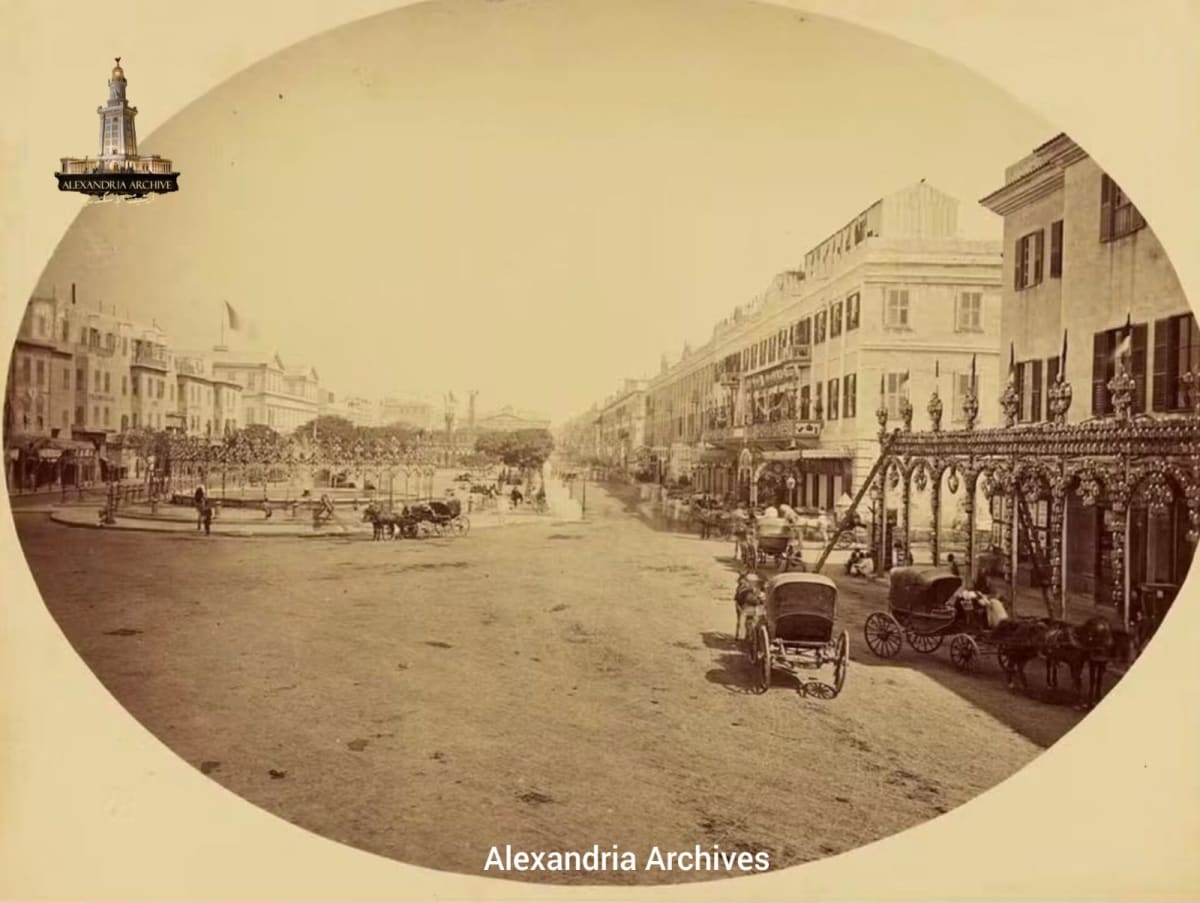
ميدان القناصل.. شاهد الإسكندرية في زمن الحروب والتحولات
في قلب الإسكندرية القديمة، يقف ميدان القناصل، المعروف لاحقًا بميدان محمد علي ثم ميدان المنشية، واحدًا من أكثر الأماكن التي تختصر تاريخ المدينة الحديث. لم يكن الميدان مجرد ساحة تجارية أو ملتقى للقنصليات والفنادق، بل كان شاهدًا على فترات من الاضطراب والحصار والقصف، ثم عاد ليشهد مراحل إعادة البناء والتحول السياسي في مصر.
ارتبط اسم «ميدان القناصل» بوجود عدد كبير من القنصليات الأجنبية والمنشآت التجارية حوله، وأصبح مع الوقت قلبًا مهمًا للحياة الاقتصادية والاجتماعية في الإسكندرية. ومع تطور المدينة في عهد محمد علي، أُعيد تخطيط المنطقة وظهرت حول الميدان مبانٍ ووكالات تجارية ذات طابع أوروبي واضح.
لكن الميدان عرف وجهًا آخر مع أحداث عام 1882، عندما دخلت الإسكندرية مرحلة صعبة انتهت بالقصف البريطاني للمدينة. فقد امتد القصف والحرائق والدمار إلى وسط الإسكندرية، وكان ميدان القناصل من أكثر المناطق تضررًا، حيث تهدمت وأحرقت أجزاء كبيرة من المباني المحيطة به.
كان ذلك القصف جزءًا من أحداث سبقت الاحتلال البريطاني لمصر، ولذلك أصبح الميدان شاهدًا على واحدة من أكثر اللحظات قسوة في تاريخ الإسكندرية الحديث. وبعد انتهاء القصف، بدأت المدينة تستعيد حياتها تدريجيًا، وأُعيد بناء كثير من المنشآت حول الميدان، فظهرت عمارة جديدة حملت تأثيرات أوروبية، خصوصًا الإيطالية.
ومع مرور العقود، لم يعد الميدان مجرد أثر لحرب قديمة؛ فقد أصبح مسرحًا لأحداث سياسية مهمة. وفي 26 يوليو 1956 شهد ميدان المنشية الخطاب التاريخي الذي أعلن فيه جمال عبد الناصر تأميم قناة السويس، ليصبح المكان مرة أخرى شاهدًا على تحول كبير في تاريخ مصر.
وهكذا يمكن القول إن ميدان القناصل لم يشهد حربًا واحدة فحسب، بل مرّ بسلسلة من الأزمات والتحولات التي غيّرت وجه الإسكندرية نفسها؛ من زمن القناصل والتجارة الأجنبية، إلى قصف 1882 وإعادة البناء، ثم إلى الأحداث الوطنية الكبرى في القرن العشرين.
ميدان القناصل حكاية مكانٍ تغيّر اسمه، وتغيّرت حوله المدينة، لكنه ظل واقفًا شاهدًا على تاريخ الإسكندرية حين كانت الحرب والسياسة والتجارة تلتقي في ساحة واحدة.
Consuls Square
Consuls’ Square: Alexandria’s Witness to Wars and Transformations
In the heart of old Alexandria stands Consuls’ Square, later known as Muhammad Ali Square and then as Mansheya Square, one of the places that best captures the city’s modern history. The square was not merely a commercial hub or a meeting place for consulates and hotels; it also witnessed periods of turmoil, siege, bombardment, and destruction, before becoming a scene of reconstruction and major political transformation in Egypt.
The name “Consuls’ Square” was associated with the large number of foreign consulates and commercial establishments surrounding it. Over time, the square became an important center of Alexandria’s economic and social life. During the reign of Muhammad Ali, the area was redeveloped, and buildings and commercial agencies with a distinctly European character began to appear around the square.
However, the square revealed another side of its history during the events of 1882, when Alexandria entered a difficult period that culminated in the British bombardment of the city. The bombardment, fires, and destruction spread through central Alexandria, and Consuls’ Square was among the areas that suffered the greatest damage, with large parts of the surrounding buildings destroyed or burned.
The bombardment was part of the events that preceded the British occupation of Egypt, making the square a witness to one of the most difficult moments in Alexandria’s modern history. After the bombardment ended, the city gradually began to recover, and many of the buildings around the square were reconstructed, giving rise to new architecture strongly influenced by European, particularly Italian, styles.
As the decades passed, the square was no longer simply a reminder of an old war. It became a stage for important political events as well. On July 26, 1956, Mansheya Square witnessed Gamal Abdel Nasser’s historic speech announcing the nationalization of the Suez Canal, once again turning the place into a witness to a major turning point in Egypt’s history.
Thus, Consuls’ Square can be said to have witnessed not just one war, but a series of crises and transformations that reshaped Alexandria itself—from the era of consuls and foreign trade, through the bombardment of 1882 and subsequent reconstruction, to the major national events of the twentieth century.
Consuls’ Square is the story of a place whose name changed, while the city around it transformed. Yet it remained standing as a witness to Alexandria’s history, when war, politics, and commerce converged in a single square.