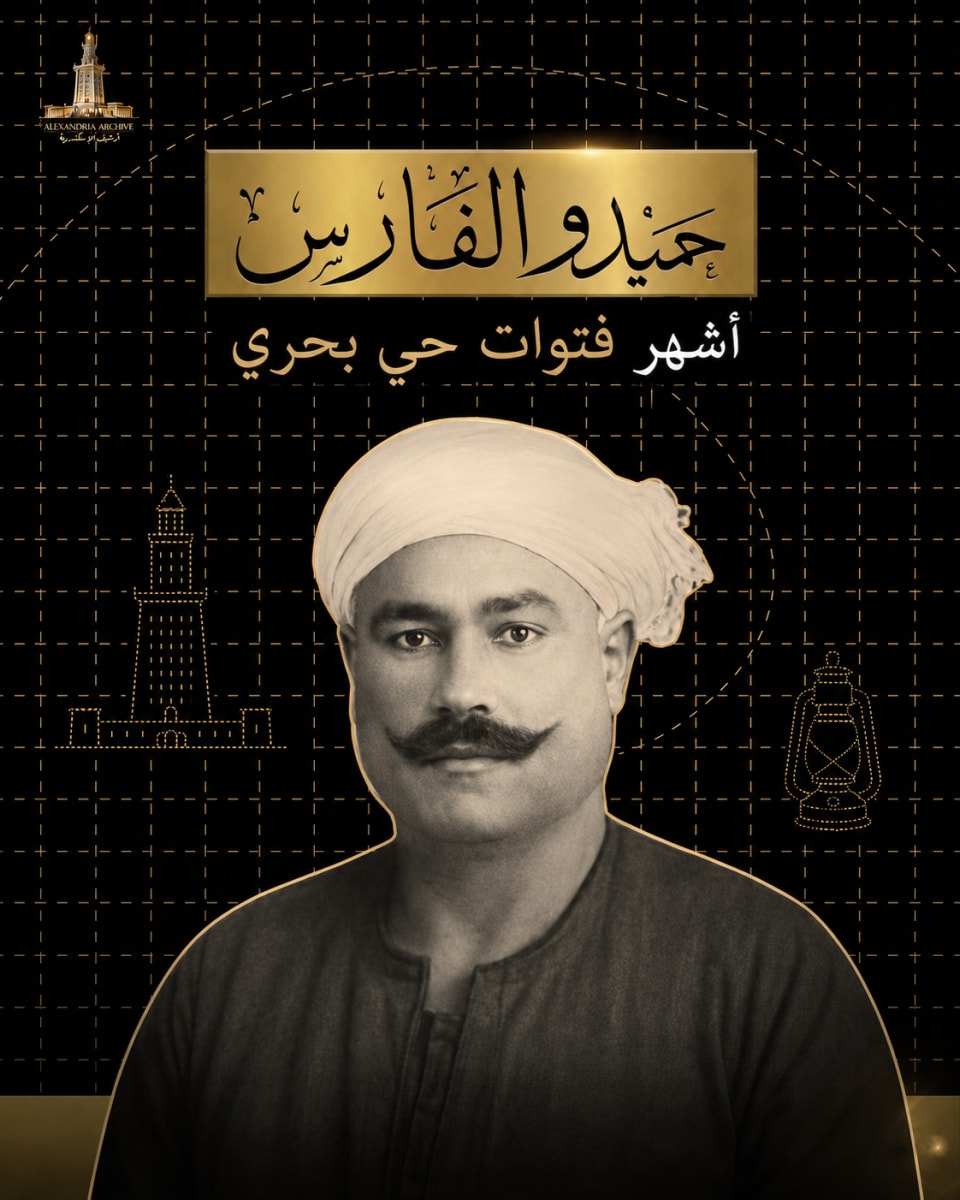
حارة "السيالة"، وسوق "السمك"، وحلقات الصيادين في حي بحري العريق بالإسكندرية، كلها أماكن شهدت على زمن كان للجدعنة والشهامة فيه رجال يحكمونها بالعدل والقوة. في هذا المجتمع السكندري القديم، لم يكن اسم "حميدو الفارس" مجرد اسم لفتوة عادي، بل كان رمزاً للحماية والشهامة، وواحداً من أشهر فتوات القرن الماضي الذين حفروا أسماءهم بحروف من نور في الوجدان الشعبي السكندري.
النشأة.. من قلب البحر إلى عالم الفتونة
ولد حميدو الفارس في حي بحري، هذا الحي الذي يعيش أهله على رزق البحر، فتشربت شخصيته من قسوة الصيد وصبر الصيادين. ومنذ شبابه، ظهرت عليه علامات القوة البدنية المفرطة والذكاء الحاد.
في ذلك الوقت، كانت الإسكندرية مركزاً للتجارة، ومكاناً يعج بالجاليات الأجنبية والبحارة من كل أنحاء العالم. ولم يكن حي بحري، القريب من الميناء والأنفوشي، بعيداً عن الصراعات والمشاحنات اليومية بين الصيادين والمتربصين بهم، وهنا برز دور حميدو الفارس كدرع واقٍ لأهل حتته.
فتوة الغلابة: عدل وحماية لا بلطجة
على عكس الصورة المشوهة التي تقدمها بعض الأعمال الدرامية للفتوة باعتباره "بلطجياً" يفرض الإتاوات، كان حميدو الفارس نموذجاً لـ "فتوة الغلابة". تميزت فتونته بـ:
نصرة الضعيف: كان يتدخل لرد الحقوق إلى أصحابها، خاصة الصيادين البسطاء الذين كانوا يتعرضون لمضايقات التجار الكبار أو البحارة الأجانب.
مجلس العدل: تحولت قهوته أو جلسته في بحري إلى محكمة شعبية يلجأ إليها المتخاصمون لحل نزاعاتهم، وكان حكمه نافذاً ومحترماً من الجميع دون حاجة لأوراق أو محاكم.
حماية الحي: في أوقات الأزمات والاضطرابات السياسية التي مرت بها مصر والإسكندرية، كان رجاله يمثلون "اللجان الشعبية" التي تحمي البيوت والأعراض والمحلات من أي اعتداء.
الفارس وسر اللقب
لم يطلق عليه لقب "الفارس" من فراغ؛ فقد كان بارعاً في ركوب الخيل، وكان معروفاً بـ "الجدعنة السكندرية" التي تجمع بين خفة الدم والهيبة الصارمة. تقول الروايات الشعبية إن حميدو كان يمتلك بنية جسدية قوية تجعل أعتى الرجال يهابون مواجهته، لكنه في الوقت نفسه كان ليّن الجانب، يوقر الكبير ويعطف على الصغير، ويخصص جزءاً من أمواله لمساعدة العائلات المستورة في بحري والسيالة.
نهاية عصر وبقاء السيرة
ومع تطور الزمن ودخول القانون الحديث وتغير ملامح المجتمع السكندري، تراجع دور الفتوات تدريجياً، لكن سيرة حميدو الفارس ظلت حية في ذاكرة كبار السن في بحري، وتوارثتها الأجيال كجزء من الفلكلور والتاريخ غير الرسمي للمدينة.
يبقى حميدو الفارس شاهداً على زمن كانت فيه "الفتونة" تعني المسؤولية، وحماية العرض، وإطعام الجائع، ليظل اسمه مرتبطاً بملامح حي بحري القديم، وصوت أمواج الإسكندرية التي لا تنسى رجالها المخلصين.
Archived biography of Hamidou Al-Fares
The Archival Biography of Hamido El Fares: "The Sultan of the Sea" and the Most Famous Strongman of Alexandria's Bahary District
The alleys of El-Sayala, the Fish Market, and the fishermen's gathering places in Alexandria's historic Bahary District all witnessed an era when courage, honor, and justice were embodied by men who protected their neighborhoods through strength and fairness. In that old Alexandrian society, Hamido El Fares was not merely a neighborhood strongman; he became a symbol of protection, generosity, and bravery, earning a lasting place in Alexandria's popular memory.
From the Heart of the Sea to the World of the Futuwwa
Hamido El Fares was born in Bahary District, where generations of families depended on the sea for their livelihood. Growing up in this environment shaped his character with the resilience of fishermen and the toughness demanded by life on the coast. From an early age, he became known for his exceptional physical strength and sharp intelligence.
At that time, Alexandria was a bustling commercial center filled with foreign communities and sailors from around the world. Situated near the harbor and Anfoushi, Bahary District often experienced disputes involving fishermen, merchants, and sailors. It was in this setting that Hamido El Fares emerged as a trusted protector of his neighborhood.
A Protector of the People, Not a Tyrant
Unlike the distorted image of the "futuwwa" often portrayed in films and television as a violent extortionist, Hamido El Fares represented the ideal of a protector of ordinary people.
He was known for:
Defending the weak: He stood up for fishermen and laborers who were mistreated by wealthy merchants or foreign sailors.
Community justice: His regular gathering place became an informal people's court where neighbors settled disputes peacefully. His decisions were respected without the need for official courts.
Protecting the neighborhood: During periods of unrest and political instability, he and his men acted as community guardians, protecting homes, businesses, and families from harm.
The Story Behind the Title "El Fares"
The title "El Fares" (The Horseman/Knight) was not given without reason. He was reputed to be an excellent horseman and embodied the Alexandrian spirit of courage, dignity, humor, and firm authority. According to local oral traditions, his powerful physique made even the strongest men hesitate to challenge him. Yet he was also remembered for his kindness, showing respect to elders, compassion toward children, and quietly helping struggling families in Bahary and El-Sayala.
The End of an Era, but Not of a Legacy
As modern law enforcement developed and Alexandrian society changed, the traditional role of neighborhood strongmen gradually disappeared. However, the story of Hamido El Fares continued to live on in the memories of Bahary's older generations, passed down as part of Alexandria's folklore and unofficial history.
Today, Hamido El Fares remains a symbol of a time when being a futuwwa meant responsibility, defending honor, protecting the vulnerable, and feeding the hungry. His name is still associated with the spirit of old Bahary District and the waves of Alexandria that never forget the people who devoted themselves to their community.