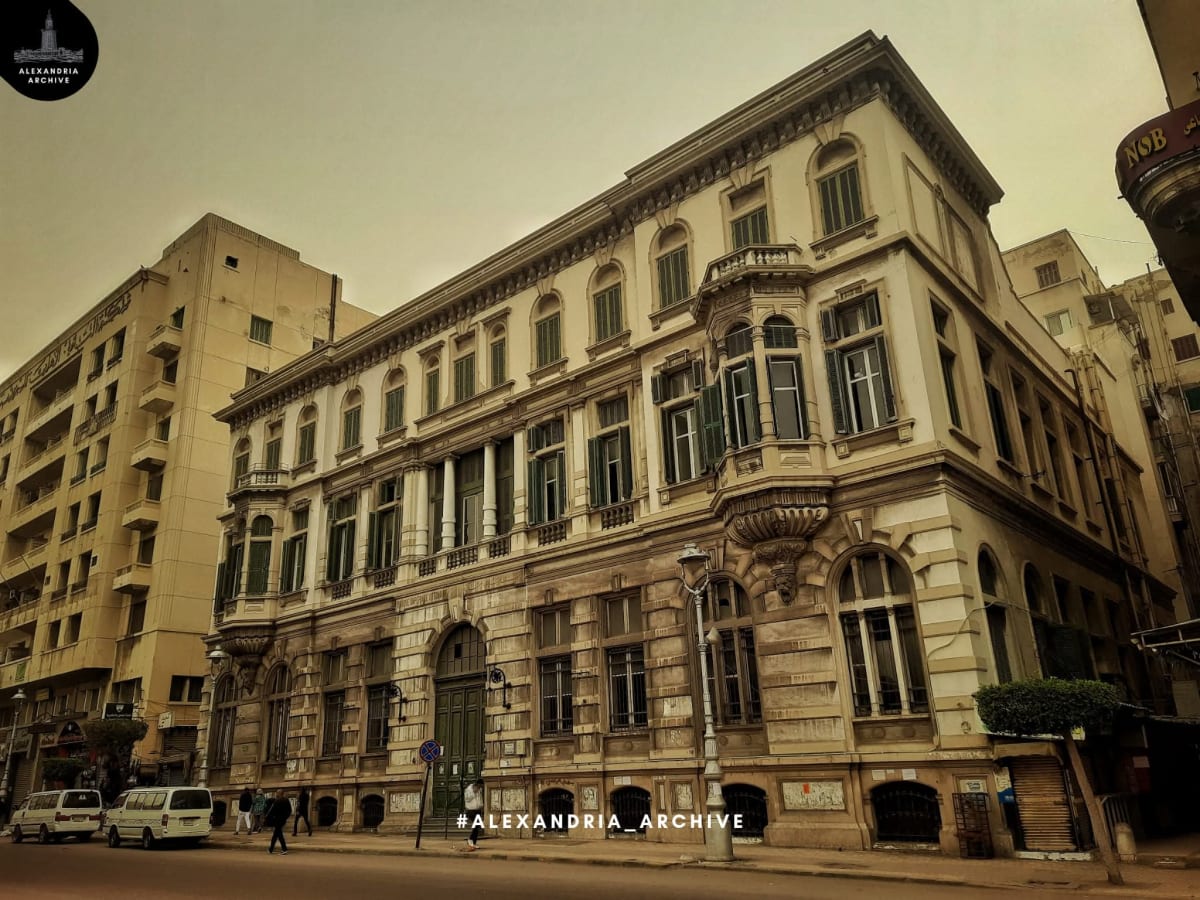
في منتصف ميدان القناصل "التحرير حاليًا" يقف هذا المبنى العريق شامخًا مليئ بالزخارف المعمارية الرائعة ومحفوراً عليه عبارة "البنك السلطاني العثماني".
كانت مصر هي البلد العثماني الأول الذي قام فيه البريطانيون بتأسيس مصرف أجنبي، وكانت مهمته هي إقراض الطبقة الحاكمة في مصر بفوائد مرتفعة وتحويل الضريبة التي تدفعها مصر لإسطانبول ومن ثم إلى بريطانيا بعدما تم رهنها لضمان أول قرض حصلت عليه الدولة العثمانية، وجاء مشروع قناة السويس وتبذير الخديوي إسماعيل من التمويل عملًا مربحًا فصار بنك مصر يوزع أرباحًا على مساهميه وصلت إلى 7%.
إن مبنى البنك السلطاني العثماني المتواجد في منطقة المنشية مسجل في مجلد الحفاظ على التراث، موضحا أن المصرف قد بني في عام 1866 بأحد فنون العمارة في القرن الـ19.
إن المبنى يتميز بواجهات نصف دائرية، وملاقف للهواء ومناور للإضاءة، وفناء داخلي، وقد صمم المبنى ليكون منزلا لإستقبال السلطان العثماني وذلك قبل تحويله إلى مصرف، حيث أن مصر في ذلك العصر كانت تابعة للدولة العثمانية.
إن المبنى ليس من الآثار، وهناك فرق بين المباني الأثرية والتراثية، حيث أن المباني التراثية تسجل في مجلد الحفاظ على التراث بينما الآثار تسجل في سجلات أخرى خاصة بالأثار وتخضع للوزارة وإشرافها.
أن الخديوي إسماعيل وضع مدينة الإسكندرية نصب إهتمامه ونفذ مبانٍ معمارية، وتم تخطيط الميادين العامة وتشييد مبانٍ حكومية على طراز معماري متميز، وكان أهم تلك المباني قد صمم وشيد في ميدان القناصل الذي أصبح اسمه الآن ميدان المنشية.
إن البنك السلطاني العثماني الذي شيد في عهد الخديوي إسماعيل ظل يعمل كمصرفا حتى خمسينات القرن العشرين، لتأتي وزارة العدل وتضع يدها عليه ويتحول ذلك المبني إلى مقرا للشهر العقاري، مشيرا إلى أنه قبل أحداث يناير 2011، قامت وزارة العدل بالإتفاق مع إحدى الشركات العالمية المتخصصة في ترميم الأثار لترميم المبنى بالكامل على أسس فنية ومعمارية دقيقة.
وكانت إدارة التوثيق الأثري بالإسكندرية قد قدمت تقريرا فنيا لوزارة الأثار قبل عشر سنوات لضم المبنى إلى عداد الآثار الإسلامية كأثر؛ وذلك للحفاظ على قيمته التاريخية والفنية والتراثية، ولكن حالت أحداث يناير دون ذلك، وقد تم تسجيله كمبنى تراثي فقط.
#أرشيف_الإسكندرية
Ottoman Sultan Bank
In the heart of what was then known as Consuls Square (now Tahrir Square), this historic building stands proudly, adorned with exquisite architectural details and inscribed with the words "Ottoman Imperial Bank."
Egypt was the first Ottoman country where the British established a foreign bank. Its purpose was to lend to the Egyptian ruling class at high interest rates and to transfer the taxes paid by Egypt to Istanbul, and subsequently to Britain, after these taxes were mortgaged as collateral for the first loan obtained by the Ottoman state. The Suez Canal project and Khedive Ismail's lavish spending on financing proved highly profitable, leading Bank Misr to distribute dividends to its shareholders reaching 7%.
The Ottoman Imperial Bank building, located in the Mansheya district, is registered in the Heritage Preservation Register, which indicates that the bank was built in 1866 in a style characteristic of 19th-century architecture.
The building features semi-circular facades, windcatchers, skylights, and an inner courtyard. It was originally designed as a residence for the Ottoman Sultan before its conversion into a bank, as Egypt was then under Ottoman rule.
The building is not an antiquity. There is a difference between archaeological and heritage buildings. Heritage buildings are registered in the Heritage Preservation Register, while antiquities are registered in separate registers specific to antiquities and are subject to the Ministry's supervision.
Khedive Ismail prioritized the city of Alexandria, commissioning architectural projects, planning public squares, and constructing government buildings in a distinctive architectural style. The most important of these buildings was designed and built in Consuls Square, now known as Mansheya Square.
The Ottoman Imperial Bank, built during Khedive Ismail's reign, continued to operate as a bank until the 1950s. The Ministry of Justice then took possession of it, and the building was converted into the Real Estate Registry. Prior to the events of January 2011, the Ministry of Justice contracted with an international company specializing in antiquities restoration to fully restore the building according to precise technical and architectural principles.
The Alexandria Archaeological Documentation Department had submitted a technical report to the Ministry of Antiquities ten years prior, recommending the building's inclusion among Islamic antiquities. This was done to preserve its historical, artistic, and cultural value, but the events of January prevented this, and it was only registered as a heritage building.